
AI Solutions

Loading

Essential Interview Preparation for Freshers: Key Tips and Strategies

Essential Interview Preparation for Freshers: Key Tips and Strategies

Introduction to Interview Preparation

Getting Started with Interview Prep

Starting a first-time job interview can feel both exciting and scary. If you are a fresher, remember that thorough interview preparation can make all the difference. Research shows that confident candidates often perform better, and you can build that confidence by preparing well. As a beginner, learning about the hiring process, job description, and how to make a strong self-introduction for freshers is your first step. By understanding what recruiters look for and what the role entails, you tailor your study and practice effectively. You will feel more in control when you prepare thoroughly.

The Importance of Preparation

Preparation is key to acing a job interview and landing the role you want. For fresh graduates, it means reading the job listing carefully and picturing yourself in that position. Spend time reviewing the skills and qualifications mentioned in the description. Also, review your educational background and educational qualifications so you can confidently discuss them during the interview. Next, find out about the company’s products, mission, and team culture. This research not only boosts your confidence but also shows interviewers that you care about the company. Remember to keep track of all this information as you study.

Practising Common Questions

To prepare thoroughly, practice common questions and answers. Reviewing interview questions and answers can help you prepare for a variety of scenarios. Interview preparation for freshers is about practice and persistence. Start by answering simple questions like “Tell me about yourself” or “Why do you want this job?” in front of a mirror or with a friend. Practice out loud so your voice feels natural. You’ll notice where you hesitate or need more detail. Writing down key points can help structure your thoughts. Looking at a sample answer for a challenging situation can help you learn how to structure your response. You might even record yourself on your phone and play it back to catch any distracting habits or unclear phrasing. Each time you practice, you’ll gain more confidence.

Refreshing Your Technical Skills

In addition to interviewing skills, make sure your technical knowledge is fresh. If you’re preparing for a technical position, review the fundamentals of your field. Be sure to review data structures and other core computer science concepts, especially if you are preparing for technical interviews. For example, if you studied engineering, go over key theories or the software development lifecycle if relevant. Think of technical topics you learned in college or at a bootcamp. Practice solving a few problems related to your subject to sharpen your mind. This way, when technical questions come, you’ll have a foundation to rely on.

Planning Your Preparation Time

Finally, give yourself enough time to prepare. Last-minute cramming is stressful and less effective. Instead, break your study into stages. Maybe spend a few days on company research, another few on practising questions, and some time polishing your resume. By spacing out your preparation, you will feel less overwhelmed and more confident by the time interview day arrives. It’s natural to feel nervous, but remember: good preparation can turn nerves into excitement.


Building a Strong Resume and Cover Letter

Building a Strong Resume and Cover Letter

Crafting an Impressive Resume

Your resume is often the first impression you make on potential employers. Building a strong resume and cover letter is a crucial part of interview preparation for freshers. Treat your resume like a showcase for your achievements and skills. Even if you have little formal work experience, you likely have projects, internships, volunteer work, or extracurricular activities to list. Write about those experiences in terms of what you accomplished.

Using Action Verbs on Your Resume

Use action verbs to make your resume stand out. Action verbs are powerful words that describe what you did. Instead of writing “worked on a project,” say “led a project,” or “designed a solution.” Verbs like developed, managed, organised, created, implemented, and achieved show initiative and responsibility. For example, you might write “Collaborated with classmates to develop a campus app,” or “Implemented a solution to improve efficiency in a team project.” This little change in wording can have a big impact.

Tailoring Your Resume to the Job

Tailor your resume to the job you’re applying for. Carefully read the job description and pick out keywords and skills. If the job listing mentions “teamwork,” “problem-solving,” or “Java programming,” make sure those keywords appear in your resume if they match your experience. Customising your resume shows employers that you put effort into aligning your qualifications with their needs.

Professional Formatting and Proofreading

Check the format and style of your resume. Use a clean layout with consistent fonts and bullet points. Make sure all your sections are easy to read. Also, proofread your resume multiple times to catch any spelling or grammar mistakes. You could ask a friend or mentor to review it as well. Errors on a resume can distract a hiring manager and take away from your accomplishments. With a polished resume and cover letter, you’ll feel more confident walking into the interview.


Understanding the Job Role and Responsibilities

Understanding the Job Role and Responsibilities

Think about it for a second—how many people do you know who walk into job interviews completely blind, hoping to wing it with charm and a firm handshake? Maybe that person is you. Here’s the thing: before you even think about stepping foot in that interview room, you need to ask yourself a fundamental question—do you actually understand what you’re signing up for? The job description isn’t just some bureaucratic checklist they threw together; it’s your roadmap, your secret weapon, your chance to peek behind the curtain and see what they’re really after. But here’s the catch—most people treat it like fine print, skimming through it without truly grasping what’s at stake. Why do we do this to ourselves? When you study that job description closely, really dig into the day-to-day tasks, the skills they’re hunting for, the outcomes they’re expecting—that’s when the magic happens. You start to see the types of questions coming your way, and suddenly you’re not just another candidate stumbling through generic responses. You’re someone who’s done their homework, someone who gets it. And here’s what most people miss: this isn’t just about boosting your confidence, though that’s a nice side effect. It’s about proving to that interviewer that you’re not just desperate for any job—you’re genuinely interested in this role, this challenge, this opportunity to contribute something meaningful. Because at the end of the day, preparation isn’t just about having the right answers; it’s about showing up as someone who actually cares enough to understand what they’re walking into.

Analysing the Job Description

Think about it for a moment—when was the last time you truly dissected a job description, not just skimmed through it like most candidates do? Here’s the thing: to really maximise your preparation, you need to crack open that job posting like you’re solving a puzzle, breaking it down piece by piece. But here’s where most people get it wrong—they’re hunting for the obvious technical skills, those programming languages and software tools that jump off the page, while completely overlooking the hidden gems buried in the soft skills section. Why do we do this? Maybe because teamwork, communication, and adaptability feel too abstract, too intangible to grasp onto. But here’s the twist: those “soft” skills are often the hardest to fake and the most valued by hiring managers who’ve been burned by technically brilliant candidates who couldn’t play well with others. Have you ever stopped to really examine what the hiring manager is seeking beneath the surface—those problem-solving abilities that separate the reactive from the proactive, leadership skills that emerge not from titles but from influence, or that genuine passion for learning that can’t be manufactured in an interview prep session? And here’s where it gets interesting: while you’re busy checking boxes on technical requirements, are you taking the time to decode the company’s cultural DNA? Because here’s a sobering truth—you could be the most qualified candidate on paper, but if you’re tone-deaf to the organisational culture and values, you’re essentially trying to fit a square peg into a round hole. The real magic happens when you understand both sides of this equation—the technical expectations that get you in the door, and the cultural alignment that determines whether you’ll thrive or merely survive. But here’s the catch: this isn’t just about becoming what they want; it’s about determining whether this organisation actually aligns with your own professional trajectory, your own vision of where you want to be five years from now. When you truly grasp both the technical and cultural landscape, you’re not just tailoring your answers to show qualification—you’re crafting a narrative that demonstrates you’re not just another candidate fishing for any job, but someone who sees this specific role as a stepping stone toward something bigger, someone who won’t just fill a seat but will become an integral part of their long-term vision.

Identifying Key Skills and Requirements

Think about it for a moment—once you’ve really dissected that job description, what you’re actually doing is creating a roadmap to your own potential, isn’t it? This list of key skills and requirements. It’s not just a checklist; it’s your compass for navigating the unknown territory of that interview room. But here’s where it gets interesting: for each skill on that list, you need to dig deep—and I mean really deep—into your own story. What experiences have shaped you? Maybe it was that challenging coursework that pushed you beyond what you thought possible, or perhaps that internship where you discovered capabilities you never knew you had. Group projects that tested your patience, volunteer work that ignited something within you—these aren’t just bullet points on a resume, they’re the building blocks of who you’ve become. Now, here’s the thing about interview preparation: it’s not about memorising scripted answers, it’s about preparing to have an authentic conversation about your journey. When they ask about programming languages like Java or Python, can you paint a picture of that specific project where you wrestled with complex code until a breakthrough struck? Can you walk them through not just what you did, but how you thought, how you problem-solved, how you grew? Because here’s what most people miss—the magic happens when you stop simply listing your experiences and start connecting them to their needs, when you transform a sterile Q&A into a compelling narrative about capability and potential. That’s when you’ll find yourself answering with the kind of confidence and clarity that doesn’t just fill the silence, but creates genuine connection.

Matching Your Strengths to the Role

Think about it for a moment—what does it really mean to “stand out” in an interview? Are you just going through the motions, or are you actually revealing who you are? Here’s the thing: matching your strengths to the specific needs of the role isn’t just strategy, it’s storytelling at its finest. And the STAR method? That’s your secret weapon—Situation, Task, Action, Result—but here’s the twist most people miss: it’s not just about structure, it’s about creating a narrative that makes the interviewer lean in and think, “This is exactly what we need.” You see, when you provide clear and concise examples, you’re not just answering questions, you’re painting a picture of your potential. But here’s where it gets interesting: highlighting relevant skills like leadership skills, organisational skills, and problem-solving skills isn’t about listing achievements; it’s about sharing the real-life stories that shaped you. Think about this: if the job description mentions project management, why settle for a generic response when you could describe that pivotal moment when you led a group project, prioritised tasks under pressure, and guided your team through chaos to success? Because here’s what most candidates don’t realise—when you emphasise how your actions contributed to a positive outcome, you’re not just demonstrating your ability to manage projects and your commitment to high-quality work, you’re showing them a glimpse of their future with you on the team. And that’s the real magic, isn’t it? By aligning your strengths with the job requirements, you’re not just proving you’re ready to take on the challenges of the role—you’re making them believe that your success and your contribution to the company’s success are already intertwined.


Using Mock Interviews to Boost Confidence

Conducting Mock Interviews

Practice makes perfect, and that’s definitely true for interviews. One of the best ways to prepare is by doing mock interviews. A mock interview is like a trial run where you simulate the real interview conditions. You can do this with a friend, family member, or career advisor. They can ask you typical questions and give feedback on your answers. This practice helps you get comfortable with speaking about yourself and your skills.

Taking Mock Interviews Seriously

During a mock interview, dress up and treat it seriously. Use the same body language and tone you would in a real interview. It might feel a bit strange at first, but it will help you adapt to the pressure. Ask your mock interviewer to give honest feedback. For example, did you talk too fast? Did you answer clearly enough? Did you remember to smile and make eye contact (even if it’s just in a video call)? These details can make a real difference.

Gaining Confidence through Practice

Mock interviews can also be done online. Recording yourself on video and reviewing it is a powerful way to improve. Notice if you have any distracting habits, like fidgeting or saying “um” a lot. Work on fixing those small issues. Each time you practice, you’ll gain more confidence. By the actual interview day, this preparation will help you feel calmer and more articulate.


Understanding HR Interviews

Understanding HR Interviews

What is an HR Interview?

An HR interview is a crucial step in the hiring process. As a fresher, this interview will focus on who you are as a person and how well you fit with the company. Human Resources (HR) wants to know about your personality, work ethic, and soft skills. Think of the HR interview as a conversation to see if you belong in the team’s culture.

Types of HR Interview Questions

During an HR interview, you’ll often face questions about your background and how you handle situations. The interviewer might ask about your experiences in college, any part-time jobs, or internships you had. They will also pay attention to your communication style. For example, they might ask, “How do you handle stress when there’s a tight deadline?” or “Tell me about a time you solved a problem in a team.” These behavioural questions want you to give specific examples of your skills in action.

Key Qualities HR Looks For

Remember to highlight the qualities that employers value. Demonstrated leadership skills are important even for freshers. Showing that you are a team player who collaborates effectively and is highly motivated to contribute to the organisation can set you apart. You might not have managed a team at work, but you can talk about leading a group project in class, coordinating a volunteer event, or training a junior colleague during an internship. Communication skills are also critical. Show that you can explain your ideas clearly and listen well. Problem-solving abilities, adaptability, and a positive attitude will also impress an HR interviewer.

Showing Your Interest in the Company

An HR interview is also your chance to learn about the company. Use this opportunity to show that you did your homework. For instance, mention how the company’s mission or products excite you. Ask thoughtful questions about the team culture or what growth opportunities look like. Demonstrating genuine interest helps you stand out. You’re not just answering questions; you’re also letting the interviewer see that you would be a motivated team member.

Overcoming Interview Anxiety

It’s normal to feel nervous during an HR interview, but being prepared can turn those nerves into positive energy. Practice answering common HR interview questions with friends, and get comfortable talking about yourself. Focus on being friendly and professional at the same time. This step of interview preparation for freshers can make the whole process more enjoyable and less scary.


Preparing for Common Interview Questions

interview preparation for freshers

Common Questions to Expect

Interviews often start with some standard questions that almost every candidate hears. As a fresher, being ready for these common interview questions will boost your confidence. Some questions seem simple, but are very telling about who you are.

Your Elevator Pitch (“Tell Me About Yourself”)

For instance, “Tell me about yourself” is almost guaranteed. This is your elevator pitch. Don’t just walk through your resume again; instead, craft a short story about what brought you here. Start with where you studied and something you’re proud of, and connect it to why you’re now interviewing for this job. Keep it brief—maybe a minute long—and highlight your strengths and interests related to the role.

Why You Want This Job

Another common question is, “Why do you want this job?” The interviewer wants to know if you understand the position and if you’re really interested. Mention specific things about the job and company that appeal to you. For example, “I want this job because I’m passionate about environmental science, and your company’s work on sustainable energy is inspiring.” This shows you’re motivated by their mission and value alignment.

Strengths and Weaknesses

Questions about strengths and weaknesses are very popular too. When asked about your strengths, choose skills that fit the job (like teamwork, communication, or a certain software skill) and give an example of each in action. Reference your previous roles to show how your contributions led to team success and helped you develop these strengths. If they ask about weaknesses, be honest but smart: talk about something you’re improving on, and then explain the steps you’re taking to get better. For example, “I used to struggle with public speaking, so I joined a debate club to gain confidence.” This shows self-awareness and growth.

Practising with Sample Answers

It’s a great idea to look at sample questions and answers as part of your preparation. Many career websites share typical responses. Use these to get an idea of how to structure your answer, but don’t memorise scripts. Understand the question’s intent and adapt answers to your own experience. Keep it conversational and genuine. After reviewing samples, practice with a friend or in front of a mirror. Over time, this practice will make your answers more confident and natural.

Mastering the STAR Method

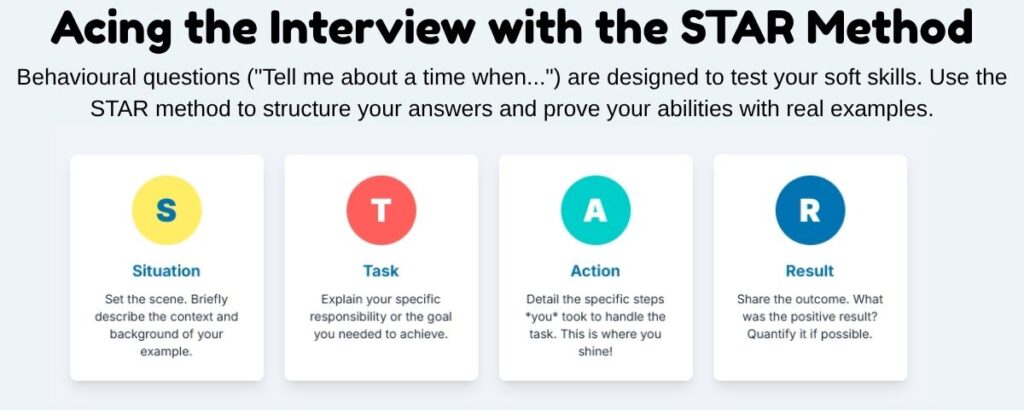
One effective technique for answering interview questions is the STAR method. STAR stands for Situation, Task, Action, and Result. It’s a way to structure your answers. For example, you might say: “In my final year project (Situation), our team had a tight deadline. My task was to coordinate our work. I created a schedule and held daily check-ins (Action). As a result, we finished the project two days early with high marks (Result).” This structure helps you answer clearly and completely, showing you have real experiences to back up your answers. It’s especially useful for behavioural questions, particularly when you need to describe how you overcome challenges in difficult situations.


Demonstrating Leadership and Communication Skills
Demonstrating Leadership and Communication Skills

Why Leadership Skills Matter

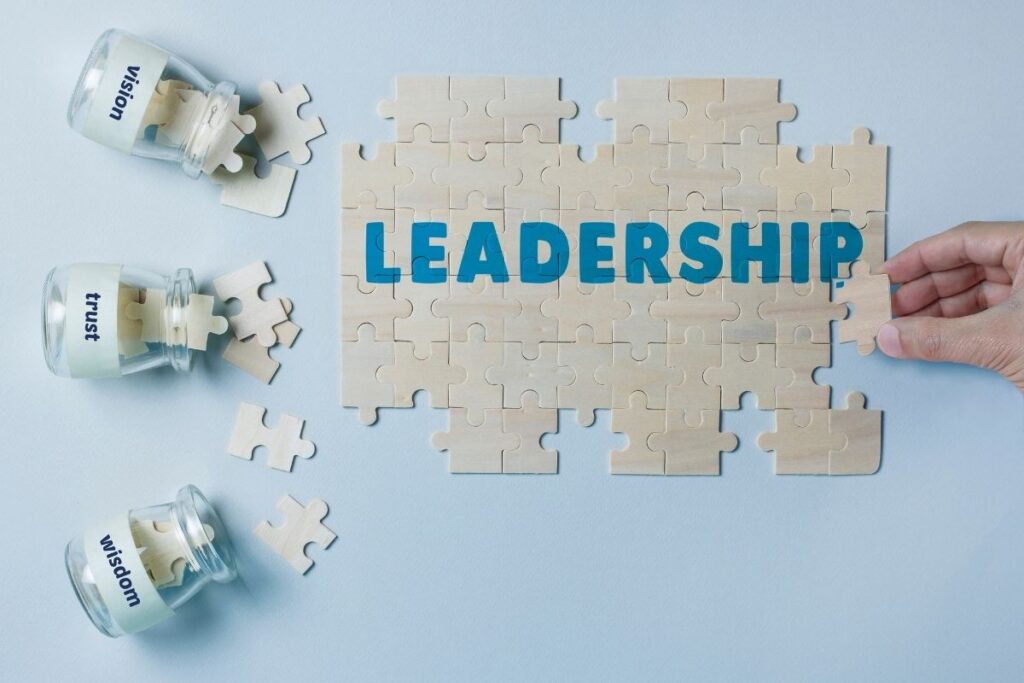
Even as a new graduate, you can show leadership and communication strengths. Employers love candidates who step up as team players and future leaders. Think of any situation where you took charge or helped guide others, and be ready to talk about it.

Why Communication Skills Matter

Communication skills go hand-in-hand with leadership. In your stories, highlight how you communicated. Did you write emails to keep everyone updated? Did you present a report to a professor or team? Mention these. Remember, effective communication means listening as well as talking. You might say, “I always made sure to listen to my teammates’ ideas and concerns before making decisions.” This shows you value others’ opinions.

Highlighting Leadership in Team Settings

When describing leadership, focus on teamwork scenarios. For example, “In my final year capstone project, I took the lead in dividing tasks among team members and setting deadlines. We met weekly to discuss progress. I also encouraged quieter members to share ideas, which helped our project excel.” This kind of answer shows initiative and inclusiveness. Always connect your stories back to the role you want. If you’re interviewing for a software role, you might add, “Leading the project team taught me project management skills that I believe will help me work on software teams here.”

Showcasing Your Communication Skills

Effective communication can be shown with specific examples. If you gave a presentation in school or at an internship, mention it. “I gave a presentation to my class about my internship findings. I prepared slides and practised my speech to keep everyone engaged.” This shows confidence and clarity. Listening is also a big part of communication. You might say, “I always ask follow-up questions and confirm what others say to ensure I understand tasks correctly.” These habits show you are an attentive communicator. In a technical context, explain your approach. For example: “When answering a coding question, I would talk through my plan step by step so the interviewer knows my reasoning.” This shows you will communicate well on the job.

Aligning Career Goals with the Role

Why Career Goals Matter

Having clear career goals helps interviewers see you as someone who plans ahead. When you answer questions about the future, show that you have thought about how this job fits into your broader aspirations.

Short-Term vs Long-Term Goals

First, define your short-term goal in relation to the position. You might say, “In the next couple of years, I want to grow into a role where I can manage projects. Starting in this position will give me the foundation to understand the company’s processes and client needs.” Next, mention a long-term career vision. For example, “In five years, I see myself taking on more responsibility as a team lead or subject matter expert in this field.” Make it relevant to the industry or field. Mention roles or certifications that fit your path.

Setting Clear Career Goals

When setting career goals, be honest but forward-thinking. For instance, if you want to become an expert in a technical skill, mention it. You could say, “My goal is to become a skilled software engineer, and this job will help me sharpen my coding abilities.” If you see leadership in your future, you might say, “I aspire to lead my own team one day, so I want to start by contributing as an effective team member and learning from experienced managers here.” Align your goals with what the company does. For example, if the company focuses on sustainability and you care about the environment, say, “I want to build a career in sustainable technology, and I admire that your company is a pioneer in that area.” This makes your goals seem a natural fit.

Discussing Your Experience and Future Prospects

Reflecting on Past Roles

As a fresher, your interview might include questions about past roles or projects and what you want next. Even if your “current job” is not a full-time position, you may have relevant experiences to discuss. When asked about your last job or project, focus on what you did and learned. For example, “My last internship as a junior developer taught me how to work in an agile team. I handled basic coding tasks and learned how to communicate with senior developers.” If you have never had an official job, you can talk about a school project or a part-time role that taught you valuable skills. The key is to show what you learned and how it prepares you for this role.

Looking Ahead to New Opportunities

Discussing what you’re looking for in your next role is also important. Explain why this position fits you. You could say, “I’m looking for a role where I can apply my programming skills and continue learning new technologies. I see that this position involves working on mobile apps, which is exactly what I’ve been studying and can’t wait to do professionally.” Be enthusiastic about the company culture and environment. If you like teamwork, say you appreciate that the company values collaboration. If they have mentorship programs or training, mention that those appeal to you as a learner. For instance, you might ask, “What qualities do your most successful employees have in common?” This shows you care about fitting in and growing there.

Researching Company Culture

Learning About Company Culture

Knowing the company culture can give you an edge in an interview. Every company has its own vibe, values, and mission. If you align yourself with those, you’ll make a strong impression. Start by looking at the company’s website, social media, and news articles to learn about its culture and mission statement. For example, if the company’s mission is to help customers succeed, think about how you share that value. Perhaps you have a story about serving clients or helping others that shows you prioritise customer needs.

Understanding Company Values and Mission

Talk about the company’s products or services too. If they make technology you love, mention that. For example, if they create educational software and you care about learning, say that you are excited to be part of making people’s lives better through education. Showing you’ve done this research proves you’re sincerely interested, not just sending resumes blindly. During the interview, use the information to your advantage. For example, you might say, “I read that your company encourages continuous learning through workshops, and that’s important to me because I always aim to improve my skills.” This shows you fit their culture of growth.

Demonstrating Cultural Fit

Show that you will fit in by using the language they use. For instance, if the company calls teams “squads,” you could say, “I’m excited about the idea of working in an agile squad.” Discuss your preferred work style in a way that matches their culture. If they value collaboration, say you enjoy group work. If they emphasise independence, mention how you thrive on self-directed tasks. You might say, “I understand this industry can move quickly. During a group project in college, I adapted when things changed by reorganising our plan to stay on track. I’m confident I can adapt similarly in a professional setting.” Ultimately, showing that you understand and respect the company culture makes interviewers envision you as part of their team. It’s the finishing touch that can land you the job.

Asking the Right Questions

At the end of the interview, you usually get to ask your own questions. Prepare thoughtful questions about the culture. For instance, you might ask, “What qualities do your most successful employees have in common?” or “How does the team celebrate successes?” Asking these questions shows you care about being part of the right culture and helps you learn if the environment is a good fit for you.

Handling Stress and Pressure

Sharing Stress-Management Examples

Interviews can be stressful, but how you handle stress is something interviewers watch closely. You can impress them by showing that you remain calm and effective under pressure. Start by sharing a quick example of a challenge you managed successfully. For example, “During exam week, I had three major deadlines. It was stressful, but I made a schedule and stuck to it. I prioritised tasks by deadlines and worked in focused time blocks. This plan helped me complete all the work on time and with good results.” This anecdote shows proactive stress management and good organisation.

Having a Problem-Solving Mindset

When talking about stress, emphasise your problem-solving mindset. You might say, “When tasks pile up, I break them into smaller steps to make progress steadily. I also talk to peers or mentors to get advice if I feel stuck. This approach helps me not to feel overwhelmed.” It shows you have strategies to cope, rather than feeling defeated by stress.

Staying Calm Under Pressure

You should also note that you maintain the quality of your work, even when busy. Perhaps say, “When I had to write multiple assignments at the same time, I created checklists and reviewed each one carefully before submitting. This way, none of my work suffered due to the high workload.” It shows dedication to excellence even in tough times.

Keeping a Positive Attitude

Maintaining a positive outlook is important. For example, “Even if I feel pressure, I try to stay positive by focusing on what I can do in the moment. I remind myself that stress often means I care about the outcome. That positive mindset has helped me do well on big projects and deadlines.” This indicates leadership and emotional intelligence. Each of these examples tells a story of how you handle pressure, which will reassure the interviewer of your ability to perform under stress.

Final Preparation Tips Before the Interview

Think about it for a moment—as your interview day creeps closer, are you just going through the motions, or are you actually preparing to perform? Here’s the thing: most people think they’re ready because they’ve skimmed the company website and rehearsed a few canned responses, but what if that’s exactly the trap that keeps you from standing out? Why do we settle for surface-level preparation when the interview is essentially a high-stakes performance where every other candidate is reading from the same script? You see, when you dive deep into the company’s recent press releases, their latest product launches, their victories and struggles—you’re not just gathering information, you’re building the foundation for authentic connection. But here’s what most people miss: practising behavioural questions isn’t about memorising perfect answers; it’s about discovering how your story intersects with their story, how your experiences don’t just align with their values but actually amplify them. And those thoughtful questions you prepared to ask the interviewer? They’re not just conversation starters—they’re your chance to flip the dynamic, to transform from someone begging for a job into someone evaluating a partnership. Because here’s the uncomfortable truth: confidence isn’t something you fake until you make it, it’s something you earn through preparation so thorough that uncertainty becomes excitement, and the interview stops feeling like an interrogation and starts feeling like a conversation between equals. What if the real question isn’t whether you’re qualified for the job, but whether the job is worthy of what you bring to the table?

Double-Checking Your Documents

Think about it for a moment—when was the last time you really looked at your documents before an interview? And I mean really looked, not just that quick glance that tells you “yeah, it’s all there.” Here’s the thing: your resume, cover letter, and reference list aren’t just pieces of paper—they’re your first impression walking through that door before you even say a word. Are they telling the story you want them to tell? Or are they whispering doubts about your attention to detail? Maybe you’re thinking, “It’s just paperwork,” but here’s the twist—what if those documents are actually the foundation that either builds your credibility or quietly undermines it? And if the interview calls for additional materials—that portfolio gathering dust on your shelf, those certificates you earned but forgot about, those examples of your work that showcase who you really are—when will you gather them, if not now? Because here’s the catch: scrambling at the last minute isn’t just stressful, it’s a silent thief that steals your confidence right when you need it most. You see, having everything organised isn’t really about the documents themselves—it’s about what that preparation signals. It whispers to the interviewer that you don’t just want this opportunity, you respect it. It shows that you understand something most candidates miss: that professionalism isn’t just how you dress or how you speak, it’s how you think about the details that others overlook. And here’s what’s fascinating—this kind of preparation doesn’t just set you apart from other candidates, it transforms how you walk into that room. When you know everything is in order, when every document tells your story with precision, you’re not just prepared for the interview—you’re prepared to own it.

After the Interview: Follow-Up and Reflection

Sending a Thank-You Note

Once the interview is over, your work isn’t quite done. The way you follow up can leave a strong final impression. After you leave the interview or end a video call, send a thank-you note or email within 24 hours. In it, thank the interviewer for their time, mention one or two points from the discussion, and reiterate your interest in the role. For example, “I enjoyed learning about your upcoming project on renewable energy. I am even more eager to contribute my skills to such initiatives.” This simple gesture can go a long way in showing professionalism and enthusiasm.

Reflecting on Your Interview

After sending the thank-you note, take some time to reflect on the interview itself. Think about which questions you answered well and which ones you could improve. Did you feel confident when describing a particular experience? Did a question catch you off guard? Write down these observations. This self-reflection is a valuable part of interview preparation that many overlook. It helps you learn and be better in future interviews.

Learning from the Experience

If possible, ask a trusted mentor or career counsellor about your performance. They can help you identify areas to improve. Keep practising based on what you learned. For instance, if you stumbled on a technical question, review that topic. If you got tongue-tied describing a project, practice that story again. Even if you get an offer quickly, continue to prepare as you start the job. The interview process itself is a great practice for the next steps in your career. Every interview experience makes you a more polished candidate. However, if you don’t get the job, stay positive. Employers sometimes have many qualified candidates. Use any feedback given (or ask politely if they have advice for improvement), and apply that feedback moving forward. Remember: each interview is a learning opportunity, and staying persistent and enthusiastic is crucial.

Continuing to Improve and Stay Positive

Building New Skills

The journey doesn’t end when the interview does. Keep your skills sharp and learn new ones. If, during the process, you realise the company uses a tool you’re unfamiliar with, start learning it online. Take free courses or tutorials to fill any gaps. Not only does this prepare you for next time, but it also shows your proactive learning mindset. Stay engaged in your field by reading industry news, joining webinars, or attending workshops. These activities can give you fresh examples to talk about in future interviews and show that your passion goes beyond just getting a job – you’re genuinely interested in the field.

Networking and Professional Growth

Networking can also help. Connect with professionals in the industry or alumni from your school who work in similar roles. They can give insights or tips, and sometimes even referrals. A simple conversation over coffee with a young professional can boost your morale and guide you. Talking to others in the field can inspire you with new ideas and help you stay motivated.

Keeping Your Motivation High

Keep your attitude positive. It’s normal to feel discouraged if you face rejection, but remember that many successful people faced multiple rejections early in their careers. Tell yourself that each “no” brings you closer to a “yes.” Maintain a list of your accomplishments and read it when you need a confidence boost. Consider every interview experience a step forward. You’ve practised answering tough questions and thinking on your feet. Use that experience as fuel – you will be stronger in the next round.

Celebrating Progress

Finally, celebrate small wins. Did you manage to answer a tricky question well? Did you finally perfect your resume with action verbs? Did you expand your network by talking to a professional? Give yourself credit for these improvements. They are progressing on your journey. Be patient with yourself. You are at the beginning of your career. Give yourself credit for the efforts you are making to prepare, learn, and grow. With each step, you are getting closer to landing the job that’s right for you.

Conclusion

Embarking on your first job search as a fresher can be daunting, but with smart interview preparation, you will shine. Start early by building a clear resume filled with strong action verbs and by practising common questions. Learn about the company and align your goals with theirs. Show your best communication and leadership skills in the interview, and stay calm under any pressure. After the interview, follow up and keep improving yourself.

Every bit of preparation adds to your confidence. Remember, you have a unique story and skill set to offer. Believe in yourself, stay positive, and keep practising. The right opportunity is out there, and with dedication and the right strategies, you’ll be ready to grab it.


The post Essential Interview Preparation for Freshers: Key Tips and Strategies first appeared on Fresher Blog.

Top Action Verbs for Resume Success: Boost Your Job Application Today

Top Action Verbs for Resume Success: Boost Your Job Application Today

Introduction to Resume Action Verbs

Why Action Verbs Are Important

Action verbs are the engine of your resume. Using powerful words can make your resume stand out in a crowded job market. When you choose strong action verbs for your resume, like managed, created, or developed to describe your accomplishments, you instantly catch the eye of hiring managers and recruiters. These dynamic words immediately show what you achieved in past roles, making your responsibilities pop off the page.

To make your accomplishments stand out, begin each bullet point with a strong action verb. This article will provide tips and examples to help you select the best action verbs for your resume.

By adding compelling action verbs to your resume, you paint a vivid picture of your skills and experience. Choosing the best words, such as accomplished, can help communicate your impact more effectively. These verbs set you apart from other candidates because they make your achievements easy to visualise. The right action words help you tell your story clearly and effectively. For example, saying you led a project is much more memorable than saying you worked on a project. This change can boost your chances of landing an interview by showing exactly what you did.

Understanding Action Verbs

What Are Action Verbs?

Action verbs are words that describe exactly what you did in a past role. Instead of writing “was responsible for the project”, you could write “led the project”. This immediately signals initiative. Verbs like led, created, and managed convey your actions quickly. Opening a bullet with one of these words highlights your achievements and skills.

Using strategic and impactful language is key to making your resume stand out. Describing your responsibilities clearly with the right action verbs ensures your contributions are communicated effectively.

You can also match action verbs to different fields. In marketing, you might say “designed a campaign” or “launched an ad”. In tech, maybe “programmed a feature” or “implemented a solution”. Understanding each verb’s meaning helps you pick the best fit. For instance, saying you “streamlined the process” means you made things run smoother and more efficiently.

Be careful to avoid overused phrases whose impact has been lost over time, and choose action verbs that truly showcase your accomplishments.

Choosing the Right Word

When choosing action verbs, think about the context. Did you lead, coordinate, or build something? Each verb has its own shade of meaning. For example, “led” implies leadership while “coordinated” implies organisation. Using the right word shows exactly what you achieved. Even subtle word changes matter. Saying you “organised a campus event” vs “planned a campus event” highlights different strengths (execution vs strategy).

The combination of strong action verbs with quantifiable results can make your achievements more compelling to recruiters by clearly demonstrating your contributions and outcomes.

Choosing the right action verb can also express your unique skills and the specific impact you made in your role.


Using Compelling Action Verbs

Making an Impression

Using compelling action verbs can really make an impression on hiring managers. Picture a recruiter skimming dozens of resumes: a strong verb grabs attention right away. Skip generic phrases and instead use specific action verbs to highlight your leadership and accomplishments. Words like initiated, coordinated, and executed show you took action. For example, instead of “was involved in a club project”, try “initiated a student club project” or “coordinated a team activity”. These verbs immediately tell the reader that you took charge and got results. Using dynamic action verbs helps you better showcase your achievements and impact in your previous roles, rather than just listing job duties.

Technical and Creative Verbs

Action verbs can also highlight your technical or creative skills. If you’re in tech, words like developed, designed, and implemented spotlight your ability to build and solve problems and showcase your technical skills. For instance, “developed a mobile app” or “designed a website interface” shows hands-on skills. In a creative field, a verb like “conceptualised” or “crafted” can emphasise innovation. Action verbs can also demonstrate your experience with data-driven decision making, especially in technical or project management roles, by showing how you analyse and act on information to achieve project goals.

Whenever possible, combine these verbs with results to tell a bigger story. For example, instead of “improved the database,” write “implemented a new system that improved retrieval speed by 40%.” The verb and the outcome together show real impact. This proves you not only have the skills but also apply them to deliver measurable results.


Action Verb Examples

Examples of Impactful Actions

Let’s look at real examples. Instead of writing “I was part of a team”, you could say “led a team to achieve a specific goal”. If you helped create something new, try “created a new product” or “designed a service”. If you worked on a plan, say “developed and implemented a marketing strategy”. If you managed resources, “managed a $5,000 budget and allocated resources efficiently”. If you did analysis, “conducted research and analysis to inform decisions”.

Each of these action verbs shows employers that you achieved results. They turn everyday tasks into achievements. When you pick verbs that match what you did, your resume becomes more compelling. For example, “designed” highlights a creative accomplishment, while “coordinated” shows teamwork. This approach ensures every bullet point demonstrates the real value you delivered.

To make your resume even stronger, clearly explain the impact of your actions by using specific action verbs that describe your responsibilities and results. Tailor your examples to the company you are applying to, making sure they align with the company culture and values. Action verbs can also bring your project management life cycle to life, helping employers see the dynamic process and results of your work.


Professional Development with Action Verbs

Showcasing Growth

You can also use action verbs to highlight your growth and learning. If you learned a new skill or improved one, write “learned advanced Excel functions” or “improved my public speaking skills”. Using strong action verbs can strengthen your resume by clearly demonstrating your achievements and progress. Words like learned, improved, and enhanced show that you’re always getting better. For example, saying “enhanced my graphic design skills through an online course” proves you take the initiative to improve yourself.

Action verbs can spotlight your growth in leadership, communication, and problem-solving, too. Maybe you “mentored a new teammate” or “organised a study group” — verbs like these indicate initiative. Managing deadlines is another key skill; using action verbs such as “coordinated project deadlines” or “prioritised tasks to meet tight deadlines” can effectively showcase your ability to handle time-sensitive responsibilities. If you tackled issues, words like resolved, addressed, or “streamlined” come into play. For instance, “regulated inventory levels for a busy store” shows you took charge of a complex process. Tailoring your action verbs to fit different jobs and industries helps demonstrate your qualifications and makes your resume more relevant to the roles you’re applying for. Each of these verbs tells employers that you tackled challenges and grew from the experience.


Creating Effective Bullet Points

Creating Effective Bullet Points

Crafting Dynamic Bullets

Bullet points are your chance to shine with action verbs. Start each bullet with a strong verb so your achievement stands out immediately. Clearly describing your achievements with action verbs is essential, as it helps employers quickly understand your skills and contributions. Starting each bullet with a strong verb helps communicate your impact and effectiveness to potential employers. For example, instead of “I supervised interns”, simply write “supervised a team of three interns”. This concise phrasing puts the action front and centre. Use verbs like “supervised,” “coordinated,” “led,” or “launched” to make each bullet dynamic and powerful.

Quantify Your Achievements

Whenever possible, add numbers or results to your bullet points. For example, “increased club membership by 20% through targeted outreach” or “organised a workshop attended by 50 participants”. For instance, “secured a new client by negotiating a strategic partnership with a local business” demonstrates your ability to bring in valuable relationships. You might also highlight achievements such as “obtained $10,000 in funding from a new sponsor” to show your success in acquiring financial support. Additionally, “built long-term relationships with clients and customers by providing ongoing support and personalised service” illustrates your skill in engaging with key stakeholders. A bullet like “implemented a new filing system that reduced retrieval time by 30%” stands out because it shows a clear outcome. These details prove your impact. Also, vary your verbs to keep the resume interesting. Instead of repeating “managed” on every line, try alternatives like “oversaw,” “built,” or “achieved” to highlight different skills.

Resume Action

Putting It All Together

All of these tips come together in your final resume. Action verbs help you describe your past work in an active, impressive way. For example, instead of saying “responsible for project planning,” you could write “oversaw project planning for multiple initiatives.” The second phrasing clearly shows your role. By using verbs like “organised,” “implemented,” or “oversaw,” you emphasise the skills you used and the results you got. Each sentence becomes a mini success story.

These verbs can highlight your successes in any field. In sales, you might say “increased revenue by 15%,” and in marketing “, launched a social media campaign.” Even volunteer work counts: “initiated a campus recycling program” or “managed a student club”, both start with action. By carefully choosing and placing strong action verbs for resume, your resume tells a clear, exciting story of what you can do. It shows employers you’re someone who actively contributes and delivers results. With these action verbs on your side, you can present your experience with confidence.

Categorised Action Verbs

Use the table below to find action verbs that match the skills you want to highlight:

Category

Examples of Action Verbs

Leadership / Management

led, managed, directed, supervised, coached

Creativity / Innovation

created, designed, developed, initiated, crafted

Analysis / Research

analysed, researched, evaluated, assessed, investigated

Communication

communicated, presented, negotiated, facilitated, collaborated

Organisation / Planning

organised, planned, scheduled, orchestrated, executed

Technical / Implementation

implemented, programmed, engineered, built, configured

Achievements / Results

achieved, improved, increased, maximised, expanded

Support / Assistance

supported, assisted, facilitated, guided, helped


The post Top Action Verbs for Resume Success: Boost Your Job Application Today first appeared on Fresher Blog.

How to Mail Resume to HR: Effective Email Templates and Tips

How to Mail Resume to HR: Effective Email Templates and Tips

Introduction to Emailing Resumes

Emailing your resume is a standard way to apply for jobs today. You may be asking yourself how to mail your resume to HR without making mistakes, and that’s exactly what this guide will cover. As a fresh graduate or first-time job seeker, you might feel nervous, but a clear and professional email can make a strong first impression. Using an informative subject line and clear subject lines increases the likelihood that your email will be noticed by hiring managers. For instance, start with a professional email address (for example, first.last@example.com) and a concise email subject line. An effective subject line helps your email stand out and sets the tone for your message. A subject like YourName – [Job Title] Application tells the hiring manager immediately who you are and the role you want.

  • Emailing a resume is a common part of applying for jobs.
  • Use a professional-sounding email address (e.g. firstname.lastname@gmail.com) to make a good impression.
  • Write a specific subject line that includes the exact job title position and your name, and if possible, the title position at the company, so the reader knows who you are and what the email is about.
  • Keep the email concise, clear, and specific to the job. A brief, well-structured email shows professionalism.

For example, an informative subject line such as “Application for Marketing Manager – Sam Jose” or “Sam Jose – Marketing Manager Position at Assign Corp” is a best practice, as it clearly states the application for the job title or the job title position.

A well-written email subject line and email body are crucial for making a positive impression on hiring managers.

This introduction sets the stage for a well-crafted application email. Each detail (from address to subject to brevity) helps positively grab the recruiter’s attention.

Preparing to Email a Resume

Before sending your email, do some preparation. Research the company and the hiring manager. Try to find the name of the person who will read your email (LinkedIn and the company website can help). Addressing someone by name (e.g. “Dear Ms. Patel,”) shows you made the effort; if you really can’t find a name, “Dear Hiring Team” or “Dear Hiring Manager” is better than nothing.

Next, review the job description carefully. Note the key skills and qualifications the posting mentions, and think about which of your experiences match them. This will help you highlight the most relevant points when you write your email.

Finally, prepare a professional signature for your email. Under your closing (like “Best regards,”), add your full name, phone number, and a link to your LinkedIn profile or portfolio (if you have one). In your professional signature, consider including your desired position and a brief mention of your professional background to give the recruiter context about your experience and clarify the role you are pursuing. A professional signature gives the recruiter easy contact information and shows attention to detail.


Writing a Clear Subject Line

The subject line is your email’s headline, so make it count. It should be brief but specific. Include the job title, company name, and any job ID or job reference number, if applicable. Also, put your name, so it’s clear who the email is from. For example:

Subject: Application for Marketing Manager – Oliver Smith (Job ID: 12345, Ref: MM-2024)
Subject: Application for Marketing Assistant – Sonam Dixit (Company Name: Bestfort Corp)
Subject: Software Engineer Application – Alex Johnson (Ref: SE-2025).

Including the company name and the job title in the subject line makes it more informative and specific. A specific subject line and an informative subject line should include details like the job title, job ID, job reference number, and company name.

  • Be precise: Use the exact job title (and number, if given) from the job posting.

  • Avoid generic phrases: Don’t use vague subjects like “Job Application” or “Resume.”

  • Stand out with clarity: Something like Graphic Designer – Emily Carter immediately tells HR why your email matters.

  • Follow good examples: Indeed provides subject formats such as Resume–Job Title–Your Name, which clearly match the resume to the position.

A clear subject line helps ensure your email gets opened and doesn’t end up overlooked. It signals professionalism and helps your email pass any simple screening tools.

Email Template and Structure

Your email should use a clean, formal format. A typical structure is:

Sample Email 1:

Subject: Tanvi Naresh – Data Analyst Job Title Position Application

Dear [Hiring Manager’s Name],

I am Jane Doe, a recent graduate in Data Science from XYZ University. I am writing to apply for the Data Analyst job position at Tech Solutions Inc., which I saw on your careers page. As a candidate with a strong academic background and relevant internships in data analytics, I believe I am well-suited for the title position at company. My coursework and internship experience have provided me with relevant accomplishments, such as leading a data visualization project and developing Python scripts for data analysis, which directly align with the requirements of this role. This short but effective introduction is designed to quickly capture your attention and demonstrate my fit for the job.

Resume attached for your review. Thank you for considering my application. I would welcome the opportunity to discuss how I could contribute to your team. Please let me know if you need any additional information.

Best regards,

Tanvi Naresh

(555) 123-4567

This template introduces who you are and why you’re writing, then highlights relevant skills, relevant accomplishments, and relevant internships. It’s a good model of a concise, professional resume email. The first paragraph provides a short but effective introduction, stating your name, degree, and the job title you want. The email’s body should be concise and focused, briefly explaining why you fit the role. It ends with thanks, a mention that your resume is attached, and a polite sign-off.

Use this structure as a guide: a formal greeting (such as “Dear [Hiring Manager’s Name]”), a brief opening about yourself and the job position, a short email body mentioning key qualifications, and a courteous closing. When sending your resume or sending a resume to potential employers, always personalise the greeting and content. Sending a resume via email is a standard practice—be sure to attach your resume and reference it in the message. Being clear about who you are and why you’re a fit is the main goal.

Attachments and File Format

When it comes to attachments, keep things simple and standard. Attach your resume (and cover letter if requested) in a common format: PDF or Word (.docx). PDF format is the universally accepted file format for resume files and ensures the correct format is preserved across all devices. Word is also acceptable (some systems prefer it). Name your files clearly, like Mohinder_Resume.pdf and Mohinder_CoverLetter.pdf, so they’re easy to identify.

  • Attach both your resume and cover letter (if required). If you’re unsure, it’s safe to include a cover letter as a separate file.

  • Use a clear, professional file name (your name and document type).

  • Keep each attachment small enough to open quickly (usually under 10 MB).

  • Follow any instructions exactly (for example, if the job ad says “PDF only” or a specific naming format, do it).

  • Before sending, double-check that all the attachments are included and that each resume file and document opens correctly and maintains the correct format.

Attaching your documents properly in the right format shows that you’re organised and understand professional norms. It also helps ensure the hiring manager can open and review your resume easily.

Email Content and Tips

Now focus on the body of the email. A well-written email body is essential—it should clearly demonstrate that you are genuinely interested in the exciting opportunity. Keep your tone professional and positive. Use complete sentences and correct grammar. Try to connect your experience to the job:

  • Highlight relevant skills, accomplishments, and internships: Mention one or two qualifications, relevant accomplishments, or relevant internships that match the job’s requirements. For example, “My internship in marketing and my coursework in data analysis prepared me well for this Sales Analyst role.”

  • Show enthusiasm politely: Let them see your excitement, but don’t overdo it. You might say, “I would love the opportunity to contribute my skills in data analysis to your team.”

  • Include a call-to-action: Politely invite next steps. For example: “I would welcome the chance to discuss how I can contribute; please let me know if you need any additional information.”

  • Mention attachments: Add a line about your attachments so the reader notices them. For example: “I have attached my resume for your consideration,” as Indeed advises. This helps point out where to find your resume.

  • Keep paragraphs short: Three or four short paragraphs (each a few sentences) are best. A shorter email is more likely to be read in full.

  • Proofread the email’s body: Always check for grammar errors, typos, or mistakes. A clean, error-free email demonstrates your attention to detail.

Overall, be genuine. The email is your first impression, so let your confidence and professionalism shine without seeming arrogant. Referencing your professional network can also add credibility to your application.

Hiring Managers and Email Etiquette

Politeness and respect go a long way. Address the hiring manager properly if you know their name, and use a professional tone throughout.

  • Address by name if possible: “Dear Ms. Gupta,” is better than “To whom it may concern.” If you found the hiring manager’s name, use it. If not, “Dear Hiring Manager,” or “Dear [Company] Recruiting,” is acceptable. If you cannot find the hiring manager’s name, addressing the HR manager is also appropriate.

  • Use a polite sign-off: End with “Sincerely,” or “Best regards,” followed by your name. You can also include your contact information in a simple signature (name, phone, email) below your name.

  • Maintain professional language: Avoid slang or overly casual phrases. Write as if speaking politely in person.

  • Be patient: After sending, give HR some time to respond. If you don’t hear back in about a week, sending one polite follow-up email is fine (see next section).

Using a courteous tone and the right formality shows respect for the hiring manager’s time and positions you as a mature candidate.

Follow-up Email

If you haven’t heard back after about a week or two, sending a brief follow-up is appropriate. It shows you’re organised and still interested, without being pushy.

  • Be polite and concise: Thank them again for considering your application and gently ask if there’s any update.

  • Remind them of the position: Mention the job title, the date you applied, and reference the job listing or job board where you found the position.

  • Reiterate interest: You can say you remain excited about the opportunity and express your enthusiasm for landing your dream job.

  • Show awareness: Briefly mention your knowledge of current industry trends to demonstrate you are up-to-date and engaged.

Sample Follow-Up Email:Subject: Follow-Up on Marketing Coordinator Application – Alex Johnson

Dear Ms. Reena,

I recently applied for the Marketing Coordinator position at BrightTech on July 10th, after seeing the job listing on your company’s careers page. I wanted to check in to see if you had a chance to review my resume. I am still very enthusiastic about the possibility of joining your team and using my social media marketing experience to contribute. I am especially excited about the opportunity to land my dream job at BrightTech. I also stay current with industry trends and am eager to bring that knowledge to your organization. Please let me know if there is any additional information I can provide.

Thank you for your time, and I look forward to hearing from you.

Sincerely, Swathi Malik (555) 987-6543

This follow-up example is short and polite. It serves as a gentle reminder without demanding an immediate answer.


Job Application Submission

When you finally click “send,” make sure you’ve followed all instructions in the job posting. Double-check:

  • You’re emailing the correct address (for example, jobs@example.com or hr@company.com).

  • You have a clear subject line as specified (include any required job code or reference).

  • All required attachments (resume, cover letter, portfolio, etc.) are included.

  • If the posting asked you to answer any specific questions or fill out forms in the email, be sure you’ve done that.

  • You used the same email address and signature throughout the process (for consistency).

  • You have followed the employer’s directions closely for submitting your job application, including any specific formatting or instructions mentioned in the job posting.

Following directions exactly shows you’re detail-oriented and professional. Even a small mistake here (like missing an attachment or sending to the wrong email) can hold you back.

Email Tips and Optimisation

Think of your email from both the recruiter’s and the system’s perspective. Many companies use software to scan incoming applications, so using clear keywords helps.

  • Use keywords from the job description: Mirror the language of the posting. If they want a “Project Manager with leadership experience,” mention “Project Manager” and related skills in your subject and email.

  • Craft a strong subject: Make it match the job. Indeed’s examples (like Resume–Job Title–Your Name) ensure your subject line passes simple filters.

  • Tailor each message: Don’t copy and paste the same generic email everywhere. Mention something specific about the company or role to show you’re truly interested.

  • Preview your email: Sending a test email to yourself is a very effective strategy. Send a test email to check formatting and ensure all the attachments are included. This helps catch any weird spacing, missing parts, or errors before the final submission.

Customising each email and using clear language helps your application stand out in both human and automated reviews.

Common Mistakes to Avoid

Learn from others by avoiding these errors:

  • Generic emails: Don’t send a form email without personalisation. Hiring managers can tell when you didn’t customise.

  • Unprofessional email address: No “party123@example.com” or “cuteguy@example.com.” Stick to a variation of your name.

  • Typos and errors: Spelling or grammar errors, especially in names or titles, look careless. Always proofread your resume email for grammar errors before sending.

  • Missing attachments: Make sure your resume (and cover letter, if required) is actually attached. A quick double-check will save you from sending an empty message.

Avoiding these mistakes keeps the focus on your qualifications, not your oversights.

Effective Emailing Strategies

Think of each email as a chance to be clear, professional, and personal. Always include your name and the job title in the subject line, maintain a courteous tone, and customise your message for the role.

Key Takeaways for Job Seekers:

  • Use a clear subject line with your name and the job title.

  • Keep your email professional and concise.

  • Personalise your message for each application.

  • Double-check attachments and contact details before sending.

  • Follow up politely if you don’t hear back.

These practices sum up the key tips we’ve discussed.

Professional Email Address

Your email address itself makes a first impression. Keep it simple and professional:

  • Use your real first and last name in the address (for example, alex.smith@example.com).

  • Avoid nicknames, numbers, or anything too casual (like hobbies or pet names).

  • If your name is common and already taken, you can add a middle initial or a simple number (for instance, john.s.smith@example.com or john.smith92@example.com).

  • Use the same professional email throughout your job search so everything stays consistent.

Having a clean, professional email address shows you’re taking the process seriously and adds credibility from the start.

Final Review

Before hitting send, take one last look. Read your email out loud to catch any typos or awkward phrasing. Check that all attachments open correctly and that your formatting looks neat. Make sure names, dates, and contact details are accurate. Doing this final review ensures your application is polished and professional.

You’ve crafted a thoughtful, well-structured email that presents your qualifications clearly. With these tips in mind, you can send your resume to HR confidently and make a positive impression. 

Good luck !!!


The post How to Mail Resume to HR: Effective Email Templates and Tips first appeared on Fresher Blog.

Understanding the Difference Between Cover Letter and Resume

Understanding the Difference Between Cover Letter and Resume

When you’re gearing up for job hunting, it helps to remember that a resume and a cover letter are both key tools in your toolkit. Submitting both a cover letter and a resume together in job applications is important because they complement each other by providing both your professional qualifications and your personal motivation. Think of them as two sides of the same coin: your resume is the highlight reel of your accomplishments—a detailed document that lists your professional experience, education, skills, and achievements—and your cover letter is the personal introduction. Career experts often put it this way: “A resume provides a concise, factual overview of your professional qualifications and experience, while the cover letter is personalized, explaining your motivation and why you’re a good fit for the job.” In other words, your resume shows the “what” of your career (what you’ve done, what skills you have), and the cover letter shows the “why” (why you want this job and why you belong). Understanding this difference is crucial for a successful job hunt.

Both documents are essential for painting a full picture of you as a candidate. A well-crafted resume and cover letter work together to highlight your skills, experiences, and personal qualities. Resumes lay out your education, work history and achievements in clear, scannable lists, while cover letters add a human touch, explain your enthusiasm, and tell a bit of your story. A cover letter is a type of business letter, serving as a formal, short document that introduces you to the employer and explains why you are interested and suitable for the role. By using both, you stand out from other applicants and make it easy for hiring managers to see why you’re the right fit. A cover letter complements and enhances a resume by providing additional context, elaborating on your qualifications, and showcasing your personality, which helps employers understand why you are the best fit for the role.

Let’s look at the differences between a cover letter vs a resume, and when to use each in your job search.


Introduction to Cover Letters and Resumes

Introduction to Cover Letters and Resumes

Your resume is a concise summary of your work and school history, showcasing your career highlights and professional experience. It typically uses sections and bullet points to make information easy to scan. For example, you might list your education, jobs, and skills in separate sections, each with bullet points describing your accomplishments. This lets a busy recruiter quickly see the highlights of your background and provides a summary of your professional history. According to one career guide, think of a resume like a “database of your professional life” – it’s short, factual, and to the point.

On the other hand, a cover letter is a one-page letter addressed to the hiring manager. To personalise your letter, be sure to include the company name in your greeting or header. It’s written in paragraph form, like a friendly letter. In a cover letter, you introduce yourself and explain why you’re excited about this job and company. You can share a little about your motivations or a story from your experience that shows you’d be a great fit. As one guide notes, a cover letter lets your “personality and enthusiasm shine through”, turning your resume from a list of facts into a story about your journey. A cover letter is typically submitted as a separate document from your resume.

For more guidance on formatting and content, you can refer to a sample cover letter or resume example.


Purpose and Content

Purpose and Content of Covering letter and resume

The primary purpose of a resume is to summarise your work history, education, professional experiences, and skills clearly. It provides a factual timeline of your accomplishments, such as degrees, honours, and relevant coursework, especially for new graduates. Employers use resumes to quickly assess your qualifications by highlighting your most relevant experience, projects, professional skills, key skills, and proven track record.

In contrast, a cover letter adds a personal touch. It introduces you to the hiring manager and explains why you’re interested in the specific job and company. You can share your enthusiasm, provide context for your resume items, and highlight achievements related to the role. Cover letters are written in the first person and in full sentences, allowing you to explain gaps or career changes. They also demonstrate how your skills and experiences align with the job requirements.

Both documents should be tailored to each job by aligning your skills and experiences with the job description and company, and by ensuring your application meets the needs of the potential employer.

In some fields, a curriculum vitae (CV) may be required instead of or in addition to a resume, especially for academic, scientific, or research positions. Resumes and cover letters help potential employers assess your suitability for a role by showcasing your qualifications, skills, and experience.


Key Differences between cover letter and resume

Key Differences between cover letter and resume

The format of a resume and a cover letter is a clear difference. Resumes use structured headings (Education, Work Experience, Skills) and bullet points for easy scanning, listing job titles, dates, and responsibilities. In contrast, a cover letter is a short professional letter with your contact info, date, greeting (e.g., “Dear Hiring Manager,”), several paragraphs, and a sign-off (e.g., “Sincerely, [Your Name]”).

Tone differs, too. Resumes maintain a formal, third-person, past-tense style (“Managed a team,” “Graduated with honours”), reading like a factual report. A resume is similar to a formal report: it is a professional, fact-based document with a serious and objective tone, suitable for official or business contexts. Cover letters are more personal and relaxed in the first person, showing enthusiasm with phrases like “I am thrilled to apply.”

Length-wise, resumes are typically a one- or two-page document; cover letters should fit on one page, typically three to four concise paragraphs focusing on key highlights.

Finally, purpose and personalisation vary. Resumes provide an overall professional overview—what you’ve done, including both hard and soft skills—while cover letters target the specific job, explaining why you’re excited and how your background fits. Cover letters mention the company by name and add colour to your application, making them more personal than the usually impersonal resume. Always tailor your documents to each job opening, and check the job listing for specific application requirements, as some may require only a resume while others request a cover letter as well.


Cover Letter vs Resume

Cover Letter vs Resume

When searching for career advice, you might wonder, “What’s the difference between a cover letter and a resume?” They serve distinct but complementary roles. Your resume is a full snapshot of your career history, listing jobs, projects, skills, and education. The cover letter is a brief personal note highlighting a few key points. Submitting just a resume may not be enough to make your application stand out; a cover letter can provide the extra context and personality that employers look for.

For example, if you have a gap in your resume, your cover letter can explain it positively: “In 2023, I volunteered teaching English in Peru, enhancing my communication skills.” Cover letters add information not in your resume and show your personality. They connect your experience directly to the job’s needs. If leadership is required, your resume might list “Team Lead,” while your cover letter describes how you motivated your team.

A well-crafted cover letter can catch a hiring manager’s eye, making a strong first impression. Always customise it by mentioning the job title and company, explaining why your background fits their needs. Resumes and cover letters together create a stronger application, showing both your qualifications and your motivation for the specific role.


Job Applications and Networking

Job Applications and Networking

In most professional job applications, employers expect both a resume and a cover letter, especially in fields like business, education, or law. Resumes and cover letters play a key role in the hiring process, helping employers evaluate your fit and interest at different recruitment stages. Including a cover letter shows not only your qualifications but also your enthusiasm and personal interest in the role. When both are required, the resume highlights your formal qualifications, while the cover letter emphasises your personality and specific interest in the company or role.

Not all job ads request a cover letter; some, especially in tech or trade jobs, may only require a resume. Always check the job listing for specific application requirements, as it often indicates whether a cover letter is needed or if a resume alone will suffice. If a cover letter is optional, including one can give you an edge by showing extra effort and genuine interest. You can also proactively send a cover letter and resume to companies you admire, even without an open job posting, to express your interest and ambition.


Cover Letters Complement Resumes

Cover Letters Complement Resumes

Cover letters complement resumes by adding context and depth. Think of your resume and cover letter as two halves of a story: the resume lists your accomplishments, while the cover letter explains them. For example, if your resume says “Managed social media campaign,” your cover letter might add, “Leading the campaign taught me how to engage an audience and analyse results, increasing followers by 20%.” This makes your achievements more meaningful.

Cover letters also showcase your communication skills and demonstrate that you’ve researched the company, showing enthusiasm that can impress hiring managers. You can express your desire to contribute to a dynamic team, highlighting your interest in joining a proactive and innovative work environment. A strong cover letter adds personality to the facts of your resume, helping you stand out in a pile of applications.


Educational History and Experience

Educational History and Experience

Your educational background is an important part of your resume, especially for students or recent graduates. List your highest degree first, such as “B.A. in Psychology, Delhi University, 2025.” Include honours, GPA, relevant coursework, or academic projects if space permits. If you haven’t graduated, mention your expected graduation date and current courses. For example, “Expected graduation: 2025, Biochemistry program.”

Include relevant experience like internships, part-time jobs, or volunteer work in reverse chronological order. Use bullet points to highlight your responsibilities and achievements, such as “Intern, Marketing Co. (Summer 2024) – Created social media content, increasing engagement by 15%.” Even retail or food service roles demonstrate valuable skills like customer service and time management.

Use your cover letter to explain any gaps or unusual situations on your resume, focusing on what you gained. For instance, briefly address employment gaps while emphasising your skills and determination.


Job Search Strategies

Job Search Strategies

When you go on a job search, think of your resume and cover letter as your dynamic duo. They should always be ready to go together. Submitting both usually shows you’re a serious applicant. Many job postings still ask for both to get the complete picture of who you are. A well-written pair of documents can make the hiring team’s job easier and impress them before they even meet you.

A key strategy is tailoring. Don’t send out the same generic resume and cover letter to every job. Instead, tweak them each time. Read the job ad closely and pick out important keywords and skills it mentions. This does two things: it helps your resume pass automated Applicant Tracking Systems (ATS) that many companies use, and it signals to the human reader that you’re a good match.

In the end, your cover letter and resume are your chance to shine. They’re more than just papers – they’re your introduction and your pitch. Believe in what you’ve accomplished. Write clearly about it, and you will give yourself the best chance to succeed.


Resume Writing Tips

Resume Writing Tips

Crafting a standout resume is all about presenting your professional background in a clear, concise summary that highlights your most relevant skills and experiences. Start by organising your work history, education, and key qualifications using bullet points—this makes your achievements easy for hiring managers to scan quickly. Always tailor your resume to the specific job you’re applying for by incorporating keywords from the job description. This not only shows you’re a great fit but also helps your resume get past applicant tracking systems (ATS) that many companies use to filter candidates.

Consider seeking feedback from a certified professional resume writer if you want to ensure your resume is polished and effective. They can help you structure your resume to emphasise your strengths and key differences that set you apart from other applicants. Remember, your resume should be a concise summary—ideally one or two pages—focused on the most relevant skills and experiences for the specific job. By customising your resume for each application, you’ll make a strong impression and increase your chances of landing an interview.


Cover Letter Writing Tips

Cover Letter Writing Tips

A cover letter is your chance to add a personal touch to your job application and show the hiring manager why you’re the perfect fit for their team. When writing your cover letter, always try to address the hiring manager by name—this small detail can make your letter feel more personal and engaging. Keep your cover letter to one page, using a professional tone and format throughout.

Use your cover letter to highlight your enthusiasm for the role and the company, and explain how your background makes you an ideal candidate. A tailored cover letter should complement your resume by focusing on the experiences and skills that are most relevant to the job. If you’re unsure where to start, a cover letter builder can help you create a professional, customised letter in just a few clicks. Before submitting, proofread your cover letter carefully to ensure it’s error-free and polished. A well-written cover letter can set you apart from other applicants and help you make a memorable first impression.


Common Mistakes to Avoid

Even the most qualified candidates can miss out on opportunities by making avoidable mistakes in their resume and cover letter. Here are some common pitfalls job seekers should watch out for:

  • Not tailoring your application: Sending the same generic resume and cover letter to every job can make your application blend in rather than stand out. Always customise your documents to the specific job by using keywords and highlighting the most relevant skills from the job description.

  • Overlooking relevant skills and experiences: Make sure to showcase your most relevant skills and experiences in both your resume and cover letter. Use language from the job description to describe your achievements and demonstrate your fit for the role.

  • Using generic salutations: Avoid starting your cover letter with “To Whom It May Concern.” Whenever possible, address the hiring manager by name to create a more personal connection.

  • Neglecting to proofread: Spelling and grammatical errors can leave a negative impression on hiring managers. Always review your resume and cover letter carefully before submitting your application.

By steering clear of these common mistakes, you’ll present yourself as a thoughtful and detail-oriented candidate ready for the specific job at hand.

Conclusion

In conclusion, understanding the difference between a cover letter and a resume is essential for a successful job search. While your resume provides a concise summary of your professional background and most relevant skills, your cover letter adds a personal touch—explaining why you’re the ideal candidate for the specific job. By following the tips in this guide, you can create a resume and cover letter that are well-structured, tailored, and professional.

Remember to highlight your most relevant skills and experiences, use a professional tone and format, and always customise your application for each job. Whether you’re a recent graduate or a seasoned professional, a strong resume and cover letter can make all the difference in today’s competitive job market. With a thoughtful approach, your resume and cover letter will help you stand out, make a great first impression, and move one step closer to landing your dream job.


The post Understanding the Difference Between Cover Letter and Resume first appeared on Fresher Blog.

Understanding the Power of Resume Keywords for Freshers

Understanding the Power of Resume Keywords for Freshers

Your journey to landing that first job starts with understanding a simple yet powerful concept: resume keywords for freshers. These specific words and phrases act as bridges between your qualifications and the opportunities waiting for you. Think of them as the secret language that connects your potential with employers’ needs. A well-crafted resume summary can help highlight your most relevant skills and keywords to both ATS and recruiters.

Resume keywords represent the skills, qualifications, and competencies that employers actively seek when reviewing applications. To identify the right keywords, it’s important to carefully analyse the job posting and extract the most relevant terms for your resume. They encompass everything from technical abilities to soft skills, from industry-specific terminology to action verbs that demonstrate your achievements.

The Digital Gateway: How Keywords Shape Your Success

Modern hiring has transformed dramatically, with most companies now relying on digital systems to manage the overwhelming volume of applications they receive. Your resume must first speak to these systems before it can impress human recruiters.

When you submit your application, it typically enters an Applicant Tracking System that scans for relevant keywords. This initial screening determines whether your resume advances to the next stage or gets filtered out. Without the right keywords, even the most qualified candidates might never get the chance to showcase their potential.

The statistics are eye-opening: companies using ATS software include 90% of Fortune 500 organisations. This means that understanding and implementing ATS-friendly resume strategies for freshers isn’t optional—it’s essential for success. Online tools can provide a resume score, helping you evaluate and improve your resume’s compatibility with ATS by identifying missing keywords and formatting issues.

Using expert-designed resume templates can further improve your chances of passing ATS screening.


Decoding Applicant Tracking Systems

Decoding Applicant Tracking Systems

Applicant Tracking Systems function as sophisticated gatekeepers in the modern hiring process. These software applications, known as applicant tracking systems (ATS), don’t just count keywords; they analyse context, relevance, and the natural flow of information throughout your resume.

The resume format you choose can significantly impact how well an ATS parses and ranks your application. A clear, structured, and ATS-friendly resume format ensures that your information is accurately read and scored by the system.

The Evolution of ATS Technology

Today’s ATS platforms utilise advanced technologies, including Natural Language Processing and machine learning algorithms. They examine how keywords are used rather than simply noting their presence. This evolution means that strategic keyword placement has become more important than ever.

Using ATS-friendly resume templates can help ensure your resume is compatible with the latest ATS technologies, increasing the likelihood that your information is accurately parsed and considered.

The system evaluates multiple factors simultaneously: keyword density, context appropriateness, and overall alignment with job requirements. It creates a comprehensive profile of each candidate, ranking applications based on their relevance to specific positions. Choosing an ATS-friendly resume template is a practical step to improve your resume’s chances of being properly scanned and ranked.

How Recruiters Use ATS

Hiring managers approach ATS databases with specific search strategies. They typically filter candidates using various criteria, with 76.4% focusing on skills, 59.7% on education, and 55.3% on job titles. After passing ATS screening, resumes are typically reviewed by a hiring manager who makes the final decision on interview invitations. Understanding these search patterns helps you optimise your resume effectively.

When recruiters search for candidates, they input specific terms related to the role. Including the right keywords ensures your resume appears in search results when recruiters or hiring managers look for candidates with particular skills or experience. This process explains why tailoring your resume for each application significantly improves your chances of discovery.


Strategic Keyword Selection for Freshers

Selecting the right keywords requires a methodical approach that goes beyond random selection. You need to analyse job descriptions thoroughly, identifying both explicit and implicit requirements that employers value. It’s important to learn how to identify keywords by examining sections like ‘responsibilities’ and ‘preferred qualifications’ in job postings, as well as industry-specific terminology and skills found in higher-level positions.

To maximise your chances with ATS, you should add keywords strategically to different sections of your resume, such as the skills section, summary, and work experience.

Analysing Job Descriptions

Start by examining job postings in your target field carefully. Look for recurring terms, phrases that appear multiple times, and specific qualifications that employers emphasise. Pay special attention to the “Requirements” and “Responsibilities” sections, as these typically contain the most valuable keywords. Carefully reading the job ad helps you identify relevant resume keywords that should be included to optimise your resume for applicant tracking systems (ATS).

Notice how certain skills appear across multiple job postings in your field. These recurring terms represent industry-standard expectations that you should incorporate into your resume when truthful and relevant. Focusing on relevant resume keywords that match the employer’s requirements increases your chances of passing ATS filters and getting noticed by hiring managers.


Understanding Keyword Categories

Keywords fall into several distinct categories, each serving a unique purpose in your resume. Including key terms such as job titles, skills, and industry-specific terminology is crucial for improving ATS compatibility and ensuring your resume is visible to recruiters. Hard skills include technical competencies like programming languages, software proficiency, or specific certifications. Soft skills encompass interpersonal abilities such as communication, teamwork, and problem-solving.

Action verbs demonstrate your accomplishments and responsibilities, showing what you’ve achieved rather than just listing what you’ve done. Words like “managed,” “developed,” “implemented,” and “analysed” create stronger impressions than passive descriptions. When selecting keywords, make sure to align your skill set with the requirements listed in the job description to increase your chances of passing ATS screening.

Industry-specific terminology shows your familiarity with field-related concepts and practices. Using industry-specific terms can help your resume stand out to both ATS and recruiters by accurately showcasing your expertise and relevance to the field. These terms demonstrate that you understand the professional landscape and can communicate effectively within it.

Researching Industry Standards

Investigate professional websites, industry publications, and career resources to understand the language commonly used in your target field. This research helps you identify the best keywords for your resume by analysing industry resources and uncovering terms that might not appear obviously in job descriptions but are widely recognised within the industry.

Connect with professionals in your desired field through networking events or online platforms. Their insights can reveal specific keywords and terminology that match the language used in your target industry, giving you an edge over other candidates.


Optimising Resume Keywords Without Stuffing

Optimising Resume Keywords Without Stuffing

The line between optimisation and stuffing represents one of the most critical distinctions in resume writing. Keyword optimisation involves strategically and naturally integrating relevant terms throughout your resume, ensuring that keywords are used in the right context and not forced unnaturally. In contrast, keyword stuffing refers to artificially overloading your document with keywords.

Additionally, it’s important to make sure that the keywords you use accurately reflect your actual skills and experience.

Natural Integration Strategies

Incorporate keywords seamlessly into your existing content rather than forcing them in awkwardly. It’s important to place keywords in your resume within key sections such as the summary, skills, and experience, as these are areas that applicant tracking systems (ATS) scan to filter candidates. When describing your experiences, use terminology that naturally aligns with industry standards while accurately representing your background.

For example, instead of simply listing “communication skills,” describe how you “facilitated weekly team meetings to coordinate project deliverables and ensure clear information flow between departments.” This approach demonstrates the skill through context rather than just claiming it.


Avoiding Common Pitfalls

Never include keywords for skills you don’t actually possess. Only use keywords that match the qualifications listed in the job posting and that genuinely reflect your experience. Recruiters can easily identify mismatched qualifications during interviews, and dishonesty damages your professional reputation.

Avoid repetitive keyword usage that makes your resume sound robotic or unnatural. Modern ATS systems can detect excessive repetition and may penalise resumes that appear to manipulate the system.

Hidden keywords—such as white text on white backgrounds—represent outdated tactics that modern systems easily detect and flag as spam. Focus on a transparent, honest representation of your qualifications instead.


Essential Keywords by Industry

Different industries prioritise distinct skill sets and terminology. Understanding these variations helps you tailor your resume effectively for specific career paths.

Technology and IT Keywords – Technology roles emphasise both programming languages and soft skills. Essential keywords include specific programming languages like Python, Java, or JavaScript, as well as frameworks and development methodologies such as working in a test-driven environment.

Key technical keywords also include computer science, which highlights relevant educational background for technical positions. Job titles like software developer and software developers are important for resume optimisation, as well as collaborative roles such as other programmers. Project management, database management, and cloud computing platforms frequently appear in technology job descriptions. Agile methodologies, version control systems, and cybersecurity principles also represent valuable keywords in this field.

Business and Administration Keywords – Business roles prioritise analytical thinking, project management, and communication skills. Keywords like “data analysis,” “strategic planning,” and “stakeholder management” frequently appear in business job descriptions. Inventory management is another important keyword, reflecting skills in business operations and data handling.

Customer relationship management, budget management, and process improvement represent core competencies that employers seek in business candidates.

Healthcare and Medical Keywords – Healthcare positions emphasise both technical medical knowledge and patient care skills. Relevant keywords include specific medical procedures, healthcare software systems, and patient interaction capabilities. Critical thinking is a valued soft skill in healthcare, reflecting the ability to analyse problems and make sound decisions.

Quality assurance, regulatory compliance, and emergency response training often appear in healthcare job requirements.

Marketing and Communications Keywords – Marketing roles focus on digital marketing skills, content creation, and analytics capabilities. Keywords like “SEO,” “social media management,” and “content strategy” appear frequently in marketing job descriptions. Proficiency in Adobe Creative Suite is a valuable skill for creative roles such as graphic design and branding.

Brand management, campaign development, and customer engagement represent additional valuable keywords in marketing contexts.


Soft Skills Keywords for Freshers

Soft Skills Keywords for Freshers

Soft skills represent transferable capabilities that apply across industries and roles. These keywords demonstrate your ability to work effectively with others and adapt to various professional environments.

Communication and Collaboration – Communication encompasses multiple dimensions, including verbal, written, and presentation skills. Keywords like “active listening,” “cross-functional collaboration,” and “stakeholder communication” demonstrate your interpersonal capabilities.

Teamwork-related keywords show your ability to contribute to group efforts. Terms like “collaborative problem-solving,” “peer coordination,” and “team leadership” indicate your capacity for effective group dynamics.

Adaptability and Learning – Adaptability keywords demonstrate your flexibility and growth mindset. Terms like “quick learner,” “change management,” and “continuous improvement” show your ability to thrive in dynamic environments.

Problem-solving capabilities represent highly valued soft skills. Keywords like “analytical thinking,” “creative solutions,” and “troubleshooting” demonstrate your ability to address challenges effectively.

Leadership and Initiative – Even as a fresher, leadership keywords can highlight your potential for growth and responsibility. Terms like “project coordination,” “mentoring,” and “initiative-taking” show your readiness to contribute beyond basic requirements.

Time management and organisational skills represent fundamental capabilities that employers value across all levels. Keywords like “prioritisation,” “deadline management,” and “multitasking” demonstrate your efficiency and reliability.

Technical Skills Keywords

Technical competencies often serve as primary screening criteria for many positions. These keywords demonstrate your technical expertise and your ability to perform specific job-related tasks and use industry-standard tools.

Software Proficiency – Microsoft Office suite skills remain essential across most industries. Specific proficiency levels in Excel, PowerPoint, and Word frequently appear in job requirements. Additionally, technical expertise in using Microsoft Word and Google Docs is highly valued, as these tools are commonly used for creating, editing, and formatting resumes and other professional documents.

Industry-specific software knowledge represents valuable differentiators. Depending on your field, this might include accounting software, design programs, or specialised analytical tools.

Digital Literacy – Basic computer skills encompass more than software knowledge. Keywords like “data entry,” “database management,” and “digital communication” demonstrate your comfort with technology-driven work environments.

Social media proficiency and digital marketing familiarity have become increasingly valuable across industries, even in traditionally non-technical roles.

Analytical and Data Skills

Data analysis capabilities represent highly sought-after skills in the modern job market. Keywords like “statistical analysis,” “data visualisation,” and “trend identification” demonstrate your analytical thinking.

Research skills, including both primary and secondary research methodologies, show your ability to gather and evaluate information systematically.

Action Verbs for Resume Impact

Strong action verbs transform passive job descriptions into dynamic achievement statements. They demonstrate your active contribution to previous roles and suggest your potential impact in future positions.

Use verbs that emphasise results and accomplishments rather than just responsibilities. Words like “achieved,” “exceeded,” “improved,” and “generated” show measurable impact.

Leadership verbs demonstrate your ability to guide and influence others. Terms like “led,” “directed,” “coordinated,” and “supervised” indicate management capabilities even in entry-level contexts.

Verbs that show analytical thinking and solution development highlight your problem-solving capabilities. Words like “diagnosed,” “resolved,” “optimised,” and “streamlined” demonstrate your ability to address challenges.

Innovation-focused verbs show your creativity and initiative. Terms like “developed,” “designed,” “created,” and “implemented” indicate your ability to contribute original solutions.

Teamwork verbs demonstrate your ability to work effectively with others. Words like “collaborated,” “supported,” “facilitated,” and “contributed” show your capacity for group success.

Communication verbs highlight your ability to share information and influence others. Terms like “presented,” “negotiated,” “communicated,” and “persuaded” demonstrate interpersonal effectiveness.

Resume Section Optimisation

Different resume sections serve distinct purposes in keyword integration. Understanding how to optimise each section maximises your keyword effectiveness while maintaining readability.

Professional Summary Enhancement – Your professional summary offers prime real estate for keyword integration. Include 3-5 of your most relevant keywords naturally within this opening section, creating an immediate connection with job requirements. Use an ATS-friendly resume template to ensure optimal keyword placement and formatting for better compatibility with Applicant Tracking Systems. Additionally, include your target job title in the summary to improve ATS recognition and show clear alignment with the position. For further guidance on highlighting unique strengths in a resume, see our detailed article.

Focus on combining industry-specific terminology with your key qualifications. This approach immediately signals your relevance to both ATS systems and human readers.

Skills Section Strategy – Create a dedicated skills section that lists relevant keywords clearly and concisely. Organise skills into categories such as technical skills, soft skills, and language proficiency for easy scanning.

Match your listed skills to job requirements precisely, using the exact terminology that appears in job descriptions when accurate.

A tailored cover letter can further complement your resume by incorporating additional keywords and demonstrating your fit for the role.

Experience Section Keywords

Integrate keywords naturally into your work experience descriptions, focusing on accomplishments rather than just duties. Use specific terminology that demonstrates your familiarity with industry practices.

Quantify your achievements when possible, combining action verbs with measurable results to create compelling bullet points.

Tailoring Keywords for Each Application

Generic resumes rarely achieve optimal results in today’s competitive job market. Customising your keyword strategy for each application significantly improves your chances of success.

  1. Job-Specific Customisation – Analyse each job description individually, identifying unique keywords and phrases that distinguish it from similar positions. When applying to different jobs, tailor your resume by focusing on important keywords from each job description, such as job titles, hard skills, and technical qualifications, to increase your chances of passing ATS screening and landing interviews. Adjust your resume to reflect these specific requirements while maintaining accuracy. Prioritise keywords based on their frequency and emphasis in the job description. Terms that appear multiple times or in prominent sections likely carry more weight in screening decisions.

  2. Industry Variation Considerations – Recognise that the same role might require different keyword emphasis across industries. A marketing coordinator in healthcare might need different keywords than the same position in technology.

Research industry-specific publications and resources to understand terminology variations and preferences within different sectors.

Common Keyword Mistakes to Avoid

Understanding what not to do proves equally important as knowing best practices. Several common mistakes can undermine your keyword strategy and damage your application prospects.

  1. Overuse and Repetition – Excessive keyword repetition makes your resume sound unnatural and potentially triggers spam detection in ATS systems. Modern systems analyse keyword density and context, penalising obvious manipulation attempts. Vary your language while maintaining relevance. Use synonyms and related terms to demonstrate vocabulary breadth while avoiding repetitive phrasing.

  2. Irrelevant Keyword Inclusion – Including keywords for skills you don’t possess creates problems during interviews and damages your credibility. Only list competencies you can genuinely demonstrate if questioned. Avoid adding trending keywords that don’t relate to your actual experience or the specific job requirements. Relevance trumps popularity in effective keyword strategies.

  3. Context Ignoring – Keywords must fit naturally within the sentence structure and context. Awkward phrasing or forced keyword insertion makes your resume difficult to read and unprofessional. Focus on creating compelling content that naturally incorporates relevant terminology rather than forcing keywords into inappropriate contexts.

Formatting for ATS Compatibility

Technical formatting significantly impacts how well ATS systems can read and interpret your resume. Simple formatting choices can mean the difference between successful parsing and complete invisibility.

  1. Structure and Layout- Use single-column layouts that read chronologically from top to bottom. Avoid complex designs, multiple columns, or creative layouts that confuse ATS parsing algorithms. Implement clear section headings using standard terminology like “Work Experience,” “Education,” and “Skills.” Creative section names might sound interesting, but can prevent proper categorisation. Using ATS resume templates can help ensure your resume is properly parsed by ATS systems, as these templates are specifically designed for compatibility and effectiveness.

  2. Font and Design Choices – Select standard, professional fonts like Arial, Calibri, or Times New Roman. Avoid decorative fonts that ATS systems might not recognise properly. Maintain consistent formatting throughout your document, using the same bullet style, date format, and spacing. Consistency helps ATS systems parse information accurately.

  3. File Format Considerations – Save your resume in commonly accepted formats, typically .docx or PDF, depending on application requirements. Always follow specific instructions provided in job postings.

Test your formatted resume using online ATS checkers to identify potential parsing issues before submitting applications.

Building Your Personal Keyword Database

Creating a comprehensive keyword database streamlines your application process and ensures consistency across multiple job applications.

  1. Research and Collection – Maintain a document that tracks keywords from job descriptions in your target field. Note the frequency of appearance and context to understand which terms carry the most weight. Include variations and synonyms for key concepts, as different employers might use different terminology for similar requirements.

  2. Organisation and Categorisation – Structure your keyword database by categories such as technical skills, soft skills, industry terms, and action verbs. This organisation makes it easier to select appropriate keywords for specific applications. Update your database regularly as you encounter new terminology or as industry language evolves.

  3. Application and Implementation – Use your keyword database as a reference when tailoring resumes for specific positions. Select the most relevant keywords while maintaining a truthful representation of your capabilities. Track which keyword combinations seem most effective in generating responses, and refine your strategy based on results.

Measuring Keyword Effectiveness

Monitoring your keyword strategy’s success helps you refine your approach and improve results over time.

  1. Response Rate Analysis – Track application response rates to identify which keyword combinations generate the most interview invitations. This data guides future optimisation efforts. Compare performance across different industries or role types to understand how keyword needs vary.

  2. ATS Scoring Tools – Use online ATS resume scanners to evaluate how well your resume performs against specific job descriptions. These tools provide insights into keyword optimisation opportunities. Regular scanning helps you identify formatting or keyword issues before they impact real applications.

  3. Continuous Improvement – Refine your keyword strategy based on feedback and results. What works for one industry or role type might need adjustment for different applications. Regularly updating and optimising your keywords helps your resume stand out to both ATS and recruiters. Stay current with industry trends and emerging terminology to keep your keyword database relevant and effective.

Future-Proofing Your Resume Strategy

The job search landscape continues evolving, making adaptability essential for long-term success.

  1. Technology Trends – Stay informed about ATS technology developments and how they might impact resume optimisation strategies. New features and capabilities regularly emerge in recruiting software. Monitor industry discussions about hiring trends and technological changes that might affect how employers evaluate candidates.

  2. Skill Evolution – Keep your keyword strategy current with emerging skills and competencies in your field. Industries evolve rapidly, and yesterday’s keywords might become irrelevant. Pursue continuous learning opportunities that add new keywords to your professional vocabulary legitimately.

  3. Professional Development – Build genuine expertise in areas represented by your keywords. Authentic skill development ensures that your resume keywords reflect real capabilities rather than empty claims. Network with industry professionals to stay current with terminology and skill requirements that might not yet appear in job descriptions. Tailoring your resume with relevant keywords can help attract potential employers and improve your chances of passing applicant tracking systems.

These strategies support job seekers in navigating the evolving job market and increasing their visibility to potential employers.

Final Words

Key Takeaways

  • Use relevant resume keywords to improve your chances with ATS systems.

  • Balance keyword optimisation with authenticity to accurately showcase your skills.

  • Research and update your resume keywords regularly for the best results.

  • A well-optimised resume increases your chances of impressing both ATS and human recruiters.

Resume keywords for freshers represent more than simple matching exercises—they’re bridges connecting your potential with exciting career opportunities. By understanding ATS systems, selecting relevant keywords strategically, and implementing them naturally throughout your resume, you position yourself for success in today’s competitive job market.

The key lies in balancing optimisation with authenticity, ensuring that your ATS-friendly resume for freshers accurately represents your capabilities while speaking the language that employers and their systems understand. Through careful research, thoughtful implementation, and continuous refinement, you can create a resume that not only passes initial screening but also impresses human recruiters with its clarity, relevance, and professionalism.

Your first job is waiting—armed with the right keywords and optimisation strategies, you’re ready to make that crucial connection between your potential and your future career success.


The post Understanding the Power of Resume Keywords for Freshers first appeared on Fresher Blog.

Best Extracurricular Activities in Resume to Boost Your Job Prospects

Best Extracurricular Activities in Resume to Boost Your Job Prospects

When you apply for jobs, including your extracurricular activities in your resume can make a big difference. Employers often look for traits beyond the basics, like teamwork, leadership and commitment. Extracurriculars highlight these qualities in action. For example, being on a sports team or a student committee shows you know how to work with others and take initiative. As one career guide explains, activities like volunteering, leading clubs or playing sports demonstrate valuable skills such as teamwork, leadership and time management.

Including relevant extracurriculars can also give you an edge in a competitive job market. If you have limited work experience, as many college students and recent graduates do, listing hobbies and clubs fills the gaps. Resume experts agree that if you lack formal job experience, including extracurriculars can round out your profile and prove you’re capable. For instance, creative hobbies like writing or painting signal creativity and an innovative mindset, while community service suggests you are empathetic and dedicated to helping others. Including activities that demonstrate job-relevant skills can make your resume more appealing to a hiring manager.

Some specific examples of great extracurriculars are language learning and volunteer work. Mastering a foreign language demonstrates determination and cultural awareness. Volunteering, on the other hand, often comes with real responsibility — meeting deadlines and managing tasks even without pay — which proves you’re reliable and driven. These kinds of activities add real value to your resume beyond grades or classes. They can also provide valuable insights into your character and work ethic for potential employers.

Consider adding a hobbies section to your resume to showcase relevant skills that align with the job you are applying for. Select hobbies and interests that best demonstrate your job-relevant skills and make a positive impression on the hiring manager.


Types of Extracurricular Activities

Types of Extracurricular Activities

Extracurriculars come in all shapes and sizes. Think beyond studying: these include student clubs, sports, arts, languages, and even personal projects. Some common examples are student organizations (like debate teams or cultural clubs), student government, community service (such as mentoring or charity drives), sports (from team games like soccer to individual pursuits like martial arts), hobby clubs (book clubs, photography groups, etc.), independent projects (a personal blog or a programming app), and volunteering at a community center. Each type of activity showcases different strengths and tells a different story about you.

Academic Clubs and Team Sports

Academic clubs and team sports are great for developing teamwork and communication skills. When you join a science club, debate team, public speaking club, or robotics group, you usually work on problems together, just like in a job. For example, building a robot or preparing a debate argument requires collaboration and clear communication. Employers know these activities mirror real work: any extracurricular shows qualities like leadership and teamwork. Similarly, playing on a sports team (football, cricket, basketball, etc.) shows you can collaborate and strive toward a common goal. LiveCareer notes that relevant sports and hobbies often demonstrate teamwork, leadership and disciplined problem-solving. In short, having these experiences on your resume tells employers you work well with others and can handle challenges.


Creative and Artistic Hobbies

Creative pursuits on your resume highlight your imagination and attention to detail. These activities also demonstrate creative thinking, which is highly valued by employers. Painting, writing, music, dance or theatre all reflect your creative side. These hobbies imply you think outside the box and persevere with projects. For instance, practising music or drama builds patience and discipline — skills that are useful anywhere. Resumegenius points out that arts activities develop patience, diligence and a sharp eye for detail. If you list playing an instrument, painting or creative writing as a hobby, employers will see that you bring creativity and dedication, traits that can benefit tasks from marketing campaigns to product design.

Leadership and Student Government

Participation in student government or club leadership roles signals strong organisational and leadership skills. Serving as a class representative, club officer, or organising an event demonstrates that you can organise people and projects. Resume experts note that highlighting student government experience is a great way to emphasise leadership, organisational and communication skills. When you put a leadership title under your activities — for example, “Class President” or “Debate Club Secretary” — it shows you can motivate teammates, make decisions and handle responsibility. These are qualities employers look for in potential managers and coordinators.


Community Service and Volunteering

Community Service and Volunteering

Volunteer work and community service are valuable extracurricular activities to include. Working with an NGO, participating in charity fundraisers or helping out at a shelter all demonstrate empathy and social responsibility. Volunteer projects often involve project management and teamwork. In fact, volunteering shows hiring managers that you’re willing to spend your own time to help others. This commitment builds real skills — planning events, coordinating people and fundraising. Such extracurricular activities are valuable experiences that demonstrate transferable skills to future employers. Any regular or long-term volunteer role can be listed in your resume, noting what you accomplished and learned. These experiences highlight leadership and compassion, and also give you a chance to practice communication and planning on the job.

Language and Cultural Activities

Including language learning or cultural clubs adds another dimension to your resume. If you’ve studied a foreign language or joined a language exchange, it shows adaptability and curiosity. Speaking foreign languages offers significant benefits for career development, such as improved communication skills, access to international employment opportunities, and cognitive advantages associated with multilingualism. Recruiters value multilingual candidates: speaking multiple languages demonstrates cultural awareness and empathy. Even basic proficiency implies you can connect with diverse audiences. Mention any language certifications or study programs under your skills or education.

Exposure to different cultures through travel or language study further demonstrates adaptability and personal growth, qualities highly valued by employers. This is especially appealing if the job involves international teams or clients. Showcasing language study and international experience tells employers you are open-minded and ready for global work.


Martial Arts and Discipline

Hobbies like martial arts also belong on a resume, especially for students. Training in karate, judo or similar disciplines shows discipline and perseverance. Martial arts require a lot of practice and respect for rules, which employers interpret as dedication and focus. While there aren’t specific citations for martial arts on a resume, think of it like any skill-building activity: succeeding in martial arts means you can commit to goals and learn complex skills over time. These qualities translate into a strong work ethic in any job.

Overall, having any of these extracurriculars is especially beneficial if you have limited work experience. They fill in your resume and highlight transferable skills that might not come through in a classroom. As LiveCareer explains, including activities related to your career can point to qualities such as leadership, teamwork skills and commitment. So, whether it’s a subject club, a sport or a creative hobby, make sure to list the activities that best reflect your strengths.

Benefits of Extracurricular Activities

Extracurricular activities on your resume offer multiple benefits. First, they reveal transferable skills that employers love. Participating in clubs or teams is essentially practice in real-world skills. For example, leading a student organisation shows leadership and decision-making, while being part of a sports team demonstrates teamwork and resilience.

Second, these activities let your personality shine through. Recruiters want to know who you are beyond your grades and tech skills. For instance, joining a debate club might highlight your analytical thinking and public speaking, while volunteering indicates empathy and dedication.

Another big benefit is that extracurriculars help your resume stand out. They can be the secret ingredient that makes your application memorable. When many candidates have similar qualifications, unique hobbies or notable achievements can catch the eye.

Finally, extracurriculars can signal that you fit the company’s culture or the industry. As one career article points out, hobbies can signal that you share a company’s values and will gel with the team. Showcasing personality traits gained or demonstrated through your activities—such as adaptability, curiosity, or open-mindedness—can further illustrate how you align with company culture. In this way, carefully chosen interests help you craft a narrative that aligns with the job you want.


Education Section and Extracurricular Activities

Education Section and Extracurricular Activities

Your education section can include more than just degrees; it’s a great place to mention relevant extracurriculars. If you held positions in campus clubs, list them under your university or college entry. For example, you might write your school name, degree, dates, and below that add a bullet like “President, Science Club” or “Vice President, Debate Society.” One resume example shows a student listing “Accounting Club Vice President” under their degree. This highlights leadership within your field and connects your club activities to your studies. Including extracurricular activities related to your academic background in the education university section can further demonstrate your skills and involvement aligned with your degree.

When adding activities to the education section, focus on what skills they show. Peer tutoring or mentorship programs are strong choices because they demonstrate communication and leadership. For example, if you helped tutor classmates in math or ran study sessions, it proves you master the material and can explain it, both of which are great academic traits.

Academic clubs and student organisations also fit here. For instance, membership in a debate team, engineering club or student council under your education line shows initiative and teamwork. These roles hone skills like problem-solving and collaboration. If you participated in fine arts-related activities or studies, such as art club or theatre, be sure to include them in the education section to highlight creativity and relevant fine arts skills.

Foreign language study and study abroad experiences belong in education as well. Resume guides explain that “studying abroad means you have lived and studied in a foreign country, which proves your adaptability, communication skills, and ability to thrive in diverse environments”. These experiences tell employers that you’re flexible and culturally aware.

Professional Experience and Extracurricular Activities

If an extracurricular activity mirrors the responsibilities of a job, place it under “Professional Experience.” For example, serving as editor of your college newspaper for two years is similar to a journalism role — managing a team, proofreading, verifying facts, and rewriting stories. List it with bullet points to highlight job-ready skills and demonstrate the job skills you developed that are attractive to employers.

Volunteer work and community service can also fit under “Experience” or “Activities.” Focus on achievements and skills gained, such as leadership, communication, and planning. For instance: “Volunteer Tutor, Local Library – Led weekly maths tutoring sessions for 20+ students.”

Include hobbies in your work descriptions if they relate to the role. Creative hobbies like photography or blogging showcase initiative and innovative thinking. Technical hobbies, such as coding projects, demonstrate valuable technical skills and specific skills relevant to the job position. Highlighting these activities can help fill skill gaps and show employers you possess the specific skills they are seeking.

Foreign language skills are another strong addition. List them under “Skills” or “Experience,” noting your fluency level. This shows cultural awareness, adaptability, and readiness for global opportunities.

Foreign Language and Career Development

Speaking a foreign language can greatly enhance your career prospects. Many industries value bilingual or multilingual skills, often rewarding them with higher starting salaries and broader opportunities. Foreign language knowledge can enhance your earning potential and demonstrate dedication, adaptability, and a willingness to invest in personal growth. Even basic proficiency shows employers you’re committed, hardworking, and open to learning.

Listing languages on your CV highlights cultural awareness, adaptability, and the ability to connect with diverse audiences. It signals problem-solving skills in cross-cultural situations. Learning a new language, whether through classes or self-study, not only boosts your qualifications but also supports personal and professional development. If you’ve taken classes, earned certifications, or lived abroad, include these details — for example, “Fluent in Spanish – DELE C1 Certified.”

Place language achievements where they fit best. Studying abroad or joining a foreign exchange program belongs under Education. Language clubs, advanced courses, or translation work can appear under Skills or Activities, proving real-world use.

Ultimately, language skills show you’re ready for a global career — adaptable, communicative, and confident in working with international teams and clients.


Hobby Examples and Job Relevance

Hobby Examples and Job Relevance

Pick hobbies that highlight skills employers value. Playing an instrument or writing creatively shows discipline and originality. Photography, painting, or graphic design can demonstrate attention to detail and the ability to approach challenges with fresh ideas. Choosing the best hobbies or good hobbies for your resume can help you stand out from other candidates by showcasing relevant skills and qualities employers seek.

Team sports like cricket, basketball, or football signal teamwork, communication, and reliability. They also show you can work toward a shared goal. If you’ve led or coached, mention it clearly — for example, “Captain, High School Soccer Team.”

Whenever you can, connect your hobbies to the role you’re applying for. A tech position? List coding projects or hackathon experience. A writing role? Include your blog or published work. When your interests align with the job, they prove you’re already engaged in that field. Making sure your hobbies align with the job description can further strengthen your application.

A “Hobbies & Interests” section can also make you memorable in interviews. Employers often ask about them to gauge cultural fit. Share achievements or unique experiences — like organising a community project or competing in a tournament — to create a strong impression.

Community Involvement and Volunteer Work

Community involvement and volunteer work reflect empathy, responsibility, and teamwork. They tell employers you care about making a difference. Volunteering at a shelter, tutoring students, or leading a local project shows commitment and initiative. These roles often teach you to organise events, manage tasks, and work with diverse groups. Engaging in these activities helps you develop strong organisational skills, which are highly valued by employers.

Volunteer experience also gives you practical skills. Whether fundraising for charity, mentoring, or cleaning a park, you gain abilities that transfer directly to the workplace. If you’ve coordinated events, that’s proof of planning, communication, and leadership. For example, “Led a team of five volunteers to organise an annual fundraiser” demonstrates both initiative and organisation.

Charity work, especially fundraising, develops time management and problem-solving. Planning a campaign or charity run involves setting goals, managing budgets, and keeping a team on track. These experiences also build time management skills, as you learn to prioritise tasks and meet deadlines.

Employers value candidates who contribute to their communities. Highlight any leadership positions in charities or service groups, as they showcase interpersonal skills and proactive attitudes. In short, community activities don’t just reflect kindness — they prove you have the dedication and skills to thrive in any workplace.

How Many Extracurricular Activities to Include

List only the extracurriculars that truly strengthen your story. Aim for three to five that match the job or highlight your strongest skills. Too many can weaken your message and make your resume look scattered.

Choose activities that show both soft and hard skills. A sport can reflect teamwork, art can show creativity, and coding can prove technical ability. If you have little work experience, add a short detail to each activity to give it weight — for example, instead of “Programming,” write “Programming – Built two Android apps using Java.”

Keep the focus on what the employer values most. If something is highly relevant, you can even mention it in other sections of your resume. A handful of well-chosen activities, described clearly, will leave a stronger impression than a long, unfocused list.

To keep your application organised and highlight your personal qualities, consider creating a separate section for interests on your resume at the end of the document. This dedicated section allows you to showcase hobbies and interests that demonstrate your soft skills and cultural fit.

Academic Clubs and Teamwork

Academic clubs show employers you can collaborate and solve problems. Joining a subject-focused group like a science Olympiad or debate society builds teamwork, communication, and critical thinking. Participating in an academic club can also benefit you on a personal level, such as meeting new people and increasing enjoyment, which contributes to personal growth and social experiences. Mentioning such roles highlights your ability to work with others on challenging tasks.

Team sports strengthen this impression. Whether on the field or in a group project, you learn to plan, communicate, and rely on one another. Even non-athletic team-based activities, like hackathons or group research, teach you to listen, contribute, and work toward shared goals.

If you’ve held leadership positions—such as captain or club president—make them stand out. Organising events or leading study groups shows initiative, coordination, and the ability to guide others. These experiences directly reflect the teamwork and leadership skills employers value most.

Job-Relevant Hobbies and Interests

Pick hobbies that match your career goals to stand out. Focus on activities that build skills for the job you want. For a software role, mention personal coding projects or tech clubs to show hands-on experience. For creative or communication roles, highlight blogging or writing to signal strong content skills.

Job seekers can use this strategy to make their job application more appealing to potential employers and a prospective employer. By aligning your hobbies and interests with the requirements of the position, you demonstrate relevant abilities and a commitment to professional growth.

Even general hobbies can be made relevant. If you read, specify industry publications to show that you stay updated. If you run or play chess, connect them to discipline or strategic thinking. Frame each hobby around the skills it develops to show constant growth.

Well-chosen hobbies tell employers you’re passionate about your field. They say, “This is what I love, and it’s linked to my career.” This can be a strong talking point in interviews. Thoughtful extracurriculars make you memorable, so include them in their own section or at the bottom of your resume. Employers value personality, and these interests can set you apart.

Professional Skills and Development

Extracurriculars are real-world training grounds for career skills. Attending workshops, conferences, or seminars shows your commitment to learning. Joining a certification course or technical bootcamp adds directly to your skillset. Mention any that connect to your field to highlight your initiative.

Take leadership roles when you can. Being a mentor, coach, or club officer builds skills in delegation, motivation, and organisation. Leading a project, like managing a team in your university coding club, proves you can deliver results.

Activities such as debate clubs, theatre, or public speaking groups sharpen your communication skills and boost confidence. They show you’re comfortable presenting ideas and engaging with others — a strength for roles involving teamwork or client interaction.

Balancing studies with sports, music, or volunteering builds time management and organisation. These activities also show how you use your free time to develop valuable skills that are attractive to employers. For instance, captaining a sports team while keeping up with classes demonstrates discipline and teamwork; playing sports develops teamwork, motivation, and goal-setting. Volunteer work also strengthens planning abilities.

Every activity is a chance to grow. Highlight leadership, presentations, and project management on your resume to show employers you’ve been building workplace skills long before your first job.


The post Best Extracurricular Activities in Resume to Boost Your Job Prospects first appeared on Fresher Blog.

Resume Checklist for Freshers: Things to Check Before Submitting Your Resume

Resume Checklist for Freshers: Things to Check Before Submitting Your Resume

Starting your job search can feel like a huge mountain to climb, especially when you’re fresh out of college or just beginning your career journey. But guess what? Your resume is your very first handshake with a potential employer, and it’s your chance to make an unforgettable first impression that captures the recruiter’s attention. Think of it as your personal marketing brochure, showcasing your unique skills and experiences and putting your best foot forward. A well-structured resume is absolutely crucial for this, as it helps hiring managers quickly grasp your potential and see how you fit into their team.

This isn’t just a document; it’s a strategic tool designed to market your capabilities and potential. For you, as a fresher, this means every detail counts even more. The way you present your experiences, even if they aren’t traditional jobs, is how you sell your value to a prospective employer. Make sure to include all the information relevant to your background and skills, so employers can fully assess your fit for the role.

That’s where a comprehensive resume checklist for freshers comes in handy. It’s your secret weapon, guiding you step-by-step to create an application that truly stands out and increases your chances of getting noticed in job applications. This systematic approach helps you mitigate common risks, ensuring you don’t miss any vital details that could prematurely end your application. It also helps you maximise every opportunity to highlight your strengths and put your foot forward to showcase what makes you unique.

You’ll find tons of amazing online resources and resume writing tips that can help you craft a good resume that highlights your abilities, even if your professional experience is limited. Leverage your LinkedIn profile for resume analysis or improvement, and embrace these tools as your personal resume-building toolkit, designed to empower you on this journey.

Remember, employers are always on the lookout for candidates who have skills relevant to the job they’re applying for. This means tailoring your resume to each job description isn’t just a good idea; it’s essential. You’re showing them, “Hey, I’m the piece you’ve been searching for!” This isn’t merely a suggestion; it’s a strategic necessity driven by both how people process information and how technology filters applications.

A deeper look reveals that tailoring your resume ensures you’ve understood their specific needs and are genuinely interested in their role and company. This saves them time and creates a positive impression, making them more likely to read further. Moreover, Applicant Tracking Systems (ATS), which are your first hurdle, rely heavily on keywords from the job description. If your resume isn’t tailored with these keywords, it might never even reach a human recruiter, regardless of your qualifications. ATS optimisation is crucial—use ATS-compliant templates, keyword targeting, and real-time content analysis tools to ensure your resume passes through these systems effectively.

Creating a strong, well-written resume is the first big step towards a successful job application, ensuring you’ve carefully considered all the job requirements. Learn how to write an effective resume as a fresher by focusing on clarity, relevance, and impact. Ultimately, a compelling resume is your ticket to securing that all-important interview. It’s your advocate, speaking for you before you even get a chance to speak for yourself, making recruiters eager to learn more about you.


Understanding Job Descriptions

Understanding Job Descriptions

Before you even think about writing a single word on your resume, you need to become a detective. Your mission? To thoroughly understand the job description. These descriptions are packed with valuable clues about the job title, the technical skills they’re looking for, and the qualifications required for the position. Every word is a clue, guiding you on how to present yourself as the ideal candidate. When analysing the job description, consider what you can expect from the screening process—many employers look for specific keywords and qualifications, so anticipating these expectations can help you better prepare your application.

Analysing these job descriptions isn’t just about reading; it’s about identifying the key skills and qualifications that are absolutely essential. This allows you to tailor your resume specifically for that role, making it incredibly relevant. You should look for recurring words, specific software, or particular soft skills. These are the keywords you’ll want to weave into your resume, showing the employer that you’ve understood their needs perfectly. When customising your application, also think about the preferences of the hiring manager—addressing their specific requirements can make your resume stand out.

By truly understanding the job requirements and responsibilities, you can figure out if you’re a suitable candidate or if you need to highlight certain transferable skills more prominently. This analysis isn’t just for the employer’s benefit; it’s for yours too! It helps you decide if the role truly aligns with your aspirations and abilities.

Here’s a big secret: many companies, especially the larger ones, use Applicant Tracking Systems (ATS) to filter through the mountain of resumes they receive. These systems are like digital gatekeepers, scanning for relevant keywords from the job description. If your resume doesn’t have those keywords, it might not even reach a human eye.

The rise of ATS fundamentally shifts the initial resume evaluation from human interpretation to algorithmic matching. This means the first “reader” of your resume isn’t a human who can infer context; it’s an algorithm looking for exact or close matches of keywords. This fundamental shift necessitates a data-driven approach to resume writing.

ATS systems evaluate applicants and collect resumes in a database, directly affecting how visible your application is. Think of it as a digital librarian. It categorises and stores resumes, and if yours isn’t properly tagged with the right keywords, it might end up buried deep in the archives, out of sight. Your goal is to make it easily discoverable.

Beyond the job description, take a moment to research the company and its culture. What are their values? What kind of team environment do they foster? This can give you invaluable insights into the type of candidate they’re truly looking for, helping you further refine your application. This helps you infuse your resume and cover letter with a personality that resonates with them.

Even your internships, volunteer work, or school projects can be included in your “work experience” section to showcase relevant experience, especially when you’re a fresher. Don’t shy away from listing them prominently; they demonstrate real-world application of your skills and a proactive attitude.


Crafting a Stellar Resume

Crafting a Stellar Resume

Now, let’s talk about the canvas of your career story. A truly good resume should be concise, clear, and beautifully formatted. Think about it: recruiters spend mere seconds scanning your resume, so you need sufficient white space and a consistent, easy-to-read font size. For better visibility, use a larger font for your name and section headings to help them stand out and make your resume easier to read. This visual appeal, with balanced text and white space, dramatically improves readability.

The real power here lies in designing your resume for rapid information extraction. Since recruiters are overwhelmed, your resume must be designed for quick assessment. This implies a clear hierarchy of information, distinct headings, and digestible chunks of text.

To make your skills and experiences pop, ditch the passive voice! Instead, use powerful action verbs and clear bullet points. These make it incredibly easy for recruiters to scan and quickly grasp your accomplishments. Think “Achieved,” “Developed,” “Managed,” “Increased” – words that show impact and initiative.

This approach transforms a passive list of duties into a compelling narrative of impact and value. Recruiters are looking for problem-solvers and achievers, not just task-doers. When you combine action verbs with quantifiable results (e.g., “increased sales by 25%”), you provide concrete evidence of your effectiveness and the tangible value you can bring.

Including all relevant information, such as your education, key employment dates (even for internships!), and technical skills, is vital. This helps your resume sail through Applicant Tracking Systems (ATS) and grab the recruiter’s attention. Tailoring your resume to the specific job description and weaving in keywords from the job posting is a golden rule for getting noticed.

When you’re ready to send it off, always use the appropriate resume format, like saving it as a PDF. This ensures your careful formatting stays perfectly intact across different devices and systems, preventing any jumbled text. Imagine spending hours perfecting your resume, only for it to look jumbled on a recruiter’s screen – a PDF locks in your beautiful formatting, ensuring it looks exactly as you intended.


Resume Structure and Content

Every great story needs a solid framework, and your resume is no different! A typical resume structure for freshers usually includes a professional summary or objective, your education, any relevant work experience (including internships or volunteer roles), skills, and achievements. It’s generally best to list everything in reverse chronological order, starting with your latest and most relevant experiences.

For freshers, including a strong professional summary or objective at the top is a game-changer. This is your elevator pitch – a brief, impactful statement highlighting your most relevant skills, experiences, and career goals, helping you stand out from other candidates right away.

For you, this section isn’t a mere formality; it’s a critical opportunity to reframe non-traditional experiences into professional assets and to proactively address the “lack of experience” narrative. By starting with a strong, tailored summary, you can immediately showcase your value and enthusiasm, setting a positive tone and subtly addressing the common concern about limited professional history.

Even without formal work experience, you can showcase your academic achievements, relevant coursework, and transferable skills here. This is where you quickly convey transferable skills, academic achievements, projects, and volunteer work, reframing what might be seen as a “lack” of experience into a demonstration of relevant capabilities and potential.

To keep your resume super readable, always use clear section headings (like “Education,” “Skills,” “Projects”) and bullet points. This makes it so much easier for recruiters to quickly scan and identify your qualifications. Consistency is key here! Ensure your formatting is uniform throughout, and stick to standard, professional fonts like Times New Roman, Calibri, or Arial. This really polishes the overall appearance of your resume.

When listing your education, always use reverse chronological order, starting with your most recent degree or current studies. Be sure to include your graduation date, as this provides a clear academic timeline and helps recruiters understand the recency of your qualifications. This helps recruiters quickly see your academic journey and most up-to-date qualifications.


Your Resume and a Compelling Cover Letter

Think of your resume and cover letter as a dynamic duo, each playing a crucial role in your job application! While your resume is your highlight reel, a cover letter is your chance to tell a more personal story and add depth to your application. It provides additional information about your skills and experiences, explaining why you’re the perfect candidate for that specific position.

Including a compelling cover letter with your resume significantly increases your chances of getting noticed. It’s a powerful way to demonstrate your genuine enthusiasm for the job and the company.12 This is where you can truly differentiate yourself from other candidates, showcasing your personality and making a lasting impression on the recruiter.

For you, as a fresher, the cover letter serves as a crucial bridge. It translates your academic and non-traditional experiences into a compelling professional narrative and demonstrates soft skills often absent from a bulleted resume. It provides the space to explain how your academic projects, volunteer work, or extracurricular activities have equipped you with relevant skills, giving context to your resume’s bullet points.

Your cover letter is also a fantastic opportunity to tell a brief story about your motivation or how a specific experience, even from your academic life or volunteer work, aligns with the role. Keep your cover letter concise – ideally one page – and focus it intensely on the most relevant information.

Always double-check your contact information on both documents; even a tiny error here could mean missed opportunities for an interview. This might seem obvious, but it’s a critical step! A typo in your email or phone number means a recruiter can’t reach you, even if you’re the perfect candidate.

Employers usually spend a few seconds scanning your resume before deciding whether to dive deeper. Your cover letter, when well-crafted, can be the hook that makes them want to read more. It’s your chance to make every second count!

Top Resume Writing Tips and Best Practices for Success

To truly shine, focus on using language and technical skills that are directly relevant to the job.1 If the job description mentions “Python,” and you know Python, make sure it’s clearly visible! These are direct matches that recruiters and ATS systems are looking for. To stand out, optimise all the resumes or application materials you submit to ensure consistency and highlight your unique strengths.

Beyond formal experience, including personal projects, academic assignments, or even volunteer work, can powerfully demonstrate your abilities and significantly boost your chances of getting hired. Don’t underestimate the power of your personal projects, even if they weren’t part of a formal job. They show initiative, passion, and real-world application of your skills. Use specific examples to illustrate your impact and showcase your expertise.

A critical, non-negotiable step is ensuring your resume is absolutely free of grammatical errors and formatting issues. Seriously, no recruiter wants to see a resume riddled with bad grammar; it instantly undermines your credibility. Proofreading isn’t just important; it’s essential! A single typo can undermine your credibility faster than you can say “interview.” Don’t rely solely on Microsoft Word for grammar and spelling checks—manual review and peer feedback are crucial.

This is a harsh truth: a brilliant mind with sloppy writing won’t get far. Recruiters are looking for the whole package, and that includes strong communication skills, which are demonstrated through flawless writing.

Don’t be afraid to ask for help! Getting feedback from trusted mentors, career advisors, or even friends can help you spot errors you might have missed and improve your resume dramatically. A fresh pair of eyes can spot what yours might miss. Utilise online resume writing resources and tools to refine your document and increase your chances of success.

Remember to use the correct tense for your experiences: present tense for current roles and past tense for previous ones. Also, avoid including unnecessary personal information like marital status or a photo unless specifically requested for certain industries. And please, no “References available upon request” – it’s assumed, and it wastes valuable space.


Showcasing Your Education and Certification

Showcasing Your Education and Certification

Your academic journey is a huge part of your story as a fresher, so make sure it shines! Including all your relevant education and certifications can significantly increase your chances of getting noticed and clearly demonstrate your qualifications. This is particularly important when you might not have extensive traditional work experience. For you, these academic achievements function as a powerful proxy for professional experience. However, avoid overstating extensive experience if you are a fresher, as misrepresenting your background can lead to mismatched expectations and affect your credibility.

Always list your education and any employment (like internships or part-time jobs) in reverse chronological order, starting with your most recent degree or experience. This helps recruiters quickly pinpoint your latest and most relevant achievements.

Don’t forget to include relevant coursework, academic honours, scholarships, or notable school projects that highlight your skills and abilities. If your GPA is 3.5 or higher, definitely include it – it’s a great indicator of your work ethic.

When it comes to formatting this section, consistency is key. Keep the font size consistent throughout your resume, generally between 10-12 points, though your name can be slightly larger. Also, ensure your resume margins are set to at least 0.5 to 1 inch on all sides. This prevents your resume from looking overcrowded and ensures readability, whether it’s viewed digitally or printed.

This seemingly minor formatting point is crucial for maintaining a professional appearance and ensuring your resume is easy on the eyes. An unreadable resume, no matter how packed with information, will be quickly discarded.

Finally, double-check that all your education and certification details are accurate and completely up-to-date. This attention to detail boosts the overall credibility of your resume.


Highlighting Your Strengths

Highlighting Your Strengths

Your skills section is where you truly showcase what you can do! Highlighting relevant skills and abilities is paramount for getting noticed and demonstrating your qualifications. Demonstrating unique skills and abilities can give you a competitive advantage in the job market by helping you stand out from other candidates. This is especially true for

technical skills (like programming languages or software proficiency) and language skills, which are often key requirements and can significantly improve your chances of passing Applicant Tracking Systems (ATS).

Just like in your experience section, using bullet points and strong action verbs is the best way to highlight your skills and experiences. This makes it incredibly easy for recruiters to quickly scan and understand your capabilities. You can categorise your skills into “technical skills” and “soft skills” (like communication, teamwork, problem-solving, and adaptability) to make them even clearer.

For you, soft skills are not just “nice-to-haves”; they are often required and can be demonstrated through academic projects, extracurriculars, and volunteer work. They function as “hidden hard skills” that you already possess and can leverage to show your readiness for a professional environment.

Always ensure that all the skills and abilities you list are accurate and genuinely up-to-date. Don’t list skills you don’t actually know or haven’t practised; honesty is always the best policy, as it leads to stronger interviews and a better job fit. If you’re learning a new tool, it’s fine to mention that you’re in the process of learning it rather than claiming fluency.

Finally, a thorough proofread of your entire resume, including your skills section, is essential to catch any potential errors before submission.3 Spelling errors, even small ones, can undermine the professionalism of your document.


Proofreading and Last-Minute Checks

You’ve poured your heart and soul into crafting your resume, and now it’s time for the ultimate quality check! This final polish is absolutely crucial before you hit that submit button. First and foremost, you need to double and triple-check for any spelling and grammatical errors. One tiny typo can unfortunately send your resume straight to the rejection pile, especially for roles demanding precision.

When submitting your resume through online job applications, remember that hiring managers review countless submissions every day. Making your application stand out is essential to increasing your chances of success.

This isn’t just about looking good; it’s about your credibility. If you can’t meticulously review your own application, how can an employer trust you with important tasks? This erodes your credibility before you even get a chance to speak.

Don’t just rely on spell-check; read your resume out loud to catch awkward phrasing or sentences that don’t quite flow. It’s also incredibly helpful to have a trusted friend, family member, or career advisor proofread it for you – a fresh pair of eyes can spot mistakes you’ve completely overlooked.10 This peer review acts as a critical quality assurance step, acknowledging that even the most careful writer can miss their own errors.

Here’s a quick checklist for those last-minute checks before submitting your resume:

Common Resume Mistakes

Why it’s a Mistake

How to Fix/Avoid (Actionable Advice)

Using a Generic Resume

Fails to speak directly to the recruiter’s needs; gets filtered by ATS.

Customise your summary, skills, and experience for each job. Use keywords from the job description.

Typos & Grammatical Errors

Undermines your credibility and suggests a lack of attention to detail.

Proofread multiple times, read aloud, use grammar checkers, and ask a friend to review.

Poor Formatting & Layout

Makes your resume hard to read and can confuse ATS.

Stick to simple fonts (Arial, Calibri), consistent sizing (10-12pt), clean margins (0.5-1 inch), and use bullet points.

Listing Responsibilities Instead of Results

Doesn’t show your impact or value to an employer.

Use action verbs and quantify outcomes with numbers or metrics (e.g., “Increased sales by 20%”).

Unprofessional Email Address

Creates a negative first impression; lacks professionalism.

Use a professional email (e.g., firstname.lastname@email.com).

Not Including Projects/Freelance Work

Misses the opportunity to showcase skills and initiative, especially for freshers.

Include class projects, hackathons, side projects, and volunteer assignments in a dedicated section or within experience.

Errors in Contact Information

Recruiters can’t reach you for an interview.

Double-check your phone number, email, and professional social media links.

Wrong File Format

It can prevent your resume from being processed by ATS.

Always save as PDF unless otherwise specified. Use a professional file name (e.g., “FirstName_LastName_Resume_JobRole.pdf”).

Irrelevant Information

Clutters your resume and distracts from key qualifications.

Remove outdated skills, unrelated job experience, salary history, or “references available upon request”.

Many candidates make these common mistakes, so paying close attention to detail can truly set you apart from the competition.

This table highlights that your resume is your “silent interview.” Every detail, or lack thereof, communicates something about your attention to detail, professionalism, and care. For you, as a fresher, this is particularly important because you have less professional experience to offset any perceived flaws.

Stepping Forward with Confidence

You’ve done the hard work! You’ve meticulously crafted a compelling resume, tailored it to your dream roles, and polished it until it shines. This isn’t just a document; it’s a testament to your potential, your skills, and your readiness to embark on your professional journey.

Remember, every successful career starts with a single, confident step. By following this resume checklist for freshers, you’re not just applying; you’re presenting your best self to the world, armed with a document that truly reflects your capabilities.

The job market can seem daunting, but with a well-prepared resume, you’re not just hoping for an opportunity—you’re creating one. Believe in your abilities, embrace the learning process, and know that your dedication to this crucial first step will open doors to exciting possibilities. Go forth and conquer, you’ve got this!


The post Resume Checklist for Freshers: Things to Check Before Submitting Your Resume first appeared on Fresher Blog.

Top Creative Resume for Design Students: Examples and Tips for Success

Top Creative Resume for Design Students: Examples and Tips for Success

As a graphic design student, you can turn your resume into a mini portfolio that showcases both your style and skills. A creative resume for design students is essential to stand out in a crowded field. After all, the global graphic design market is huge and competitive – valued at over $60 billion – so crafting a resume that grabs attention can be your ticket to that dream internship or job. Use design elements to your advantage: for example, picking a template from Canva or Adobe Express that matches your personality lets you display your layout abilities and artistic flair right away. You can customize these templates by editing colors, fonts, and layout to reflect your unique personality and make your resume truly your own.

Beyond looks, make sure your resume highlights what you can do. List your technical skills prominently – things like Adobe Illustrator, Photoshop, and InDesign – so employers see you’re job-ready. Many resume guides stress balancing creativity with concrete abilities: for instance, include “Adobe Creative Suite proficiency” under skills. This tells recruiters you have the hands-on software expertise to execute projects.

Don’t forget to link to your work. A strong online portfolio lets recruiters instantly view your best designs. Include a clear link to your Behance or personal website in the contact section. In fact, career experts advise putting a “link to your professional portfolio” right up top with your name and email. That way, anyone reviewing your graphic design student resume can click through and see your projects at a glance.

Keep looking for inspiration by exploring different templates. Experiment with layouts and colour schemes until you find one that suits you. Platforms like Canva and Adobe Express offer hundreds of free, customizable graphic design resume templates. By browsing these examples, you can learn how to balance text and graphics, and then make the design uniquely yours. Explore additional resume examples and resources to find inspiration and stay updated on industry trends. The right template can give your resume a cohesive style without you starting from scratch.

Always aim for visual appeal. A good resume isn’t just a wall of text – it guides the eye. Use white space to separate sections, add subtle colour accents for headings, and consider small icons or your personal logo to reinforce your brand. For example, you might put a tiny computer icon next to your “Skills” section or a pencil icon by your “Education.” These touches can make the document more engaging. Enhance your resume by incorporating illustrations and visual assets to make it more creative and eye-catching. Just remember not to let design gimmicks overwhelm the content – the goal is to highlight your personality while still being readable.

Having a polished, creative resume is crucial in today’s market. Employers often skim dozens of applications, so yours needs to make a quick, positive impression. An impressive resume with creative design elements can help you stand out and increase your chances of landing your dream job. A visually pleasing design shows you’re serious about your craft, and clear organisation makes it easy to spot your key qualifications. As one of my post puts it, in a fierce market, “it’s even more important to craft a resume that grabs attention”. By blending strong design with concise content, you’ll confidently set yourself apart from other applicants.

Crafting a Strong Resume

When writing your resume, tailor it to the specific role you want. Read the job or internship description and mirror its language in your resume, making sure to use industry-specific language to align your resume with employer expectations. Start with a brief summary or objective that acts like an elevator pitch: two or three sentences about who you are and what you bring. If you have some experience, use a summary to highlight your major achievements; if you’re entry-level, an objective can outline your career goals. As one guide explains, a summary is ideal for experienced designers, while an objective is a roadmap for newcomers. For example: “Aspiring graphic designer with strong Adobe skills seeking to apply creativity and technical knowledge at [Company Name].” This immediately shows you know the tools and are goal-driven.

Next, list your core skills clearly. In one section, bullet your hard skills (like software programs) and soft skills (like communication). Balance both so employers see you’re well-rounded. In fact, experts emphasise that “highlighting your skills and relevant certifications is essential” on a resume. So include items such as “Adobe Photoshop (advanced)”, “Typography and layout design”, or “Client communication”. If you can, back these up with quick examples. For instance: “Led a team to redesign a club logo, incorporating feedback to align with brand vision.” That shows you can work with others and deliver results. Additionally, highlight your ability to collaborate effectively, manage deadlines, and deliver impactful work—qualities highly valued in the graphic design industry. For inspiration, check out the creative resume example above by designer Nemish Zawar. Notice how colour blocks break up the sections: a subtle blue band highlights the name and title at the top, and orange headings draw your eye to each section (Experience, Education, Skills, etc.). Despite the graphics, the text remains easy to read. Each job title, date, and bullet point is clearly separated. This example proves you can add design flourishes without losing clarity. You might similarly include a small icon next to your contact info or section headers – it adds personality while guiding the reader’s eye. Ultimately, Nemish’s resume shows that playful elements like colored backgrounds and icons can work with the content to make an impression, rather than distract from it.

Always keep your layout user-friendly. Use standard fonts (Arial, Calibri, or Helvetica) for body text so everything is legible on screens and in print. Align everything neatly in columns or sections. Bullet points and short paragraphs make it easy for someone to scan your resume quickly. Use one- to two-column designs for more complex info, but make sure the most important stuff (like your name and key skills) is prominent. The goal is a balance between creative formatting and straightforward readability.


Education and Certifications

Education and Certifications in Resume

Your education section shows recruiters your formal background. List your degrees in reverse chronological order (newest first). For example, write your Bachelor of Fine Arts in Graphic Design, the name of the college, and your graduation year. A bachelor’s degree is often a key requirement for entry-level positions in graphic design and should be clearly presented in your resume. You can also note any relevant coursework or projects here if it adds value. For instance: “BFA in Graphic Design – XYZ University (2024). Relevant coursework: Typography, Web Design.” If you studied under notable professors or completed a senior thesis, include a brief phrase about that experience. This makes clear what you learned and when.

Below education, feature any certifications. These boost your credibility as a designer. List things like “Adobe Certified Professional in Photoshop” or an “Adobe Illustrator Certification,” which validate that you truly know the software. Hloom’s resume guide points out that showcasing an Adobe certification “validates your expertise in using their design tools”. You can also include certificates from online courses (e.g. Coursera’s Graphic Design Specialisation) or bootcamps. In short, under Certifications, add any badges that prove you’ve gone the extra mile in learning.

Don’t forget achievements and awards. If you’ve won a design competition, a scholarship, or any recognition, put those in a separate small section or under education. Wix’s tips advise listing any awards or press to strengthen your application. For example: “Artworks Magazine Student Award – 2023” or “First Place, Campus Poster Contest (2022)”. Even school honours count: “Dean’s List (2021-2024) – academic excellence”. These items tell employers that others have recognised your talent. Present them briefly (award name, issuing organisation, date) so they add prestige without taking up too much space.

Experience and Internships

When it comes to work experience, highlight anything design-related you’ve done. List internships, volunteer projects, or freelance gigs in reverse chronological order. For each position, include your job title (for example, “Design Intern,” “Graphic Design Intern,” or “Freelance Graphic Artist”), the organisation, location, and dates. Then describe what you did in bullet points. Focus on tasks and outcomes. Did you redesign a company’s logo or layout a newsletter? Mention it. Hloom suggests detailing responsibilities while emphasising design projects and teamwork. For instance, a bullet could read: “Created 5+ marketing flyers and banners for campus events, resulting in 30% higher student attendance.” Numbers like that show impact. Also note if you collaborated with others – e.g. “Worked with marketing team and content writers to deliver cohesive campaign visuals.” Employers want to see that you can work well in a team.

When describing your work, highlight your experience creating various visual and marketing materials from concept to completion. If you have experience with print materials, include that too. Perhaps you assisted with printing a brochure, designed posters for events or marketing campaigns, or coordinated with a print vendor. Any hands-on knowledge of how designs translate to print (bleeds, colour profiles, paper types) is valuable. Mentioning “managed relationships with print vendors to ensure accurate brochure production” adds depth to your skills. This shows versatility in both digital and physical media.

If you’re building your resume, seek more experience through internships, freelance work, or personal projects to strengthen your portfolio. Soft skills are important here. Graphic design is not just about tools – it’s about communication. In your descriptions, subtly highlight abilities like creativity, attention to detail, and communication. Enhancv’s guide on design student resumes calls these “important abilities” to mention. For example, you might write: “Adapted design based on feedback from supervisors and clients, improving final layout and colour scheme.” This tells the reader you can listen to input and refine your work. Emphasising how you handle revisions or explain ideas to non-designers will assure employers that you can navigate workplace dynamics. Remember, including a mix of creative and interpersonal examples will make your resume stand out.

Finally, always include your contact information and links to your online portfolio, making it easy for potential employers to assess your skills and experience.


Resume Layout and Format

Resume Layout and Format for Design students

A clean, professional format is key. Start with a neat header (your name and contact info) and clear section titles like Education, Experience, and Skills. Use consistent spacing and alignment so that each section is visually separate but coherent. White space is your friend: don’t cram text; give each element room to breathe. According to design resume advice, using whitespace and simple graphical dividers can make the layout interesting without clutter. For instance, a thin line or a block of colour between sections looks sharp and guides the eye. Use a single accent colour (from your personal palette) throughout to tie the design together.

Choose fonts that are easy to read. Sans-serif fonts like Arial, Calibri, or Helvetica work well for screen and print. Keep one font for headings and another (or a different weight of the same font) for body text. Avoid fancy or script fonts except possibly in your name or logo – you want the hiring manager to focus on the words, not struggle to read them. Remember, simple fonts also translate better if your resume goes through an applicant tracking system (ATS).

Pick a universally shareable file format. Save and send your resume as a PDF so it looks the same on any device. Recruiters often prefer PDFs to prevent formatting shifts. A PDF also gives a polished, final feel. It’s wise to have two versions: a creatively formatted one for in-person or email submissions, and a more traditional one for online forms. This way, you preserve your design when a real person is reading it, but also ensure the content is ATS-friendly if necessary. For more guidance on this topic, see the best resume format for freshers.

Speaking of ATS, be careful with graphics. ZipJob warns that applicant tracking systems can struggle with complex designs or images. So don’t load your resume with non-text elements or unusual layouts if you know it will be scanned by software. A trick is to overlay graphics in software, but also keep a plain text layer hidden for the ATS to read. In any case, it’s smart to have a fallback resume (simple one-column layout) if you need to apply through a strict online portal.


Entry-Level Graphic Design Resumes

If you’re just starting out, focus on your education and projects. Your entry-level graphic design student resume should showcase your degree (e.g. BFA or BA in Graphic Design), relevant classes, and any academic honours or extracurriculars. Begin with an objective or summary that highlights your enthusiasm and key skills (e.g. “Creative graphic design student adept at Photoshop and Illustrator, seeking to build real-world experience through a summer internship.”). Then list your internships, part-time jobs, or volunteer roles – even if they weren’t strictly design jobs- frame any creative or collaborative aspects. For example, if you interned in a marketing department, describe how you assisted with design tasks or learned about visual branding.

Include a Portfolio Showcase section if possible. You can briefly describe a class project or provide a link. Hloom suggests devoting a section to your best design pieces or linking directly to your online portfolio. For instance: “Portfolio: A link to an online gallery with three projects, including a poster design and a brand mockup.” This signals confidence in your work. Even listing “Selected class projects on personal website” under Experience or Projects will do – it gives something tangible for employers to check.

Remember to keep it concise. An entry-level resume generally fits on one page. Employers know you are a student, so they don’t expect decades of work history. Instead, they want to see your potential. Emphasise that you are eager to learn new tools and adapt. Phrases like “quick learner” and “team player” are useful. And use a layout that highlights key information: name and contact at the top, then education, then skills and projects. If using a template, pick one meant for students or new professionals, which often have sections already labelled for coursework or internships. This ensures you don’t forget to include the basics like contact info, education, and even a short “Interests” or “Activities” section if space allows. In short, you can create a compelling graphic design student resume even without years of experience by focusing on your relevant strengths and achievements.


What Makes a Great Graphic Designer

What Makes a Great Graphic Designer

Think of your resume as a mini portfolio: it should reflect the qualities of a great designer. First, emphasise hard skills – those are the technical tools you’ve mastered. List software you’re fluent in (Adobe Photoshop, Illustrator, InDesign, After Effects, etc.) as well as any coding or web design skills if you have them. Employers know that strong hard skills “demonstrate your technical competence and reduce training needs”. For example, stating “Proficient in Adobe Creative Suite” or even better, “Adobe Certified Professional – Illustrator (2024)”, immediately tells them you can hit the ground running. Highlighting certifications like an Adobe credential is a great idea, too, as it “validates your expertise”. These details assure employers that you bring existing talent to the table.

Next, show your creative mindset. A top designer has a keen eye for detail and original ideas. If you have a speciality (say, UI/UX, branding, or illustration), mention it in your summary or skills. Make sure your resume itself looks polished – good alignment, no typos, and balanced elements. This subtly demonstrates your attention to design quality. Additionally, soft skills are part of what makes a designer stand out. Are you good at listening to feedback and improving your work? Note that you can “communicate concepts clearly” or “collaborate with cross-functional teams” in your descriptions. Enhancv’s guide highlights “creativity, attention to detail, and strong communication” as key qualities. Wherever possible, weave those in. For instance: “Demonstrated creativity by developing multiple poster concepts; refined designs through client feedback.” This shows both your creative process and teamwork.

Finally, ensure your resume links to your portfolio. A resume can only say so much; seeing your work makes the strongest impression. As Hloom advises, add a direct link to your portfolio site in your contact info. You might even list one standout project in brief to draw interest. For example, under Skills or Projects, you could note “Developed logo and branding for a campus event (see portfolio)”. Your online portfolio is where you truly prove your graphic design talents, so make it easy for employers to find it. Use a clean URL (like your name or a dedicated Behance link) and double-check that the link works.

A great graphic designer is also adaptable and always learning. In your resume language, hint at this by saying you stay current with design trends or new tools. Mention if you’ve taught yourself something new (e.g., “Self-taught 3D modelling in Blender to expand skill set”). These lines signal that you’re proactive. In summary, combine your technical chops with an eye for aesthetics and clear communication. Let your resume itself be a testament to your style, while the words within highlight your creativity and skills.

Conclusion and Final Tips

Before you send off your resume, do one last check: tailor it and polish it. Review the job title and company, and tweak any keywords in your document to match. Use a straightforward layout with headings so that an employer can quickly find what they need. As always, emphasise your strongest skills – for example, “Fluent in Adobe Illustrator” or “Experienced in HTML/CSS” – to catch the eye. Also, remind yourself to emphasise your learning agility: you might say that you’re “eager to learn new design techniques.” In general, most experts recommend keeping your resume to about one page if you’re a student (two pages is the absolute maximum) and making every word count. Concise and clear win over fluff. For freshers, don’t forget that a standout cover letter for your resume can make a strong first impression and boost your chances.

Don’t forget to add that portfolio link one more time. Some design resume templates include a section just for links or QR codes. This can be a neat way to make sure hiring managers click through. And speaking of templates, take advantage of what’s available. Adobe Express offers fully customizable resume templates designed for graphic professionals (and they’re free). Canva also has a wide range of creative, editable designs. Using these resources means you can start with a solid structure and just plug in your info. You’ll still customise colours and fonts to match your personal brand, but the hard work of balancing sections is already done.

Above all, be confident in your creative skills. Your resume is a reflection of you – let it show your passion and personality. Before submitting, proofread carefully and even have a friend or mentor look at it. A fresh pair of eyes might catch a typo or a confusing layout. Finally, write the content in a friendly, second-person tone when you review it: think of yourself as talking to the reader, guiding them through your story. By tailoring your graphic design student resume to each opportunity, using a clear, professional layout, and highlighting both your technical and creative strengths, you’re setting yourself up for success. With a standout creative resume in hand, you’re ready to impress employers and land that next design opportunity.


The post Top Creative Resume for Design Students: Examples and Tips for Success first appeared on Fresher Blog.

The Ultimate Guide to Adding Certifications in Resume for Freshers

The Ultimate Guide to Adding Certifications in Resume for Freshers

Getting your first job can feel overwhelming, especially when you’re competing against hundreds of other candidates. However, there’s a powerful secret weapon that can set you apart from the crowd: certifications in resume for freshers. Including certifications on your resume is crucial as it demonstrates your industry knowledge, meets employer requirements, and highlights your achievements right from the start. Learning how to strategically add online courses to a resume can be the game-changer that transforms your job prospects and opens doors to exciting career opportunities.

Why Online Courses and Certifications Matter More Than Ever

The modern job market has undergone a dramatic shift. Employers are increasingly focusing on skills-based hiring rather than solely relying on traditional qualifications. This means that your certifications in a resume for freshers can actually carry more weight than you might imagine. Companies want to see evidence that you possess the specific skills they need, and online courses provide exactly that proof. Listing relevant skills alongside your certifications can further demonstrate your suitability for the role and make it easier for recruiters to assess your fit. For freshers, online courses are also a great way to acquire new skills that are in demand in the job market.

The Digital Revolution in Learning

Online learning platforms have revolutionised how we acquire knowledge and skills. Unlike traditional education, which takes years to complete, you can now gain valuable expertise in weeks or months through dedicated online courses. This flexibility makes it perfect for freshers who want to quickly bridge the gap between academic learning and industry requirements.

Your commitment to learning through online platforms demonstrates several crucial qualities that employers value highly. It shows you’re self-motivated, adaptable to new technologies, and committed to continuous improvement. These characteristics are exactly what hiring managers look for in today’s rapidly evolving workplace.


Understanding the Value of Online Certifications

Understanding the Value of Online Certifications

Before diving into how to add online courses to a resume, you need to understand their genuine value in the eyes of employers. Recent surveys reveal fascinating insights about how hiring managers perceive online certifications. According to research, 35% of employers view candidates with relevant online certifications positively, while 30% see them as indicators of a growth mindset.

What Makes Online Certifications Valuable

Online certifications serve multiple purposes in your professional journey. They validate your skills with verifiable proof that employers can instantly check. Unlike traditional qualifications that might be outdated, online courses often reflect the most current industry standards and practices.

Earning a certification shows your commitment to professional growth and your ability to meet industry standards.

Furthermore, these credentials demonstrate your ability to work independently and manage your time effectively. When you complete an online course, you’re proving that you can set goals, follow through on commitments, and learn new concepts without constant supervision.


Choosing the Right Courses for Your Resume

Choosing the Right Courses for Your Resume

Not all online courses deserve a place on your resume. The key to effective certifications in a resume for freshers lies in strategic selection. You want to focus on courses that directly relate to your target job or demonstrate transferable skills that add value to any workplace. Only certifications relevant to your desired role or industry should be included to maximise impact.

Relevance is Everything

When deciding which courses to include, always prioritise relevance to your desired position. If you’re applying for a marketing role, include certifications in digital marketing, social media, or data analytics. For software development positions, focus on programming languages, frameworks, or development methodologies.

After identifying your target job, carefully review the job ad to determine which certifications and skills are required or preferred by employers. This helps ensure your resume matches the specific qualifications listed in the job advertisement.

However, don’t limit yourself to only technical skills. Soft skills certifications in communication, project management, or leadership can be equally valuable, especially for freshers who might lack extensive work experience.

Quality Over Quantity

One common mistake freshers make is overwhelming their resume with every course they’ve ever completed. This approach can actually backfire. Employers prefer to see 3-5 highly relevant certifications rather than a lengthy list of random courses. Highlighting only the most important certifications will make your resume more impactful.

Choose certifications from reputable platforms and organisations. Courses from well-known providers like Google, Microsoft, IBM, Coursera, edX, or LinkedIn Learning carry more weight than certificates from unknown platforms.

Where to Place Online Courses on Your Resume

Understanding how to add online courses to a resume involves knowing exactly where to position them for maximum impact. You have several strategic options, and the best choice depends on your experience level and the specific role you’re targeting. You can list certifications in different resume sections, such as a separate section dedicated to certifications or within the education section, to ensure they are highlighted and relevant to recruiters.

Creating a Dedicated Certifications Section

For most freshers, creating a separate “Certifications” or “Professional Development” section is the most effective approach. Including a dedicated certification section helps highlight your qualifications clearly for hiring managers. This dedicated section should appear after your education but before any work experience, giving it prominent visibility.

This placement strategy ensures that hiring managers see your additional qualifications early in their review process. It also makes your resume easier to scan, which is crucial since recruiters typically spend only seconds on initial resume reviews.

Integrating into Your Education Section

If your online courses directly complement your academic studies, you might consider adding them to your education section. You can also add certifications to this section if they are closely related to your degree, ensuring that you highlight relevant achievements and skills.

This approach works particularly well when the courses fill gaps in your formal education or provide practical applications of theoretical knowledge.

For example, if you studied computer science but lack practical experience with specific programming languages, adding relevant coding bootcamp certificates to your education section can strengthen your technical profile.

Highlighting in Your Resume Summary

High-impact certifications that directly align with your target role can also be mentioned in your resume summary or objective statement. Including the certification’s title in your summary immediately showcases your credentials to potential employers. This approach immediately draws attention to your most relevant qualifications and can help your resume pass initial screening processes.

Proper Formatting for Maximum Impact

Once you’ve decided where to place your online courses, proper formatting becomes crucial. Using bullet points to clearly present each certification or project makes it easy for recruiters to scan and quickly identify your accomplishments. The way you present your certifications in a resume for freshers can significantly impact how employers perceive their value.

Essential Information to Include

Every certification entry should contain specific key details to maintain credibility and allow for verification. For certification courses, you should also include the course title and the issuing platform.

  • Full certification name: Never use abbreviations or shortened versions

  • Issuing organisation: Include the complete name of the platform or institution

  • Completion date: Month and year when you earned the certification

  • Expiration date: If applicable, mention when the certification expires

  • Verification link: Consider including a URL for online verification

Professional Formatting Standards

Maintain consistency in formatting throughout your resume. Use the same font, spacing, and structure for all certification entries. This attention to detail demonstrates professionalism and makes your resume more readable.

Consider using a clean, organised format like this:

Certification Name – Issuing Organisation, Month Year Brief description of skills gained (optional)

When you list online certifications, be sure to include the course title, issuing organisation, and completion date for clarity.


Optimising for Applicant Tracking Systems (ATS)

Modern recruitment heavily relies on Applicant Tracking Systems that scan resumes before human eyes ever see them. Understanding how to optimise your online course listings for ATS is crucial for getting your resume noticed. Make sure to match your certifications and skills to the keywords found in the job description, as this helps ensure your application aligns with employer expectations.

Keyword Optimization

Study job descriptions carefully and incorporate relevant keywords from the postings into your certification descriptions. If a job posting mentions “Google Analytics,” make sure your Google Analytics certification uses exactly that phrasing rather than abbreviations or variations.

Many ATS systems search for specific terms, so using the exact language from job descriptions increases your chances of passing the initial screening. Always include the exact name of any specific certification required by the employer, as job descriptions often specify which certification is needed for the role. This strategy is particularly important for freshers who might have limited work experience to highlight.

Format for ATS Compatibility

Keep your certification formatting simple and ATS-friendly. Avoid complex tables, graphics, or unusual fonts that might confuse scanning software. Stick to standard section headers like “Certifications,” “Professional Development,” or “Additional Training”.

Leveraging Different Types of Online Learning Platforms

Different online learning platforms carry varying levels of recognition in the job market. Understanding how employers view different providers can help you make strategic decisions about which courses to pursue and highlight. Free online courses are also available and can provide valuable certifications for freshers.

University-Backed Platforms

Platforms like edX and Coursera that partner with prestigious universities often carry more weight with employers. Courses from institutions like Harvard, MIT, or Stanford through these platforms can significantly enhance your resume’s credibility.

These credentials combine the accessibility of online learning with the reputation of established academic institutions, making them particularly valuable for freshers looking to compensate for limited work experience.

Industry-Specific Certifications

Professional certifications from industry leaders like Google Career Certificates, Microsoft Learn, or AWS Certifications are highly regarded in their respective fields. Many of these certifications are globally recognised and can enhance your employability worldwide. These certifications often have direct pathways to employment and are specifically designed to meet industry needs.

Many employers actively look for these specific certifications when hiring, making them excellent investments for freshers entering competitive fields like technology, digital marketing, or project management. Project management certifications, such as PMP, and digital marketing certifications, like those from Google Digital Garage, are especially valuable for freshers seeking roles in these areas, as they are in high demand and can significantly boost career prospects.

Skill-Specific Platforms

Platforms like Udemy, Skillshare, or LinkedIn Learning offer more targeted, skill-specific courses. These platforms often provide online course certifications that can be added to your resume. While individual courses from these platforms might carry less weight than university credentials, they can still be valuable when strategically selected and combined with other qualifications.


Common Mistakes to Avoid

Understanding what not to do is just as important as knowing the right strategies. Many freshers make critical errors when adding online courses to their resumes that can actually hurt their chances of getting hired. Avoid including expired certifications unless you clearly indicate their expired status.

Avoiding the “Certification Overload” Trap

One of the biggest mistakes freshers make is listing every online course they’ve ever completed. This approach can make you appear unfocused or desperate, and it dilutes the impact of your most relevant qualifications.

Instead, curate your certifications carefully. Quality trumps quantity every time. It’s better to showcase 3-4 highly relevant, well-respected certifications than to list 15 random courses that don’t add meaningful value to your application.

Never Misrepresent Your Credentials

Always be completely honest about your certifications. For example, only list an aid certification if you have actually earned it. Never claim certifications you don’t have or exaggerate the scope of what you learned. Employers can easily verify online credentials, and getting caught in a lie will immediately disqualify you from consideration.

Similarly, don’t include courses you started but never completed, unless you specifically indicate their in-progress status with expected completion dates.

Avoiding Irrelevant Certifications

Just because you earned a certification doesn’t mean it belongs on your resume. Including irrelevant courses can actually work against you by making you appear unfocused or by taking up valuable space that could be used for more relevant information. Certifications like first aid certification, for example, should only be included if they are relevant to the job you are applying for.


Maximising the Impact of Your Online Learning

Maximising the Impact of Your Online Learning

Simply listing online courses isn’t enough to maximise their impact on your job prospects. You need to strategically present them in ways that demonstrate real value to potential employers. Be sure to highlight certifications that are most relevant to the job you are seeking.

Connecting Courses to Practical Applications

Whenever possible, connect your online learning to practical applications or projects. If you completed a digital marketing course, mention any projects you worked on or campaigns you designed. This approach transforms theoretical knowledge into demonstrated capability.

Consider creating a portfolio or personal website where you can showcase projects that resulted from your online jobs for students in India. This provides tangible proof of your skills and gives employers concrete examples of what you can accomplish, which can be especially useful when navigating the hidden job market in India.

Quantifying Your Learning Outcomes

Where applicable, include specific details about what you accomplished through your online courses. Did you learn specific software programs? Can you now perform particular tasks? Did you achieve certain performance metrics in course projects? Be sure to mention any relevant courses you completed, as this highlights the specific areas of knowledge and training you have gained.

These details help employers understand exactly what skills you’ve gained and how they might apply to their specific needs.

Building a Comprehensive Learning Strategy

Successful integration of online courses into your resume requires a strategic approach to continuous learning. Your learning strategy should be aligned with each stage of the job search process, ensuring that the skills you acquire support your progress from goal setting to interview preparation. Rather than randomly selecting courses, develop a comprehensive plan that aligns with your career goals.

Creating Learning Pathways

Identify the key skills and knowledge areas that are most valuable in your target field. Then, create a learning pathway that systematically builds these competencies through carefully selected online courses. Be sure to list online courses on your resume to demonstrate your commitment to building relevant skills.

For example, if you want to enter digital marketing, you might pursue courses in Google Analytics, Google Ads, social media marketing, content creation, and email marketing in a logical sequence that builds upon previous learning.

Staying Current with Industry Trends

The technology and business landscapes evolve rapidly, so your online learning should reflect current industry needs. Regularly research job postings in your field to identify emerging skills and technologies that employers are seeking. This is particularly important for freshers targeting entry-level jobs.

This proactive approach ensures that your certifications in a resume for freshers remain relevant and valuable as the job market evolves.


Digital Skills That Employers Value Most

Digital Skills That Employers Value Most

Certain digital skills are in particularly high demand across industries. Cloud computing is another valuable skill area for freshers to consider. Focusing your online learning on these areas can significantly boost your employability as a fresher.

Data Analysis and Visualisation

Data literacy is becoming essential across virtually all industries. Courses in Excel, Google Analytics, SQL, or data visualisation tools like Tableau can make your resume much more attractive to employers.

These skills are particularly valuable because they demonstrate your ability to make data-driven decisions, a capability that employers increasingly value in today’s competitive business environment.

Digital Marketing and Social Media

With businesses increasingly moving online, digital marketing skills are in high demand. Certifications in Google Ads, Facebook advertising, content marketing, or SEO can open doors across multiple industries.

These skills are especially valuable for freshers because they’re relatively quick to learn through online courses, yet they provide immediate value to employers looking to strengthen their online presence. If you’re interested, check out these part-time jobs for college students that can help you build your skills.

Programming and Technical Skills

Even if you’re not pursuing a technical career, basic programming knowledge can set you apart from other candidates. Languages like Python, JavaScript, or even basic HTML/CSS can be valuable additions to your skill set.

These technical skills demonstrate logical thinking, problem-solving abilities, and adaptability to new technologies – all qualities that employers value highly.


Professional Development Beyond Certifications

While certifications are important, they’re just one part of a comprehensive professional development strategy. Earning a professional certification can be a key milestone in your career development plan, demonstrating your skills and enhancing your employability. Understanding how online courses fit into your broader career development plan is crucial for long-term success.

Building a Learning Portfolio

Consider creating a professional portfolio that showcases not just your certifications, but also projects, case studies, and practical applications of your learning. This comprehensive approach demonstrates your ability to apply knowledge in real-world situations. For example, if you are pursuing a career as a business analyst, a portfolio featuring relevant certifications and project work can significantly enhance your resume and demonstrate your expertise to potential employers.

Your portfolio can include screenshots of completed projects, brief case studies describing challenges you solved, or even blog posts reflecting on your learning journey.

Networking and Community Engagement

Many online learning platforms offer community features that allow you to connect with other learners and industry professionals. Engaging with these communities can provide networking opportunities and demonstrate your commitment to continuous learning. Networking is especially valuable for those interested in human resources roles, where building professional relationships is a key part of career development.

Participating in online discussions, sharing insights, or collaborating on projects can enhance your professional reputation and potentially lead to job opportunities.


Measuring the ROI of Your Online Learning

Measuring the ROI of Your Online Learning

As you invest time and sometimes money in online courses, it’s important to track their return on investment in terms of career advancement and job prospects. Additionally, consider monitoring how free certifications impact your job search success, as these can enhance your resume and demonstrate professional development.

Tracking Your Progress

Keep detailed records of the courses you complete, the skills you gain, and how they contribute to your job search success. Tracking your progress in this way helps you become a more qualified candidate for your target roles. This tracking helps you make informed decisions about future learning investments.

Monitor which certifications generate the most interest from employers and focus your future learning on similar high-impact areas.

Career Impact Assessment

Regularly assess how your online learning is contributing to your career goals. Certifications can help compensate for limited professional experience, especially for freshers. Are you getting more interview opportunities? Are employers commenting positively on specific certifications? This feedback helps you refine your learning strategy over time.


Future-Proofing Your Career Through Continuous Learning

The rapid pace of technological change means that continuous learning isn’t just beneficial – it’s essential for long-term career success. Earning new certifications can also help you transition into a new job or career path by demonstrating your skills and commitment to learning. Your approach to how to add online courses to a resume should be part of a broader commitment to lifelong learning.

Staying Ahead of Industry Changes

Industries are constantly evolving, with new technologies, methodologies, and best practices emerging regularly. By maintaining an active online learning routine, you position yourself to adapt quickly to these changes.

This adaptability is particularly crucial for freshers, as it demonstrates to employers that you’re prepared to grow with the company and industry rather than becoming obsolete as conditions change.

Building a Growth Mindset

Employers increasingly value candidates who demonstrate a growth mindset – the belief that abilities can be developed through dedication and hard work. Your commitment to online learning is tangible evidence of this mindset.

This quality is especially important for freshers because it signals to employers that you’re coachable, motivated to improve, and likely to contribute positively to team dynamics and company culture.

Conclusion: Your Path to Career Success

Mastering how to add online courses to a resume effectively can be the key differentiator that launches your career as a fresher. The strategic inclusion of certifications in a resume for freshers demonstrates your commitment to professional growth, validates your skills, and shows employers that you’re prepared to contribute value from day one.

Remember that successful resume building is about more than just listing qualifications – it’s about telling a compelling story of your potential and preparation. Your online courses and certifications are powerful elements of that story, but they need to be presented strategically and authentically.

The job market may be competitive, but by thoughtfully leveraging online learning opportunities and presenting them effectively on your resume, you’re positioning yourself for success. Every course you complete, every skill you develop, and every certification you earn is an investment in your future.

Start today by identifying the most valuable skills in your target field, selecting high-quality online courses that address those needs, and strategically incorporating them into your resume. Your future self will thank you for the foundation you’re building now.

The world of online learning offers unprecedented opportunities for career development. By understanding how to navigate this landscape effectively and present your learning achievements professionally, you’re not just preparing for your first job – you’re setting the stage for a lifetime of career growth and success.

Take control of your career destiny. Embrace the power of online learning, master the art of strategic resume building, and step confidently into the professional world knowing that you have the skills, credentials, and mindset that employers are actively seeking.


The post The Ultimate Guide to Adding Certifications in Resume for Freshers first appeared on Fresher Blog.

Essential Soft Skills for Resume Freshers: Stand Out to Employers

Essential Soft Skills for Resume Freshers: Stand Out to Employers

Embarking on your professional journey as a fresher is an exciting time, filled with dreams and aspirations. You’ve worked hard, honed your academic prowess, and perhaps even mastered some impressive technical skills. Yet, as you prepare your resume and step into the competitive job market, there’s a powerful, often underestimated, asset that truly makes your application shine and unlocks incredible career opportunities: soft skills. These aren’t just buzzwords; they are the very essence of how you work, communicate, and solve problems, with personality traits forming the foundation of soft skills and fundamentally shaping your career trajectory.

Employers today profoundly value strong soft skills, recognising that they enhance productivity, boost job satisfaction, and elevate overall performance within a team. What’s more, these attributes are often the decisive factor when recruiters must choose between applicants who possess similar academic backgrounds and technical experience. For job seekers, decision-making and creativity are considered valuable soft skills, essential for problem-solving, leadership, and adaptability in the workplace. In a world where many new graduates arrive with comparable qualifications and foundational knowledge, your ability to navigate interpersonal dynamics, adapt to new challenges, and collaborate effectively becomes your most compelling differentiator. Soft skills are important for job seekers entering the workforce because they help connect with employers, fit into diverse work environments, and support long-term professional success. It’s about showcasing not just what you know, but how you apply that knowledge and interact with the world around you.

What Exactly Are Soft Skills, Anyway? Definition and Importance

So, what exactly are these elusive “soft skills”? Simply put, they are the personal attributes and interpersonal abilities that empower you to interact effectively with others in any professional setting. Unlike hard skills, which are often technical, quantifiable, and specific to a particular task—like coding, data analysis, or using specialised software—soft skills are more about your approach to work and your relationships with colleagues and clients. They encompass a wide range of qualities, including communication, teamwork, problem-solving, and time management. In most job descriptions, technical abilities and the technical skills required for the role are listed alongside resume soft skills, highlighting the importance of both measurable, teachable skills and key personal attributes.


The beauty of soft skills is that they are not something you’re simply born with; they are skills that can be developed and refined through consistent practice, diverse experiences, and dedicated training. You can develop soft skills through practical activities such as volunteering, taking on leadership roles, seeking mentorship, and actively requesting feedback to improve your interpersonal effectiveness. Think of them as the core competencies universally sought after in every profession, regardless of industry or role.

While hard skills are typically taught explicitly in classrooms or through certifications, soft skills are often learned implicitly through real-world interactions and challenges. The profound truth is that while hard skills might get you an interview, your soft skills are what will truly help you keep the job and advance in your career. This is why understanding and cultivating these less tangible, yet profoundly impactful, interpersonal abilities is so vital for your long-term success. The soft skills required for success—such as communication, adaptability, and teamwork—complement the technical skills needed for each position, making both essential for thriving in any professional environment.


Why Soft Skills Are Your Ultimate Game-Changer

Why Soft Skills Are Your Ultimate Game-Changer

You might wonder just how important soft skills truly are, especially when you’re focused on building a strong foundation of technical expertise. The statistics paint a compelling picture: these skills are not merely a bonus; they are your ultimate game-changer in the professional arena.

Consider this: more than half of new employees who fail within their first months do so not because they lack technical skills, but because they lack crucial soft skills. A staggering % of new hires fail within this period, and an overwhelming % of these failures are attributed to deficits in areas like coachability, emotional intelligence, motivation, and temperament, not to a lack of technical competence, which accounts for only % of failures. This reveals a powerful truth: companies can teach you the tools and processes, but they rely on you to bring the right mindset and interpersonal capabilities. For freshers, this is a profound realisation: investing in your soft skills isn’t just about impressing recruiters; it’s about building a resilient foundation that prevents early career pitfalls and ensures long-term job security and growth. In fact, having the right soft skills—such as communication, adaptability, and teamwork—can make all the difference, as employers are looking for the most important soft skills that match the demands of the role.

Furthermore, employers overwhelmingly value soft skills in their hiring decisions. A remarkable % of employers state that soft skills are either an essential or very important factor when they consider candidates. This sentiment is echoed across various studies, with figures ranging from % to % highlighting their critical role. Soft skills are often specifically mentioned in job descriptions, and showcasing them can significantly contribute to your professional growth. Looking beyond the initial hire, a Carnegie Mellon Foundation study revealed that % of long-term job success hinges on an employee’s soft skills. Another LinkedIn study found that % of employers actually value soft skills more than hard skills when making new hire decisions. Clearly, for freshers, these personal attributes are just as important as technical skills in getting hired and, crucially, in getting ahead.


Your Essential Soft Skills Toolkit: What Employers Really Want

Soft Skills Toolkit

Now that you understand the immense value of soft skills, let’s explore some of the most sought-after attributes that employers are actively looking for in candidates, especially freshers. Identifying key soft skills and including a soft skills list tailored to in-demand soft skills for your industry is essential to stand out in today’s competitive job market.

Critical Thinking: Becoming a Master Problem-Solver

Critical thinking is a cornerstone soft skill that involves actively analysing information, evaluating evidence, and making informed, logical decisions. It’s about moving beyond simply recalling information to truly questioning assumptions, identifying biases, and considering multiple perspectives before concluding. This skill is absolutely essential for solving complex problems, identifying new opportunities, and driving innovation within any organisation.

Employers consistently seek candidates who can think critically and make sound judgments, because these individuals are equipped to navigate challenges and contribute meaningfully. When you possess strong critical thinking abilities, you’re not just reacting to problems; you’re proactively dissecting them, exploring alternative solutions, and even fostering creativity by challenging the status quo. This foundational skill empowers you to be proactive, innovative, and adaptable in any professional setting, making you an invaluable asset in industries that demand continuous evolution. The good news is that critical thinking skills can be developed through deliberate practice, targeted training, and real-world experience.

When highlighting critical thinking or other valuable soft skills on your resume or in interviews, be sure to provide concrete examples that demonstrate these abilities in action. For instance, examples of soft skills such as communication, teamwork, leadership, and problem-solving can make your qualifications more tangible and credible to employers.

Leadership and Teamwork

Leadership Skills

Leadership is far more than a job title; it’s a set of behaviours and a mindset that can be cultivated by anyone, regardless of their formal position. Leadership skills are essential for motivating and inspiring others to achieve common goals, fostering an environment where everyone feels empowered to contribute. This involves setting clear direction, building trust among team members, and empowering individuals to take ownership of their work.

Employers highly value individuals who can communicate effectively, make tough decisions when necessary, and consistently drive results. A key aspect of leadership, even in entry-level roles, is dependability—the ability to be trusted to finish tasks on time and hold yourself accountable. A simple yet powerful way to demonstrate leadership early in your career is by taking initiative: volunteer for new projects, propose solutions, and go beyond your defined responsibilities. Taking on project management responsibilities, even on a small scale, is an excellent way to showcase your leadership and organisational skills to employers. These skills, like all soft skills, can be developed through experience, dedicated training, and mentorship. True leadership is about influence and proactivity, contributing to collective success no matter where you stand in the hierarchy.

Teamwork and Collaboration

In today’s interconnected workplaces, teamwork and collaboration are absolutely critical soft skills. They involve working effectively with others to achieve shared objectives, recognising that collective effort often yields superior results. To truly work effectively, you need strong people skills, which include the ability to communicate, empathise, and resolve conflicts. Successful collaboration requires open communication, active listening, and a genuine willingness to compromise and find common ground.

Employers actively seek candidates who can work collaboratively, build strong professional relationships, and contribute positively to team success. Teamwork not only helps you build strong relationships but also enhances your people skills by encouraging empathy, communication, and understanding among colleagues. The beauty of developing your teamwork skills is that it often acts as a catalyst for strengthening other crucial soft skills, such as problem-solving, communication, and critical thinking. Every group project, every club activity, and every volunteer effort you participate in isn’t just about the immediate task; it’s a holistic training ground where you practice communicating ideas, listening to diverse perspectives, negotiating solutions, and collectively brainstorming. Teamwork skills can be actively developed through group projects, volunteering experiences, and various team-building activities. Strong soft skills, particularly in collaboration, naturally drive initiative among employees, leading to project advancement and positive outcomes.

Communication and Problem Solving

Active Listening

Effective communication is a two-way street, and its cornerstone is active listening. Interpersonal skills and good communication skills play a crucial role in active listening, as they enable individuals to engage effectively, interpret non-verbal cues, and respond appropriately. This vital soft skill involves truly paying attention to others, understanding their underlying needs, and responding thoughtfully and appropriately. It’s far more than just hearing words; it’s about comprehending the full message, including non-verbal cues, and providing feedback to ensure mutual understanding.0

Active listening is essential for building trust, resolving conflicts constructively, and providing excellent customer service.0 When individuals feel truly heard and understood, it fosters a sense of psychological safety, which is crucial for open feedback and effective collaboration. Employers highly value candidates who can listen actively, communicate effectively, and respond thoughtfully, as these individuals contribute to a healthy, productive team culture. Strong communication skills are a key differentiator in the workplace, setting candidates apart in both managerial and collaborative roles. Communication, in its broader sense—the ability to convey ideas and feelings effectively—is consistently among the top soft skills employers require across all fields. Like other soft skills, active listening can be honed through consistent practice, targeted training, and diverse experiences.0

Problem Solving

Problem-solving is a critical soft skill that involves a dynamic process: identifying challenges, meticulously analysing relevant data, and then developing creative and effective solutions. Creative skills and attention to detail are crucial soft skills for effective problem solving, enabling professionals to approach challenges from multiple angles while ensuring accuracy and thoroughness in their solutions. This isn’t just about finding an answer; it requires a blend of creativity, sharp critical thinking, and a willingness to take calculated risks to innovate.

Employers are always on the lookout for candidates who can solve complex problems, think outside the box, and drive innovation. The process of problem-solving is often a continuous learning loop; it’s not enough to simply arrive at a solution. Truly effective problem-solvers analyze

how they reached that solution, what worked well, what could be improved, and what lessons can be extracted for future challenges. This reflective practice is a hallmark of individuals with a growth mindset, who view challenges and even setbacks as opportunities for learning and development. Problem-solving skills can be significantly developed through practice, specialised training, and real-world experience.

Emotional Intelligence and Adaptability

Emotional Intelligence

Emotional intelligence (EI) is a vital soft skill that involves understanding and managing your own emotions, as well as accurately recognising and influencing the emotions of those around you. It’s a cornerstone for building strong professional relationships, communicating effectively, and making informed decisions that consider the human element.

Employers highly value candidates who can manage their emotions, empathise with others, and build trust within a team. High emotional intelligence correlates with better performance, effective conflict resolution, and higher employee engagement and retention. This means that individuals with strong EI can reduce workplace friction, improve team cohesion, and foster a positive work environment, all contributing to long-term organisational success. Maintaining a positive attitude is a key aspect of emotional intelligence, as it helps build trust and encourages a supportive, thriving workplace culture. EI is typically broken down into four core components: self-awareness (understanding your own emotions), self-management (controlling your reactions), social awareness (recognising others’ emotions, including empathy), and relationship management (influencing and resolving conflicts). Emotional intelligence can be developed through self-awareness practices, targeted training, and accumulating diverse experiences.

Adaptability

In today’s fast-paced, ever-changing professional landscape, adaptability is a critical soft skill. It involves being flexible, resilient, and genuinely open to change, embracing new situations rather than resisting them. This skill is absolutely essential for navigating uncertainty, embracing new technologies as they emerge, and driving innovation within your role and organisation.

Employers actively seek candidates who can adapt quickly, learn from setbacks, and thrive even in ambiguous situations. An adaptable individual doesn’t merely cope with change; they actively seek learning opportunities and contribute to a company’s overall flexibility and resilience. This makes them incredibly attractive to forward-thinking employers who need agile workforces capable of continuous evolution. Adaptability can be developed through gaining experience, participating in training programs, and cultivating a strong growth mindset that views challenges as opportunities. In fact, adaptability is considered one of the most valuable transferable skills for career advancement, as it demonstrates your ability to succeed across different roles and industries.


Cultivating Your Soft Skills: Practical Ways to Grow

Cultivating Your Soft Skills

Developing your soft skills is an ongoing journey, and as a fresher, you have countless opportunities to cultivate these invaluable attributes, often outside of traditional coursework. To improve soft skills, engage in self-reflection, seek feedback, participate in targeted training, and apply these skills in real-world situations. These experiences not only build your capabilities but also provide compelling examples for your resume and interviews.

One of the most effective avenues for freshers to develop these crucial skills is through internships, volunteering, and extracurricular activities. These pursuits offer authentic, low-stakes environments to practice and refine essential soft skills. For instance, participating in team sports or joining student associations is excellent for developing teamwork, time management, leadership, and effective communication. When you take on the responsibility of organising events or managing projects, you naturally enhance your problem-solving abilities, foster autonomy, spark creativity, and learn to deal with unforeseen challenges calmly and proactively.

Volunteering in your community instils compassion, empathy, a strong sense of responsibility, and a solid work ethic. If you’ve ever joined a debate club or a public speaking group, you’ve actively enhanced your communication, persuasion, and critical thinking skills. Even learning a new language demonstrates open-mindedness, an enthusiasm for learning, and a remarkable capacity for adaptability. Furthermore, challenging travel experiences can build cultural awareness, refine your planning and budgeting skills, and significantly boost your adaptability.

The power of these experiences lies in their “transferability.” They allow you to draw direct parallels between your non-traditional pursuits—like leading a student club or organising a charity event—and the demands of a professional role. A resume that highlights more than just your academic course of study, one that tells the story of your resourcefulness, curiosity, and desire to challenge yourself, will truly stand out. These activities effectively reframe your personal growth as valuable professional training, showcasing the best soft skills for a resume that employers are actively seeking. Be sure to incorporate soft skills into your resume and interviews by drawing on these experiences and providing specific examples that demonstrate your abilities.


Making Your Resume Shine: Highlighting Your Soft Skills

Once you’ve cultivated these essential soft skills, the next step is to highlight them effectively on your resume. The golden rule here is to “show, don’t tell”. Simply listing “team player” or “good communicator” won’t impress; you need to provide concrete evidence of these abilities in action. When listing soft skills, be sure to include soft skills examples that demonstrate how you have applied these abilities in real situations.

It’s also crucial to understand the role of Applicant Tracking Systems (ATS). These software programs are used by nearly all large companies, including % of Fortune 00 firms, to screen resumes before a human ever sees them. An ATS scans your resume for specific keywords, including both hard and soft skills, from the job listing. Therefore, tailoring your resume to the specific job you’re applying for and matching your resume keywords to those found in the job description is paramount. This strategic optimisation is your gateway to getting past the initial screening. To stand out, highlight soft skills and integrate soft skills throughout your resume by embedding them in your work experience, summary, and skills sections.

To effectively integrate your soft skills, weave them throughout your entire resume: in your summary, skills section, and especially within your work experience descriptions. When describing your experiences, use powerful action verbs such as “managed,” “created,” “developed,” and “improved” to showcase your soft skills. Provide specific examples of how you applied these skills in previous roles or projects, even if they were academic or volunteer-based. To truly make an impact, quantify your achievements with metrics and statistics. For instance, instead of saying “improved team communication,” try “increased team productivity by % through effective communication and collaboration”. Using specific, quantifiable examples adds immense credibility to your claims. Remember to avoid overused buzzwords like “team player,” as these can dilute your resume’s effectiveness. When considering how many soft skills to include, focus on all the soft skills that are most relevant to the job and company culture, ensuring you prioritise those that align with the job description.

For freshers, a well-crafted resume objective can be particularly beneficial. This concise statement, placed at the top of your resume, should clearly articulate your career goals, job aspirations, and relevant soft skills. Ensure it’s focused and tailored to the specific job description, incorporating keywords from the listing to describe your soft skills and objectives. Including the right skills on your resume and tailoring them to the job description will help you make a stronger impression.

Here’s a helpful guide to action verbs and how to quantify your soft skills, making your resume stand out. When listing soft skills in your work experience, be sure to provide soft skills examples that demonstrate your impact and abilities:

Soft Skill Category

Action Verbs to Use (Examples)

Quantifiable Achievement Example

Communication

Addressed, Articulated, Collaborated, Drafted, Formulated, Influenced, Lectured, Negotiated, Persuaded, Presented, Wrote

“Developed and delivered 0+ presentations to diverse audiences, leading to a % increase in project understanding.”

Leadership

Administered, Chaired, Coordinated, Delegated, Developed, Directed, Established, Led, Managed, Oversaw, Supervised

“Led a team of  volunteers for a community event, increasing participant engagement by 0%.”

Problem-Solving

Analysed, Clarified, Critiqued, Diagnosed, Evaluated, Identified, Investigated, Resolved, Solved, Streamlined, Troubleshot

“Analysed customer feedback data, identifying key issues and implementing solutions that reduced complaints by 0%.”

Teamwork

Collaborated, Coordinated, Facilitated, Participated, Supported, Team-built, Unified

“Collaborated with a cross-functional team on a major project, delivering it  weeks ahead of schedule.”

Adaptability

Adjusted, Adapted, Embraced, Flexed, Learned, Navigated, Pivoted, Responded, Shifted

“Quickly adapted to new virtual collaboration tools during remote transition, maintaining 00% project continuity.”

Organization

Arranged, Catalogued, Compiled, Coordinated, Executed, Implemented, Maintained, Organized, Planned, Prioritized, Scheduled

“Managed weekly payroll and expense reporting for 0+ employees, ensuring 00% on-time processing.”

Creativity

Conceptualised, Created, Designed, Developed, Devised, Fashioned, Illustrated, Innovated, Invented, Originated, Redesigned

“Designed a new marketing campaign concept that increased social media engagement by %.”


Beyond the Resume: Acing Your Interview with Soft Skills

soft skills for resume freshers

Getting your resume noticed is a significant first step, but the interview is where your soft skills truly come alive. Employers don’t just want to read about your abilities; they want to see them in action. This is why they heavily rely on behavioural interview questions to assess your soft skills. These questions are designed to elicit specific examples of your past behaviour, as a strong predictor of how you’ll perform in future scenarios.

To ace these questions, master the STAR method: Situation, Task, Action, Result. This structured approach helps you tell a compelling story that showcases your soft skills effectively:

  • Situation: Begin by setting the context for your story. Describe the background and the challenge you faced. What was the scenario you encountered?

  • Task: Next, explain the specific task or your responsibilities related to the soft skill you want to highlight. What needed to be done?

  • Action: Detail your specific actions to address the situation or task. What did

you do? Be sure to use those powerful action verbs here.

  • Result: Finally, explain the outcome of your actions, emphasising how your use of soft skills contributed to the success. What was the positive impact?

Practising the STAR method with compelling examples from your academic projects, volunteer work, or extracurricular activities is not just a helpful tip; it’s a necessity to convert resume interest into a job offer. This is your ultimate opportunity to demonstrate that your claimed soft skills are genuinely integrated into your professional toolkit.

Here are some typical behavioural questions you might encounter:

  • Teamwork: “Tell me about a time when you had difficulty getting others to work together on a critical problem and how you handled it.”

  • Communication: “Describe a situation where you persuaded others.”

  • Problem-Solving: “Give me an example of a time you provided an innovative solution.”

  • Adaptability: “Describe a situation in which you were able to overcome a personality conflict in order to get results.”

  • Leadership: “Tell me about a time when you took charge of a project and achieved successful results.”


Soft Skills for Remote Success

The professional landscape is continuously evolving, with remote and hybrid work models becoming increasingly common. In these environments, certain soft skills become even more critical, amplifying their importance for your daily productivity, team cohesion, and individual career success.

Virtual Communication is paramount for remote workers, as it involves communicating effectively through digital channels like email, instant messaging, and video calls. It demands strong written and verbal communication skills, along with the ability to build trust and rapport with colleagues and clients without the benefit of in-person interactions. Employers highly value remote workers who can communicate clearly, collaborate virtually, and drive results in a distributed environment. These skills, like all communication abilities, can be developed through consistent practice and experience in digital settings.

Self-motivation is another vital soft skill for remote workers. When you’re not in a traditional office setting, you need to be self-directed, disciplined, and inherently motivated to stay productive. This requires a strong ability to work independently, manage your time effectively, and prioritise tasks without constant oversight. In particular, strong time management skills are essential for remote workers to plan, prioritise, and efficiently handle multiple tasks, ensuring deadlines are met and productivity remains high. Employers seek remote workers who can motivate themselves, manage their time efficiently, and consistently deliver results in a remote work environment. Cultivating self-motivation, like other soft skills, is a journey of practice and experience.

Beyond these, other soft skills that are amplified in a remote setting include robust time management, heightened adaptability to new digital tools and workflows, proactive problem-solving for technical glitches, and seamless collaboration across different time zones. In a remote or hybrid environment, where informal channels of communication and oversight are reduced, these specific soft skills are not just beneficial; they are foundational for your daily effectiveness, ability to collaborate, and overall career progression. They serve as the invisible glue that holds remote teams together and ensures individual success.

Your Journey Starts Now!

As you stand at the threshold of your professional life, remember that your soft skills are truly your secret weapon. They are not merely supplementary; they are essential for career success, distinguishing you in a competitive job market and paving the way for long-term fulfilment. While your academic achievements and technical competencies are undoubtedly important, it’s your ability to communicate, collaborate, solve problems, lead, adapt, and understand emotions that will truly define your professional journey.

The most encouraging aspect is that these crucial skills are not fixed traits; they can be developed and strengthened through consistent practice, diverse experiences, and dedicated training. Every group project, every volunteer opportunity, and every extracurricular activity has already contributed to building your unique set of best soft skills for your resume. Employers are actively seeking candidates who demonstrate both strong hard skills and well-honed soft skills, recognising that this combination is a decisive factor in employability and overall organisational success.

So, as you craft your resume and prepare for interviews, embrace the power of your soft skills. Articulate them with confidence, illustrate them with compelling examples, and continue to cultivate them throughout your career. Your journey starts now, and with a focus on these invaluable attributes, you are well-equipped to not only land your dream job but also to thrive, innovate, and make a lasting impact in the professional world.


The post Essential Soft Skills for Resume Freshers: Stand Out to Employers first appeared on Fresher Blog.