
Precision Talent

Loading

Blog

Top Creative Resume for Design Students: Examples and Tips for Success

Top Creative Resume for Design Students: Examples and Tips for Success

As a graphic design student, you can turn your resume into a mini portfolio that showcases both your style and skills. A creative resume for design students is essential to stand out in a crowded field. After all, the global graphic design market is huge and competitive – valued at over $60 billion – so crafting a resume that grabs attention can be your ticket to that dream internship or job. Use design elements to your advantage: for example, picking a template from Canva or Adobe Express that matches your personality lets you display your layout abilities and artistic flair right away. You can customize these templates by editing colors, fonts, and layout to reflect your unique personality and make your resume truly your own.

Beyond looks, make sure your resume highlights what you can do. List your technical skills prominently – things like Adobe Illustrator, Photoshop, and InDesign – so employers see you’re job-ready. Many resume guides stress balancing creativity with concrete abilities: for instance, include “Adobe Creative Suite proficiency” under skills. This tells recruiters you have the hands-on software expertise to execute projects.

Don’t forget to link to your work. A strong online portfolio lets recruiters instantly view your best designs. Include a clear link to your Behance or personal website in the contact section. In fact, career experts advise putting a “link to your professional portfolio” right up top with your name and email. That way, anyone reviewing your graphic design student resume can click through and see your projects at a glance.

Keep looking for inspiration by exploring different templates. Experiment with layouts and colour schemes until you find one that suits you. Platforms like Canva and Adobe Express offer hundreds of free, customizable graphic design resume templates. By browsing these examples, you can learn how to balance text and graphics, and then make the design uniquely yours. Explore additional resume examples and resources to find inspiration and stay updated on industry trends. The right template can give your resume a cohesive style without you starting from scratch.

Always aim for visual appeal. A good resume isn’t just a wall of text – it guides the eye. Use white space to separate sections, add subtle colour accents for headings, and consider small icons or your personal logo to reinforce your brand. For example, you might put a tiny computer icon next to your “Skills” section or a pencil icon by your “Education.” These touches can make the document more engaging. Enhance your resume by incorporating illustrations and visual assets to make it more creative and eye-catching. Just remember not to let design gimmicks overwhelm the content – the goal is to highlight your personality while still being readable.

Having a polished, creative resume is crucial in today’s market. Employers often skim dozens of applications, so yours needs to make a quick, positive impression. An impressive resume with creative design elements can help you stand out and increase your chances of landing your dream job. A visually pleasing design shows you’re serious about your craft, and clear organisation makes it easy to spot your key qualifications. As one of my post puts it, in a fierce market, “it’s even more important to craft a resume that grabs attention”. By blending strong design with concise content, you’ll confidently set yourself apart from other applicants.

Crafting a Strong Resume

When writing your resume, tailor it to the specific role you want. Read the job or internship description and mirror its language in your resume, making sure to use industry-specific language to align your resume with employer expectations. Start with a brief summary or objective that acts like an elevator pitch: two or three sentences about who you are and what you bring. If you have some experience, use a summary to highlight your major achievements; if you’re entry-level, an objective can outline your career goals. As one guide explains, a summary is ideal for experienced designers, while an objective is a roadmap for newcomers. For example: “Aspiring graphic designer with strong Adobe skills seeking to apply creativity and technical knowledge at [Company Name].” This immediately shows you know the tools and are goal-driven.

Next, list your core skills clearly. In one section, bullet your hard skills (like software programs) and soft skills (like communication). Balance both so employers see you’re well-rounded. In fact, experts emphasise that “highlighting your skills and relevant certifications is essential” on a resume. So include items such as “Adobe Photoshop (advanced)”, “Typography and layout design”, or “Client communication”. If you can, back these up with quick examples. For instance: “Led a team to redesign a club logo, incorporating feedback to align with brand vision.” That shows you can work with others and deliver results. Additionally, highlight your ability to collaborate effectively, manage deadlines, and deliver impactful work—qualities highly valued in the graphic design industry. For inspiration, check out the creative resume example above by designer Nemish Zawar. Notice how colour blocks break up the sections: a subtle blue band highlights the name and title at the top, and orange headings draw your eye to each section (Experience, Education, Skills, etc.). Despite the graphics, the text remains easy to read. Each job title, date, and bullet point is clearly separated. This example proves you can add design flourishes without losing clarity. You might similarly include a small icon next to your contact info or section headers – it adds personality while guiding the reader’s eye. Ultimately, Nemish’s resume shows that playful elements like colored backgrounds and icons can work with the content to make an impression, rather than distract from it.

Always keep your layout user-friendly. Use standard fonts (Arial, Calibri, or Helvetica) for body text so everything is legible on screens and in print. Align everything neatly in columns or sections. Bullet points and short paragraphs make it easy for someone to scan your resume quickly. Use one- to two-column designs for more complex info, but make sure the most important stuff (like your name and key skills) is prominent. The goal is a balance between creative formatting and straightforward readability.


Education and Certifications

Education and Certifications in Resume

Your education section shows recruiters your formal background. List your degrees in reverse chronological order (newest first). For example, write your Bachelor of Fine Arts in Graphic Design, the name of the college, and your graduation year. A bachelor’s degree is often a key requirement for entry-level positions in graphic design and should be clearly presented in your resume. You can also note any relevant coursework or projects here if it adds value. For instance: “BFA in Graphic Design – XYZ University (2024). Relevant coursework: Typography, Web Design.” If you studied under notable professors or completed a senior thesis, include a brief phrase about that experience. This makes clear what you learned and when.

Below education, feature any certifications. These boost your credibility as a designer. List things like “Adobe Certified Professional in Photoshop” or an “Adobe Illustrator Certification,” which validate that you truly know the software. Hloom’s resume guide points out that showcasing an Adobe certification “validates your expertise in using their design tools”. You can also include certificates from online courses (e.g. Coursera’s Graphic Design Specialisation) or bootcamps. In short, under Certifications, add any badges that prove you’ve gone the extra mile in learning.

Don’t forget achievements and awards. If you’ve won a design competition, a scholarship, or any recognition, put those in a separate small section or under education. Wix’s tips advise listing any awards or press to strengthen your application. For example: “Artworks Magazine Student Award – 2023” or “First Place, Campus Poster Contest (2022)”. Even school honours count: “Dean’s List (2021-2024) – academic excellence”. These items tell employers that others have recognised your talent. Present them briefly (award name, issuing organisation, date) so they add prestige without taking up too much space.

Experience and Internships

When it comes to work experience, highlight anything design-related you’ve done. List internships, volunteer projects, or freelance gigs in reverse chronological order. For each position, include your job title (for example, “Design Intern,” “Graphic Design Intern,” or “Freelance Graphic Artist”), the organisation, location, and dates. Then describe what you did in bullet points. Focus on tasks and outcomes. Did you redesign a company’s logo or layout a newsletter? Mention it. Hloom suggests detailing responsibilities while emphasising design projects and teamwork. For instance, a bullet could read: “Created 5+ marketing flyers and banners for campus events, resulting in 30% higher student attendance.” Numbers like that show impact. Also note if you collaborated with others – e.g. “Worked with marketing team and content writers to deliver cohesive campaign visuals.” Employers want to see that you can work well in a team.

When describing your work, highlight your experience creating various visual and marketing materials from concept to completion. If you have experience with print materials, include that too. Perhaps you assisted with printing a brochure, designed posters for events or marketing campaigns, or coordinated with a print vendor. Any hands-on knowledge of how designs translate to print (bleeds, colour profiles, paper types) is valuable. Mentioning “managed relationships with print vendors to ensure accurate brochure production” adds depth to your skills. This shows versatility in both digital and physical media.

If you’re building your resume, seek more experience through internships, freelance work, or personal projects to strengthen your portfolio. Soft skills are important here. Graphic design is not just about tools – it’s about communication. In your descriptions, subtly highlight abilities like creativity, attention to detail, and communication. Enhancv’s guide on design student resumes calls these “important abilities” to mention. For example, you might write: “Adapted design based on feedback from supervisors and clients, improving final layout and colour scheme.” This tells the reader you can listen to input and refine your work. Emphasising how you handle revisions or explain ideas to non-designers will assure employers that you can navigate workplace dynamics. Remember, including a mix of creative and interpersonal examples will make your resume stand out.

Finally, always include your contact information and links to your online portfolio, making it easy for potential employers to assess your skills and experience.


Resume Layout and Format

Resume Layout and Format for Design students

A clean, professional format is key. Start with a neat header (your name and contact info) and clear section titles like Education, Experience, and Skills. Use consistent spacing and alignment so that each section is visually separate but coherent. White space is your friend: don’t cram text; give each element room to breathe. According to design resume advice, using whitespace and simple graphical dividers can make the layout interesting without clutter. For instance, a thin line or a block of colour between sections looks sharp and guides the eye. Use a single accent colour (from your personal palette) throughout to tie the design together.

Choose fonts that are easy to read. Sans-serif fonts like Arial, Calibri, or Helvetica work well for screen and print. Keep one font for headings and another (or a different weight of the same font) for body text. Avoid fancy or script fonts except possibly in your name or logo – you want the hiring manager to focus on the words, not struggle to read them. Remember, simple fonts also translate better if your resume goes through an applicant tracking system (ATS).

Pick a universally shareable file format. Save and send your resume as a PDF so it looks the same on any device. Recruiters often prefer PDFs to prevent formatting shifts. A PDF also gives a polished, final feel. It’s wise to have two versions: a creatively formatted one for in-person or email submissions, and a more traditional one for online forms. This way, you preserve your design when a real person is reading it, but also ensure the content is ATS-friendly if necessary. For more guidance on this topic, see the best resume format for freshers.

Speaking of ATS, be careful with graphics. ZipJob warns that applicant tracking systems can struggle with complex designs or images. So don’t load your resume with non-text elements or unusual layouts if you know it will be scanned by software. A trick is to overlay graphics in software, but also keep a plain text layer hidden for the ATS to read. In any case, it’s smart to have a fallback resume (simple one-column layout) if you need to apply through a strict online portal.


Entry-Level Graphic Design Resumes

If you’re just starting out, focus on your education and projects. Your entry-level graphic design student resume should showcase your degree (e.g. BFA or BA in Graphic Design), relevant classes, and any academic honours or extracurriculars. Begin with an objective or summary that highlights your enthusiasm and key skills (e.g. “Creative graphic design student adept at Photoshop and Illustrator, seeking to build real-world experience through a summer internship.”). Then list your internships, part-time jobs, or volunteer roles – even if they weren’t strictly design jobs- frame any creative or collaborative aspects. For example, if you interned in a marketing department, describe how you assisted with design tasks or learned about visual branding.

Include a Portfolio Showcase section if possible. You can briefly describe a class project or provide a link. Hloom suggests devoting a section to your best design pieces or linking directly to your online portfolio. For instance: “Portfolio: A link to an online gallery with three projects, including a poster design and a brand mockup.” This signals confidence in your work. Even listing “Selected class projects on personal website” under Experience or Projects will do – it gives something tangible for employers to check.

Remember to keep it concise. An entry-level resume generally fits on one page. Employers know you are a student, so they don’t expect decades of work history. Instead, they want to see your potential. Emphasise that you are eager to learn new tools and adapt. Phrases like “quick learner” and “team player” are useful. And use a layout that highlights key information: name and contact at the top, then education, then skills and projects. If using a template, pick one meant for students or new professionals, which often have sections already labelled for coursework or internships. This ensures you don’t forget to include the basics like contact info, education, and even a short “Interests” or “Activities” section if space allows. In short, you can create a compelling graphic design student resume even without years of experience by focusing on your relevant strengths and achievements.


What Makes a Great Graphic Designer

What Makes a Great Graphic Designer

Think of your resume as a mini portfolio: it should reflect the qualities of a great designer. First, emphasise hard skills – those are the technical tools you’ve mastered. List software you’re fluent in (Adobe Photoshop, Illustrator, InDesign, After Effects, etc.) as well as any coding or web design skills if you have them. Employers know that strong hard skills “demonstrate your technical competence and reduce training needs”. For example, stating “Proficient in Adobe Creative Suite” or even better, “Adobe Certified Professional – Illustrator (2024)”, immediately tells them you can hit the ground running. Highlighting certifications like an Adobe credential is a great idea, too, as it “validates your expertise”. These details assure employers that you bring existing talent to the table.

Next, show your creative mindset. A top designer has a keen eye for detail and original ideas. If you have a speciality (say, UI/UX, branding, or illustration), mention it in your summary or skills. Make sure your resume itself looks polished – good alignment, no typos, and balanced elements. This subtly demonstrates your attention to design quality. Additionally, soft skills are part of what makes a designer stand out. Are you good at listening to feedback and improving your work? Note that you can “communicate concepts clearly” or “collaborate with cross-functional teams” in your descriptions. Enhancv’s guide highlights “creativity, attention to detail, and strong communication” as key qualities. Wherever possible, weave those in. For instance: “Demonstrated creativity by developing multiple poster concepts; refined designs through client feedback.” This shows both your creative process and teamwork.

Finally, ensure your resume links to your portfolio. A resume can only say so much; seeing your work makes the strongest impression. As Hloom advises, add a direct link to your portfolio site in your contact info. You might even list one standout project in brief to draw interest. For example, under Skills or Projects, you could note “Developed logo and branding for a campus event (see portfolio)”. Your online portfolio is where you truly prove your graphic design talents, so make it easy for employers to find it. Use a clean URL (like your name or a dedicated Behance link) and double-check that the link works.

A great graphic designer is also adaptable and always learning. In your resume language, hint at this by saying you stay current with design trends or new tools. Mention if you’ve taught yourself something new (e.g., “Self-taught 3D modelling in Blender to expand skill set”). These lines signal that you’re proactive. In summary, combine your technical chops with an eye for aesthetics and clear communication. Let your resume itself be a testament to your style, while the words within highlight your creativity and skills.

Conclusion and Final Tips

Before you send off your resume, do one last check: tailor it and polish it. Review the job title and company, and tweak any keywords in your document to match. Use a straightforward layout with headings so that an employer can quickly find what they need. As always, emphasise your strongest skills – for example, “Fluent in Adobe Illustrator” or “Experienced in HTML/CSS” – to catch the eye. Also, remind yourself to emphasise your learning agility: you might say that you’re “eager to learn new design techniques.” In general, most experts recommend keeping your resume to about one page if you’re a student (two pages is the absolute maximum) and making every word count. Concise and clear win over fluff. For freshers, don’t forget that a standout cover letter for your resume can make a strong first impression and boost your chances.

Don’t forget to add that portfolio link one more time. Some design resume templates include a section just for links or QR codes. This can be a neat way to make sure hiring managers click through. And speaking of templates, take advantage of what’s available. Adobe Express offers fully customizable resume templates designed for graphic professionals (and they’re free). Canva also has a wide range of creative, editable designs. Using these resources means you can start with a solid structure and just plug in your info. You’ll still customise colours and fonts to match your personal brand, but the hard work of balancing sections is already done.

Above all, be confident in your creative skills. Your resume is a reflection of you – let it show your passion and personality. Before submitting, proofread carefully and even have a friend or mentor look at it. A fresh pair of eyes might catch a typo or a confusing layout. Finally, write the content in a friendly, second-person tone when you review it: think of yourself as talking to the reader, guiding them through your story. By tailoring your graphic design student resume to each opportunity, using a clear, professional layout, and highlighting both your technical and creative strengths, you’re setting yourself up for success. With a standout creative resume in hand, you’re ready to impress employers and land that next design opportunity.


The post Top Creative Resume for Design Students: Examples and Tips for Success first appeared on Fresher Blog.


The Ultimate Guide to Adding Certifications in Resume for Freshers

The Ultimate Guide to Adding Certifications in Resume for Freshers

Getting your first job can feel overwhelming, especially when you’re competing against hundreds of other candidates. However, there’s a powerful secret weapon that can set you apart from the crowd: certifications in resume for freshers. Including certifications on your resume is crucial as it demonstrates your industry knowledge, meets employer requirements, and highlights your achievements right from the start. Learning how to strategically add online courses to a resume can be the game-changer that transforms your job prospects and opens doors to exciting career opportunities.

Why Online Courses and Certifications Matter More Than Ever

The modern job market has undergone a dramatic shift. Employers are increasingly focusing on skills-based hiring rather than solely relying on traditional qualifications. This means that your certifications in a resume for freshers can actually carry more weight than you might imagine. Companies want to see evidence that you possess the specific skills they need, and online courses provide exactly that proof. Listing relevant skills alongside your certifications can further demonstrate your suitability for the role and make it easier for recruiters to assess your fit. For freshers, online courses are also a great way to acquire new skills that are in demand in the job market.

The Digital Revolution in Learning

Online learning platforms have revolutionised how we acquire knowledge and skills. Unlike traditional education, which takes years to complete, you can now gain valuable expertise in weeks or months through dedicated online courses. This flexibility makes it perfect for freshers who want to quickly bridge the gap between academic learning and industry requirements.

Your commitment to learning through online platforms demonstrates several crucial qualities that employers value highly. It shows you’re self-motivated, adaptable to new technologies, and committed to continuous improvement. These characteristics are exactly what hiring managers look for in today’s rapidly evolving workplace.


Understanding the Value of Online Certifications

Understanding the Value of Online Certifications

Before diving into how to add online courses to a resume, you need to understand their genuine value in the eyes of employers. Recent surveys reveal fascinating insights about how hiring managers perceive online certifications. According to research, 35% of employers view candidates with relevant online certifications positively, while 30% see them as indicators of a growth mindset.

What Makes Online Certifications Valuable

Online certifications serve multiple purposes in your professional journey. They validate your skills with verifiable proof that employers can instantly check. Unlike traditional qualifications that might be outdated, online courses often reflect the most current industry standards and practices.

Earning a certification shows your commitment to professional growth and your ability to meet industry standards.

Furthermore, these credentials demonstrate your ability to work independently and manage your time effectively. When you complete an online course, you’re proving that you can set goals, follow through on commitments, and learn new concepts without constant supervision.


Choosing the Right Courses for Your Resume

Choosing the Right Courses for Your Resume

Not all online courses deserve a place on your resume. The key to effective certifications in a resume for freshers lies in strategic selection. You want to focus on courses that directly relate to your target job or demonstrate transferable skills that add value to any workplace. Only certifications relevant to your desired role or industry should be included to maximise impact.

Relevance is Everything

When deciding which courses to include, always prioritise relevance to your desired position. If you’re applying for a marketing role, include certifications in digital marketing, social media, or data analytics. For software development positions, focus on programming languages, frameworks, or development methodologies.

After identifying your target job, carefully review the job ad to determine which certifications and skills are required or preferred by employers. This helps ensure your resume matches the specific qualifications listed in the job advertisement.

However, don’t limit yourself to only technical skills. Soft skills certifications in communication, project management, or leadership can be equally valuable, especially for freshers who might lack extensive work experience.

Quality Over Quantity

One common mistake freshers make is overwhelming their resume with every course they’ve ever completed. This approach can actually backfire. Employers prefer to see 3-5 highly relevant certifications rather than a lengthy list of random courses. Highlighting only the most important certifications will make your resume more impactful.

Choose certifications from reputable platforms and organisations. Courses from well-known providers like Google, Microsoft, IBM, Coursera, edX, or LinkedIn Learning carry more weight than certificates from unknown platforms.

Where to Place Online Courses on Your Resume

Understanding how to add online courses to a resume involves knowing exactly where to position them for maximum impact. You have several strategic options, and the best choice depends on your experience level and the specific role you’re targeting. You can list certifications in different resume sections, such as a separate section dedicated to certifications or within the education section, to ensure they are highlighted and relevant to recruiters.

Creating a Dedicated Certifications Section

For most freshers, creating a separate “Certifications” or “Professional Development” section is the most effective approach. Including a dedicated certification section helps highlight your qualifications clearly for hiring managers. This dedicated section should appear after your education but before any work experience, giving it prominent visibility.

This placement strategy ensures that hiring managers see your additional qualifications early in their review process. It also makes your resume easier to scan, which is crucial since recruiters typically spend only seconds on initial resume reviews.

Integrating into Your Education Section

If your online courses directly complement your academic studies, you might consider adding them to your education section. You can also add certifications to this section if they are closely related to your degree, ensuring that you highlight relevant achievements and skills.

This approach works particularly well when the courses fill gaps in your formal education or provide practical applications of theoretical knowledge.

For example, if you studied computer science but lack practical experience with specific programming languages, adding relevant coding bootcamp certificates to your education section can strengthen your technical profile.

Highlighting in Your Resume Summary

High-impact certifications that directly align with your target role can also be mentioned in your resume summary or objective statement. Including the certification’s title in your summary immediately showcases your credentials to potential employers. This approach immediately draws attention to your most relevant qualifications and can help your resume pass initial screening processes.

Proper Formatting for Maximum Impact

Once you’ve decided where to place your online courses, proper formatting becomes crucial. Using bullet points to clearly present each certification or project makes it easy for recruiters to scan and quickly identify your accomplishments. The way you present your certifications in a resume for freshers can significantly impact how employers perceive their value.

Essential Information to Include

Every certification entry should contain specific key details to maintain credibility and allow for verification. For certification courses, you should also include the course title and the issuing platform.

  • Full certification name: Never use abbreviations or shortened versions

  • Issuing organisation: Include the complete name of the platform or institution

  • Completion date: Month and year when you earned the certification

  • Expiration date: If applicable, mention when the certification expires

  • Verification link: Consider including a URL for online verification

Professional Formatting Standards

Maintain consistency in formatting throughout your resume. Use the same font, spacing, and structure for all certification entries. This attention to detail demonstrates professionalism and makes your resume more readable.

Consider using a clean, organised format like this:

Certification Name – Issuing Organisation, Month Year Brief description of skills gained (optional)

When you list online certifications, be sure to include the course title, issuing organisation, and completion date for clarity.


Optimising for Applicant Tracking Systems (ATS)

Modern recruitment heavily relies on Applicant Tracking Systems that scan resumes before human eyes ever see them. Understanding how to optimise your online course listings for ATS is crucial for getting your resume noticed. Make sure to match your certifications and skills to the keywords found in the job description, as this helps ensure your application aligns with employer expectations.

Keyword Optimization

Study job descriptions carefully and incorporate relevant keywords from the postings into your certification descriptions. If a job posting mentions “Google Analytics,” make sure your Google Analytics certification uses exactly that phrasing rather than abbreviations or variations.

Many ATS systems search for specific terms, so using the exact language from job descriptions increases your chances of passing the initial screening. Always include the exact name of any specific certification required by the employer, as job descriptions often specify which certification is needed for the role. This strategy is particularly important for freshers who might have limited work experience to highlight.

Format for ATS Compatibility

Keep your certification formatting simple and ATS-friendly. Avoid complex tables, graphics, or unusual fonts that might confuse scanning software. Stick to standard section headers like “Certifications,” “Professional Development,” or “Additional Training”.

Leveraging Different Types of Online Learning Platforms

Different online learning platforms carry varying levels of recognition in the job market. Understanding how employers view different providers can help you make strategic decisions about which courses to pursue and highlight. Free online courses are also available and can provide valuable certifications for freshers.

University-Backed Platforms

Platforms like edX and Coursera that partner with prestigious universities often carry more weight with employers. Courses from institutions like Harvard, MIT, or Stanford through these platforms can significantly enhance your resume’s credibility.

These credentials combine the accessibility of online learning with the reputation of established academic institutions, making them particularly valuable for freshers looking to compensate for limited work experience.

Industry-Specific Certifications

Professional certifications from industry leaders like Google Career Certificates, Microsoft Learn, or AWS Certifications are highly regarded in their respective fields. Many of these certifications are globally recognised and can enhance your employability worldwide. These certifications often have direct pathways to employment and are specifically designed to meet industry needs.

Many employers actively look for these specific certifications when hiring, making them excellent investments for freshers entering competitive fields like technology, digital marketing, or project management. Project management certifications, such as PMP, and digital marketing certifications, like those from Google Digital Garage, are especially valuable for freshers seeking roles in these areas, as they are in high demand and can significantly boost career prospects.

Skill-Specific Platforms

Platforms like Udemy, Skillshare, or LinkedIn Learning offer more targeted, skill-specific courses. These platforms often provide online course certifications that can be added to your resume. While individual courses from these platforms might carry less weight than university credentials, they can still be valuable when strategically selected and combined with other qualifications.


Common Mistakes to Avoid

Understanding what not to do is just as important as knowing the right strategies. Many freshers make critical errors when adding online courses to their resumes that can actually hurt their chances of getting hired. Avoid including expired certifications unless you clearly indicate their expired status.

Avoiding the “Certification Overload” Trap

One of the biggest mistakes freshers make is listing every online course they’ve ever completed. This approach can make you appear unfocused or desperate, and it dilutes the impact of your most relevant qualifications.

Instead, curate your certifications carefully. Quality trumps quantity every time. It’s better to showcase 3-4 highly relevant, well-respected certifications than to list 15 random courses that don’t add meaningful value to your application.

Never Misrepresent Your Credentials

Always be completely honest about your certifications. For example, only list an aid certification if you have actually earned it. Never claim certifications you don’t have or exaggerate the scope of what you learned. Employers can easily verify online credentials, and getting caught in a lie will immediately disqualify you from consideration.

Similarly, don’t include courses you started but never completed, unless you specifically indicate their in-progress status with expected completion dates.

Avoiding Irrelevant Certifications

Just because you earned a certification doesn’t mean it belongs on your resume. Including irrelevant courses can actually work against you by making you appear unfocused or by taking up valuable space that could be used for more relevant information. Certifications like first aid certification, for example, should only be included if they are relevant to the job you are applying for.


Maximising the Impact of Your Online Learning

Maximising the Impact of Your Online Learning

Simply listing online courses isn’t enough to maximise their impact on your job prospects. You need to strategically present them in ways that demonstrate real value to potential employers. Be sure to highlight certifications that are most relevant to the job you are seeking.

Connecting Courses to Practical Applications

Whenever possible, connect your online learning to practical applications or projects. If you completed a digital marketing course, mention any projects you worked on or campaigns you designed. This approach transforms theoretical knowledge into demonstrated capability.

Consider creating a portfolio or personal website where you can showcase projects that resulted from your online jobs for students in India. This provides tangible proof of your skills and gives employers concrete examples of what you can accomplish, which can be especially useful when navigating the hidden job market in India.

Quantifying Your Learning Outcomes

Where applicable, include specific details about what you accomplished through your online courses. Did you learn specific software programs? Can you now perform particular tasks? Did you achieve certain performance metrics in course projects? Be sure to mention any relevant courses you completed, as this highlights the specific areas of knowledge and training you have gained.

These details help employers understand exactly what skills you’ve gained and how they might apply to their specific needs.

Building a Comprehensive Learning Strategy

Successful integration of online courses into your resume requires a strategic approach to continuous learning. Your learning strategy should be aligned with each stage of the job search process, ensuring that the skills you acquire support your progress from goal setting to interview preparation. Rather than randomly selecting courses, develop a comprehensive plan that aligns with your career goals.

Creating Learning Pathways

Identify the key skills and knowledge areas that are most valuable in your target field. Then, create a learning pathway that systematically builds these competencies through carefully selected online courses. Be sure to list online courses on your resume to demonstrate your commitment to building relevant skills.

For example, if you want to enter digital marketing, you might pursue courses in Google Analytics, Google Ads, social media marketing, content creation, and email marketing in a logical sequence that builds upon previous learning.

Staying Current with Industry Trends

The technology and business landscapes evolve rapidly, so your online learning should reflect current industry needs. Regularly research job postings in your field to identify emerging skills and technologies that employers are seeking. This is particularly important for freshers targeting entry-level jobs.

This proactive approach ensures that your certifications in a resume for freshers remain relevant and valuable as the job market evolves.


Digital Skills That Employers Value Most

Digital Skills That Employers Value Most

Certain digital skills are in particularly high demand across industries. Cloud computing is another valuable skill area for freshers to consider. Focusing your online learning on these areas can significantly boost your employability as a fresher.

Data Analysis and Visualisation

Data literacy is becoming essential across virtually all industries. Courses in Excel, Google Analytics, SQL, or data visualisation tools like Tableau can make your resume much more attractive to employers.

These skills are particularly valuable because they demonstrate your ability to make data-driven decisions, a capability that employers increasingly value in today’s competitive business environment.

Digital Marketing and Social Media

With businesses increasingly moving online, digital marketing skills are in high demand. Certifications in Google Ads, Facebook advertising, content marketing, or SEO can open doors across multiple industries.

These skills are especially valuable for freshers because they’re relatively quick to learn through online courses, yet they provide immediate value to employers looking to strengthen their online presence. If you’re interested, check out these part-time jobs for college students that can help you build your skills.

Programming and Technical Skills

Even if you’re not pursuing a technical career, basic programming knowledge can set you apart from other candidates. Languages like Python, JavaScript, or even basic HTML/CSS can be valuable additions to your skill set.

These technical skills demonstrate logical thinking, problem-solving abilities, and adaptability to new technologies – all qualities that employers value highly.


Professional Development Beyond Certifications

While certifications are important, they’re just one part of a comprehensive professional development strategy. Earning a professional certification can be a key milestone in your career development plan, demonstrating your skills and enhancing your employability. Understanding how online courses fit into your broader career development plan is crucial for long-term success.

Building a Learning Portfolio

Consider creating a professional portfolio that showcases not just your certifications, but also projects, case studies, and practical applications of your learning. This comprehensive approach demonstrates your ability to apply knowledge in real-world situations. For example, if you are pursuing a career as a business analyst, a portfolio featuring relevant certifications and project work can significantly enhance your resume and demonstrate your expertise to potential employers.

Your portfolio can include screenshots of completed projects, brief case studies describing challenges you solved, or even blog posts reflecting on your learning journey.

Networking and Community Engagement

Many online learning platforms offer community features that allow you to connect with other learners and industry professionals. Engaging with these communities can provide networking opportunities and demonstrate your commitment to continuous learning. Networking is especially valuable for those interested in human resources roles, where building professional relationships is a key part of career development.

Participating in online discussions, sharing insights, or collaborating on projects can enhance your professional reputation and potentially lead to job opportunities.


Measuring the ROI of Your Online Learning

Measuring the ROI of Your Online Learning

As you invest time and sometimes money in online courses, it’s important to track their return on investment in terms of career advancement and job prospects. Additionally, consider monitoring how free certifications impact your job search success, as these can enhance your resume and demonstrate professional development.

Tracking Your Progress

Keep detailed records of the courses you complete, the skills you gain, and how they contribute to your job search success. Tracking your progress in this way helps you become a more qualified candidate for your target roles. This tracking helps you make informed decisions about future learning investments.

Monitor which certifications generate the most interest from employers and focus your future learning on similar high-impact areas.

Career Impact Assessment

Regularly assess how your online learning is contributing to your career goals. Certifications can help compensate for limited professional experience, especially for freshers. Are you getting more interview opportunities? Are employers commenting positively on specific certifications? This feedback helps you refine your learning strategy over time.


Future-Proofing Your Career Through Continuous Learning

The rapid pace of technological change means that continuous learning isn’t just beneficial – it’s essential for long-term career success. Earning new certifications can also help you transition into a new job or career path by demonstrating your skills and commitment to learning. Your approach to how to add online courses to a resume should be part of a broader commitment to lifelong learning.

Staying Ahead of Industry Changes

Industries are constantly evolving, with new technologies, methodologies, and best practices emerging regularly. By maintaining an active online learning routine, you position yourself to adapt quickly to these changes.

This adaptability is particularly crucial for freshers, as it demonstrates to employers that you’re prepared to grow with the company and industry rather than becoming obsolete as conditions change.

Building a Growth Mindset

Employers increasingly value candidates who demonstrate a growth mindset – the belief that abilities can be developed through dedication and hard work. Your commitment to online learning is tangible evidence of this mindset.

This quality is especially important for freshers because it signals to employers that you’re coachable, motivated to improve, and likely to contribute positively to team dynamics and company culture.

Conclusion: Your Path to Career Success

Mastering how to add online courses to a resume effectively can be the key differentiator that launches your career as a fresher. The strategic inclusion of certifications in a resume for freshers demonstrates your commitment to professional growth, validates your skills, and shows employers that you’re prepared to contribute value from day one.

Remember that successful resume building is about more than just listing qualifications – it’s about telling a compelling story of your potential and preparation. Your online courses and certifications are powerful elements of that story, but they need to be presented strategically and authentically.

The job market may be competitive, but by thoughtfully leveraging online learning opportunities and presenting them effectively on your resume, you’re positioning yourself for success. Every course you complete, every skill you develop, and every certification you earn is an investment in your future.

Start today by identifying the most valuable skills in your target field, selecting high-quality online courses that address those needs, and strategically incorporating them into your resume. Your future self will thank you for the foundation you’re building now.

The world of online learning offers unprecedented opportunities for career development. By understanding how to navigate this landscape effectively and present your learning achievements professionally, you’re not just preparing for your first job – you’re setting the stage for a lifetime of career growth and success.

Take control of your career destiny. Embrace the power of online learning, master the art of strategic resume building, and step confidently into the professional world knowing that you have the skills, credentials, and mindset that employers are actively seeking.


The post The Ultimate Guide to Adding Certifications in Resume for Freshers first appeared on Fresher Blog.
Essential Soft Skills for Resume Freshers: Stand Out to Employers

Essential Soft Skills for Resume Freshers: Stand Out to Employers

Embarking on your professional journey as a fresher is an exciting time, filled with dreams and aspirations. You’ve worked hard, honed your academic prowess, and perhaps even mastered some impressive technical skills. Yet, as you prepare your resume and step into the competitive job market, there’s a powerful, often underestimated, asset that truly makes your application shine and unlocks incredible career opportunities: soft skills. These aren’t just buzzwords; they are the very essence of how you work, communicate, and solve problems, with personality traits forming the foundation of soft skills and fundamentally shaping your career trajectory.

Employers today profoundly value strong soft skills, recognising that they enhance productivity, boost job satisfaction, and elevate overall performance within a team. What’s more, these attributes are often the decisive factor when recruiters must choose between applicants who possess similar academic backgrounds and technical experience. For job seekers, decision-making and creativity are considered valuable soft skills, essential for problem-solving, leadership, and adaptability in the workplace. In a world where many new graduates arrive with comparable qualifications and foundational knowledge, your ability to navigate interpersonal dynamics, adapt to new challenges, and collaborate effectively becomes your most compelling differentiator. Soft skills are important for job seekers entering the workforce because they help connect with employers, fit into diverse work environments, and support long-term professional success. It’s about showcasing not just what you know, but how you apply that knowledge and interact with the world around you.

What Exactly Are Soft Skills, Anyway? Definition and Importance

So, what exactly are these elusive “soft skills”? Simply put, they are the personal attributes and interpersonal abilities that empower you to interact effectively with others in any professional setting. Unlike hard skills, which are often technical, quantifiable, and specific to a particular task—like coding, data analysis, or using specialised software—soft skills are more about your approach to work and your relationships with colleagues and clients. They encompass a wide range of qualities, including communication, teamwork, problem-solving, and time management. In most job descriptions, technical abilities and the technical skills required for the role are listed alongside resume soft skills, highlighting the importance of both measurable, teachable skills and key personal attributes.

The beauty of soft skills is that they are not something you’re simply born with; they are skills that can be developed and refined through consistent practice, diverse experiences, and dedicated training. You can develop soft skills through practical activities such as volunteering, taking on leadership roles, seeking mentorship, and actively requesting feedback to improve your interpersonal effectiveness. Think of them as the core competencies universally sought after in every profession, regardless of industry or role.

While hard skills are typically taught explicitly in classrooms or through certifications, soft skills are often learned implicitly through real-world interactions and challenges. The profound truth is that while hard skills might get you an interview, your soft skills are what will truly help you keep the job and advance in your career. This is why understanding and cultivating these less tangible, yet profoundly impactful, interpersonal abilities is so vital for your long-term success. The soft skills required for success—such as communication, adaptability, and teamwork—complement the technical skills needed for each position, making both essential for thriving in any professional environment.


Why Soft Skills Are Your Ultimate Game-Changer

Why Soft Skills Are Your Ultimate Game-Changer

You might wonder just how important soft skills truly are, especially when you’re focused on building a strong foundation of technical expertise. The statistics paint a compelling picture: these skills are not merely a bonus; they are your ultimate game-changer in the professional arena.

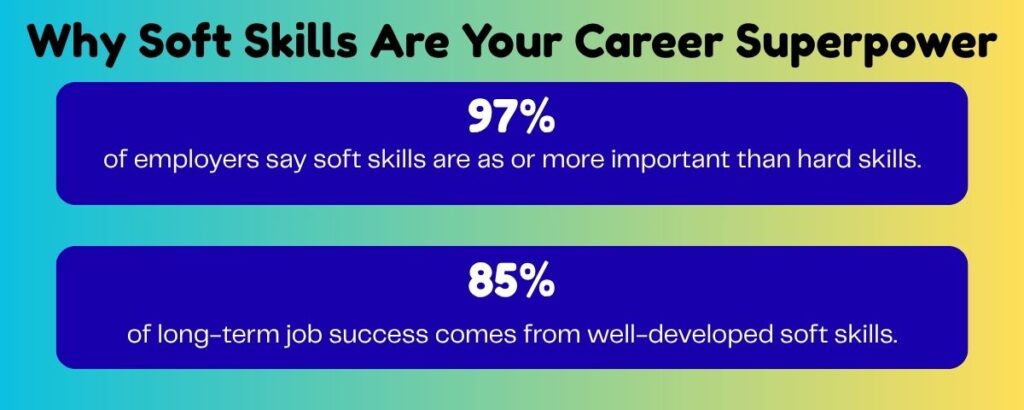
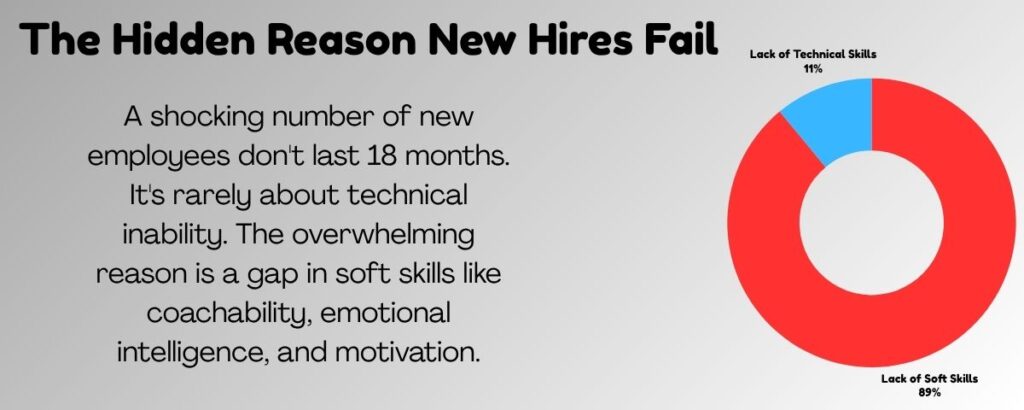
Consider this: more than half of new employees who fail within their first months do so not because they lack technical skills, but because they lack crucial soft skills. A staggering % of new hires fail within this period, and an overwhelming % of these failures are attributed to deficits in areas like coachability, emotional intelligence, motivation, and temperament, not to a lack of technical competence, which accounts for only % of failures. This reveals a powerful truth: companies can teach you the tools and processes, but they rely on you to bring the right mindset and interpersonal capabilities. For freshers, this is a profound realisation: investing in your soft skills isn’t just about impressing recruiters; it’s about building a resilient foundation that prevents early career pitfalls and ensures long-term job security and growth. In fact, having the right soft skills—such as communication, adaptability, and teamwork—can make all the difference, as employers are looking for the most important soft skills that match the demands of the role.

Furthermore, employers overwhelmingly value soft skills in their hiring decisions. A remarkable % of employers state that soft skills are either an essential or very important factor when they consider candidates. This sentiment is echoed across various studies, with figures ranging from % to % highlighting their critical role. Soft skills are often specifically mentioned in job descriptions, and showcasing them can significantly contribute to your professional growth. Looking beyond the initial hire, a Carnegie Mellon Foundation study revealed that % of long-term job success hinges on an employee’s soft skills. Another LinkedIn study found that % of employers actually value soft skills more than hard skills when making new hire decisions. Clearly, for freshers, these personal attributes are just as important as technical skills in getting hired and, crucially, in getting ahead.


Your Essential Soft Skills Toolkit: What Employers Really Want

Soft Skills Toolkit

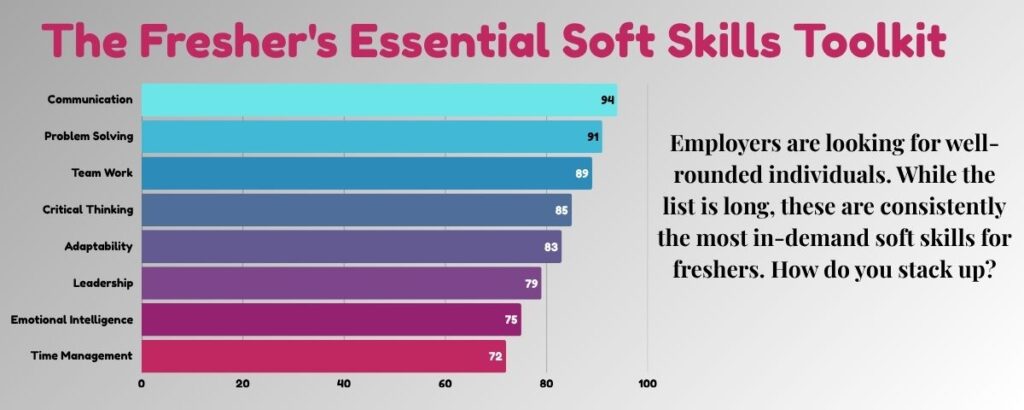
Now that you understand the immense value of soft skills, let’s explore some of the most sought-after attributes that employers are actively looking for in candidates, especially freshers. Identifying key soft skills and including a soft skills list tailored to in-demand soft skills for your industry is essential to stand out in today’s competitive job market.

Critical Thinking: Becoming a Master Problem-Solver

Critical thinking is a cornerstone soft skill that involves actively analysing information, evaluating evidence, and making informed, logical decisions. It’s about moving beyond simply recalling information to truly questioning assumptions, identifying biases, and considering multiple perspectives before concluding. This skill is absolutely essential for solving complex problems, identifying new opportunities, and driving innovation within any organisation.

Employers consistently seek candidates who can think critically and make sound judgments, because these individuals are equipped to navigate challenges and contribute meaningfully. When you possess strong critical thinking abilities, you’re not just reacting to problems; you’re proactively dissecting them, exploring alternative solutions, and even fostering creativity by challenging the status quo. This foundational skill empowers you to be proactive, innovative, and adaptable in any professional setting, making you an invaluable asset in industries that demand continuous evolution. The good news is that critical thinking skills can be developed through deliberate practice, targeted training, and real-world experience.

When highlighting critical thinking or other valuable soft skills on your resume or in interviews, be sure to provide concrete examples that demonstrate these abilities in action. For instance, examples of soft skills such as communication, teamwork, leadership, and problem-solving can make your qualifications more tangible and credible to employers.

Leadership and Teamwork

Leadership Skills

Leadership is far more than a job title; it’s a set of behaviours and a mindset that can be cultivated by anyone, regardless of their formal position. Leadership skills are essential for motivating and inspiring others to achieve common goals, fostering an environment where everyone feels empowered to contribute. This involves setting clear direction, building trust among team members, and empowering individuals to take ownership of their work.

Employers highly value individuals who can communicate effectively, make tough decisions when necessary, and consistently drive results. A key aspect of leadership, even in entry-level roles, is dependability—the ability to be trusted to finish tasks on time and hold yourself accountable. A simple yet powerful way to demonstrate leadership early in your career is by taking initiative: volunteer for new projects, propose solutions, and go beyond your defined responsibilities. Taking on project management responsibilities, even on a small scale, is an excellent way to showcase your leadership and organisational skills to employers. These skills, like all soft skills, can be developed through experience, dedicated training, and mentorship. True leadership is about influence and proactivity, contributing to collective success no matter where you stand in the hierarchy.

Teamwork and Collaboration

In today’s interconnected workplaces, teamwork and collaboration are absolutely critical soft skills. They involve working effectively with others to achieve shared objectives, recognising that collective effort often yields superior results. To truly work effectively, you need strong people skills, which include the ability to communicate, empathise, and resolve conflicts. Successful collaboration requires open communication, active listening, and a genuine willingness to compromise and find common ground.

Employers actively seek candidates who can work collaboratively, build strong professional relationships, and contribute positively to team success. Teamwork not only helps you build strong relationships but also enhances your people skills by encouraging empathy, communication, and understanding among colleagues. The beauty of developing your teamwork skills is that it often acts as a catalyst for strengthening other crucial soft skills, such as problem-solving, communication, and critical thinking. Every group project, every club activity, and every volunteer effort you participate in isn’t just about the immediate task; it’s a holistic training ground where you practice communicating ideas, listening to diverse perspectives, negotiating solutions, and collectively brainstorming. Teamwork skills can be actively developed through group projects, volunteering experiences, and various team-building activities. Strong soft skills, particularly in collaboration, naturally drive initiative among employees, leading to project advancement and positive outcomes.

Communication and Problem Solving

Active Listening

Effective communication is a two-way street, and its cornerstone is active listening. Interpersonal skills and good communication skills play a crucial role in active listening, as they enable individuals to engage effectively, interpret non-verbal cues, and respond appropriately. This vital soft skill involves truly paying attention to others, understanding their underlying needs, and responding thoughtfully and appropriately. It’s far more than just hearing words; it’s about comprehending the full message, including non-verbal cues, and providing feedback to ensure mutual understanding.0

Active listening is essential for building trust, resolving conflicts constructively, and providing excellent customer service.0 When individuals feel truly heard and understood, it fosters a sense of psychological safety, which is crucial for open feedback and effective collaboration. Employers highly value candidates who can listen actively, communicate effectively, and respond thoughtfully, as these individuals contribute to a healthy, productive team culture. Strong communication skills are a key differentiator in the workplace, setting candidates apart in both managerial and collaborative roles. Communication, in its broader sense—the ability to convey ideas and feelings effectively—is consistently among the top soft skills employers require across all fields. Like other soft skills, active listening can be honed through consistent practice, targeted training, and diverse experiences.0

Problem Solving

Problem-solving is a critical soft skill that involves a dynamic process: identifying challenges, meticulously analysing relevant data, and then developing creative and effective solutions. Creative skills and attention to detail are crucial soft skills for effective problem solving, enabling professionals to approach challenges from multiple angles while ensuring accuracy and thoroughness in their solutions. This isn’t just about finding an answer; it requires a blend of creativity, sharp critical thinking, and a willingness to take calculated risks to innovate.

Employers are always on the lookout for candidates who can solve complex problems, think outside the box, and drive innovation. The process of problem-solving is often a continuous learning loop; it’s not enough to simply arrive at a solution. Truly effective problem-solvers analyze

how they reached that solution, what worked well, what could be improved, and what lessons can be extracted for future challenges. This reflective practice is a hallmark of individuals with a growth mindset, who view challenges and even setbacks as opportunities for learning and development. Problem-solving skills can be significantly developed through practice, specialised training, and real-world experience.

Emotional Intelligence and Adaptability

Emotional Intelligence

Emotional intelligence (EI) is a vital soft skill that involves understanding and managing your own emotions, as well as accurately recognising and influencing the emotions of those around you. It’s a cornerstone for building strong professional relationships, communicating effectively, and making informed decisions that consider the human element.

Employers highly value candidates who can manage their emotions, empathise with others, and build trust within a team. High emotional intelligence correlates with better performance, effective conflict resolution, and higher employee engagement and retention. This means that individuals with strong EI can reduce workplace friction, improve team cohesion, and foster a positive work environment, all contributing to long-term organisational success. Maintaining a positive attitude is a key aspect of emotional intelligence, as it helps build trust and encourages a supportive, thriving workplace culture. EI is typically broken down into four core components: self-awareness (understanding your own emotions), self-management (controlling your reactions), social awareness (recognising others’ emotions, including empathy), and relationship management (influencing and resolving conflicts). Emotional intelligence can be developed through self-awareness practices, targeted training, and accumulating diverse experiences.

Adaptability

In today’s fast-paced, ever-changing professional landscape, adaptability is a critical soft skill. It involves being flexible, resilient, and genuinely open to change, embracing new situations rather than resisting them. This skill is absolutely essential for navigating uncertainty, embracing new technologies as they emerge, and driving innovation within your role and organisation.

Employers actively seek candidates who can adapt quickly, learn from setbacks, and thrive even in ambiguous situations. An adaptable individual doesn’t merely cope with change; they actively seek learning opportunities and contribute to a company’s overall flexibility and resilience. This makes them incredibly attractive to forward-thinking employers who need agile workforces capable of continuous evolution. Adaptability can be developed through gaining experience, participating in training programs, and cultivating a strong growth mindset that views challenges as opportunities. In fact, adaptability is considered one of the most valuable transferable skills for career advancement, as it demonstrates your ability to succeed across different roles and industries.


Cultivating Your Soft Skills: Practical Ways to Grow

Cultivating Your Soft Skills

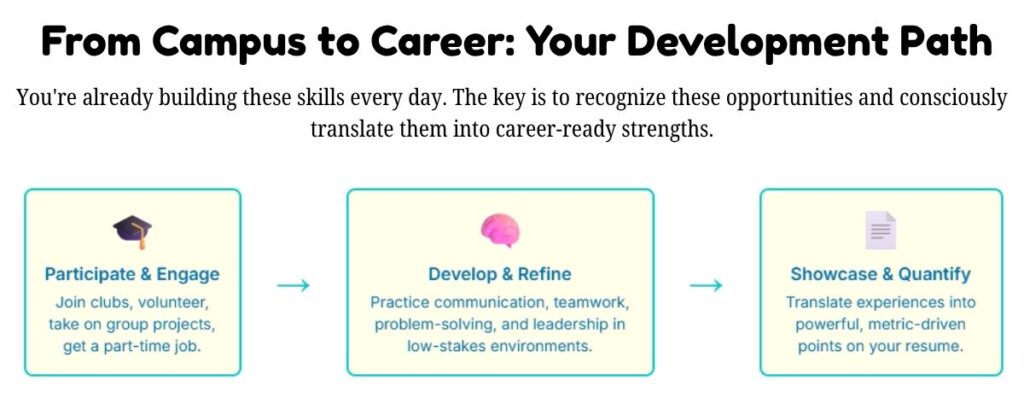
Developing your soft skills is an ongoing journey, and as a fresher, you have countless opportunities to cultivate these invaluable attributes, often outside of traditional coursework. To improve soft skills, engage in self-reflection, seek feedback, participate in targeted training, and apply these skills in real-world situations. These experiences not only build your capabilities but also provide compelling examples for your resume and interviews.

One of the most effective avenues for freshers to develop these crucial skills is through internships, volunteering, and extracurricular activities. These pursuits offer authentic, low-stakes environments to practice and refine essential soft skills. For instance, participating in team sports or joining student associations is excellent for developing teamwork, time management, leadership, and effective communication. When you take on the responsibility of organising events or managing projects, you naturally enhance your problem-solving abilities, foster autonomy, spark creativity, and learn to deal with unforeseen challenges calmly and proactively.

Volunteering in your community instils compassion, empathy, a strong sense of responsibility, and a solid work ethic. If you’ve ever joined a debate club or a public speaking group, you’ve actively enhanced your communication, persuasion, and critical thinking skills. Even learning a new language demonstrates open-mindedness, an enthusiasm for learning, and a remarkable capacity for adaptability. Furthermore, challenging travel experiences can build cultural awareness, refine your planning and budgeting skills, and significantly boost your adaptability.

The power of these experiences lies in their “transferability.” They allow you to draw direct parallels between your non-traditional pursuits—like leading a student club or organising a charity event—and the demands of a professional role. A resume that highlights more than just your academic course of study, one that tells the story of your resourcefulness, curiosity, and desire to challenge yourself, will truly stand out. These activities effectively reframe your personal growth as valuable professional training, showcasing the best soft skills for a resume that employers are actively seeking. Be sure to incorporate soft skills into your resume and interviews by drawing on these experiences and providing specific examples that demonstrate your abilities.


Making Your Resume Shine: Highlighting Your Soft Skills

Once you’ve cultivated these essential soft skills, the next step is to highlight them effectively on your resume. The golden rule here is to “show, don’t tell”. Simply listing “team player” or “good communicator” won’t impress; you need to provide concrete evidence of these abilities in action. When listing soft skills, be sure to include soft skills examples that demonstrate how you have applied these abilities in real situations.

It’s also crucial to understand the role of Applicant Tracking Systems (ATS). These software programs are used by nearly all large companies, including % of Fortune 00 firms, to screen resumes before a human ever sees them. An ATS scans your resume for specific keywords, including both hard and soft skills, from the job listing. Therefore, tailoring your resume to the specific job you’re applying for and matching your resume keywords to those found in the job description is paramount. This strategic optimisation is your gateway to getting past the initial screening. To stand out, highlight soft skills and integrate soft skills throughout your resume by embedding them in your work experience, summary, and skills sections.

To effectively integrate your soft skills, weave them throughout your entire resume: in your summary, skills section, and especially within your work experience descriptions. When describing your experiences, use powerful action verbs such as “managed,” “created,” “developed,” and “improved” to showcase your soft skills. Provide specific examples of how you applied these skills in previous roles or projects, even if they were academic or volunteer-based. To truly make an impact, quantify your achievements with metrics and statistics. For instance, instead of saying “improved team communication,” try “increased team productivity by % through effective communication and collaboration”. Using specific, quantifiable examples adds immense credibility to your claims. Remember to avoid overused buzzwords like “team player,” as these can dilute your resume’s effectiveness. When considering how many soft skills to include, focus on all the soft skills that are most relevant to the job and company culture, ensuring you prioritise those that align with the job description.

For freshers, a well-crafted resume objective can be particularly beneficial. This concise statement, placed at the top of your resume, should clearly articulate your career goals, job aspirations, and relevant soft skills. Ensure it’s focused and tailored to the specific job description, incorporating keywords from the listing to describe your soft skills and objectives. Including the right skills on your resume and tailoring them to the job description will help you make a stronger impression.

Here’s a helpful guide to action verbs and how to quantify your soft skills, making your resume stand out. When listing soft skills in your work experience, be sure to provide soft skills examples that demonstrate your impact and abilities:

Soft Skill Category

Action Verbs to Use (Examples)

Quantifiable Achievement Example

Communication

Addressed, Articulated, Collaborated, Drafted, Formulated, Influenced, Lectured, Negotiated, Persuaded, Presented, Wrote

“Developed and delivered 0+ presentations to diverse audiences, leading to a % increase in project understanding.”

Leadership

Administered, Chaired, Coordinated, Delegated, Developed, Directed, Established, Led, Managed, Oversaw, Supervised

“Led a team of  volunteers for a community event, increasing participant engagement by 0%.”

Problem-Solving

Analysed, Clarified, Critiqued, Diagnosed, Evaluated, Identified, Investigated, Resolved, Solved, Streamlined, Troubleshot

“Analysed customer feedback data, identifying key issues and implementing solutions that reduced complaints by 0%.”

Teamwork

Collaborated, Coordinated, Facilitated, Participated, Supported, Team-built, Unified

“Collaborated with a cross-functional team on a major project, delivering it  weeks ahead of schedule.”

Adaptability

Adjusted, Adapted, Embraced, Flexed, Learned, Navigated, Pivoted, Responded, Shifted

“Quickly adapted to new virtual collaboration tools during remote transition, maintaining 00% project continuity.”

Organization

Arranged, Catalogued, Compiled, Coordinated, Executed, Implemented, Maintained, Organized, Planned, Prioritized, Scheduled

“Managed weekly payroll and expense reporting for 0+ employees, ensuring 00% on-time processing.”

Creativity

Conceptualised, Created, Designed, Developed, Devised, Fashioned, Illustrated, Innovated, Invented, Originated, Redesigned

“Designed a new marketing campaign concept that increased social media engagement by %.”


Beyond the Resume: Acing Your Interview with Soft Skills

soft skills for resume freshers

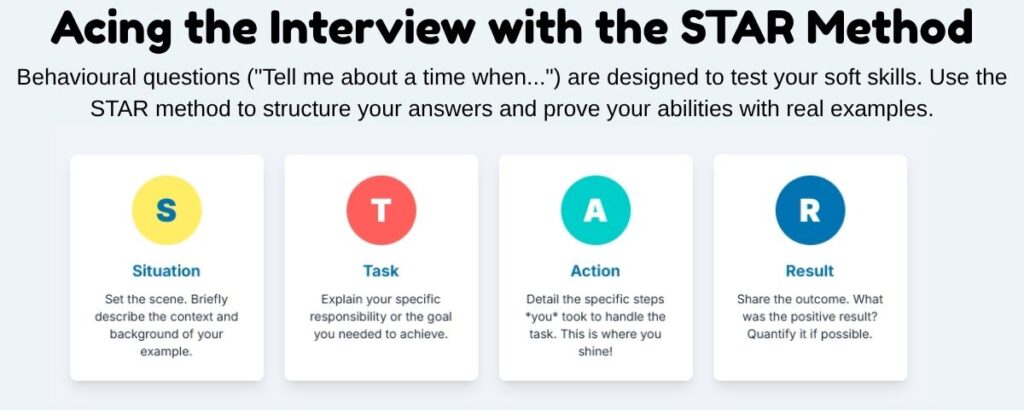
Getting your resume noticed is a significant first step, but the interview is where your soft skills truly come alive. Employers don’t just want to read about your abilities; they want to see them in action. This is why they heavily rely on behavioural interview questions to assess your soft skills. These questions are designed to elicit specific examples of your past behaviour, as a strong predictor of how you’ll perform in future scenarios.

To ace these questions, master the STAR method: Situation, Task, Action, Result. This structured approach helps you tell a compelling story that showcases your soft skills effectively:

  • Situation: Begin by setting the context for your story. Describe the background and the challenge you faced. What was the scenario you encountered?

  • Task: Next, explain the specific task or your responsibilities related to the soft skill you want to highlight. What needed to be done?

  • Action: Detail your specific actions to address the situation or task. What did

you do? Be sure to use those powerful action verbs here.

  • Result: Finally, explain the outcome of your actions, emphasising how your use of soft skills contributed to the success. What was the positive impact?

Practising the STAR method with compelling examples from your academic projects, volunteer work, or extracurricular activities is not just a helpful tip; it’s a necessity to convert resume interest into a job offer. This is your ultimate opportunity to demonstrate that your claimed soft skills are genuinely integrated into your professional toolkit.

Here are some typical behavioural questions you might encounter:

  • Teamwork: “Tell me about a time when you had difficulty getting others to work together on a critical problem and how you handled it.”

  • Communication: “Describe a situation where you persuaded others.”

  • Problem-Solving: “Give me an example of a time you provided an innovative solution.”

  • Adaptability: “Describe a situation in which you were able to overcome a personality conflict in order to get results.”

  • Leadership: “Tell me about a time when you took charge of a project and achieved successful results.”


Soft Skills for Remote Success

The professional landscape is continuously evolving, with remote and hybrid work models becoming increasingly common. In these environments, certain soft skills become even more critical, amplifying their importance for your daily productivity, team cohesion, and individual career success.

Virtual Communication is paramount for remote workers, as it involves communicating effectively through digital channels like email, instant messaging, and video calls. It demands strong written and verbal communication skills, along with the ability to build trust and rapport with colleagues and clients without the benefit of in-person interactions. Employers highly value remote workers who can communicate clearly, collaborate virtually, and drive results in a distributed environment. These skills, like all communication abilities, can be developed through consistent practice and experience in digital settings.

Self-motivation is another vital soft skill for remote workers. When you’re not in a traditional office setting, you need to be self-directed, disciplined, and inherently motivated to stay productive. This requires a strong ability to work independently, manage your time effectively, and prioritise tasks without constant oversight. In particular, strong time management skills are essential for remote workers to plan, prioritise, and efficiently handle multiple tasks, ensuring deadlines are met and productivity remains high. Employers seek remote workers who can motivate themselves, manage their time efficiently, and consistently deliver results in a remote work environment. Cultivating self-motivation, like other soft skills, is a journey of practice and experience.

Beyond these, other soft skills that are amplified in a remote setting include robust time management, heightened adaptability to new digital tools and workflows, proactive problem-solving for technical glitches, and seamless collaboration across different time zones. In a remote or hybrid environment, where informal channels of communication and oversight are reduced, these specific soft skills are not just beneficial; they are foundational for your daily effectiveness, ability to collaborate, and overall career progression. They serve as the invisible glue that holds remote teams together and ensures individual success.

Your Journey Starts Now!

As you stand at the threshold of your professional life, remember that your soft skills are truly your secret weapon. They are not merely supplementary; they are essential for career success, distinguishing you in a competitive job market and paving the way for long-term fulfilment. While your academic achievements and technical competencies are undoubtedly important, it’s your ability to communicate, collaborate, solve problems, lead, adapt, and understand emotions that will truly define your professional journey.

The most encouraging aspect is that these crucial skills are not fixed traits; they can be developed and strengthened through consistent practice, diverse experiences, and dedicated training. Every group project, every volunteer opportunity, and every extracurricular activity has already contributed to building your unique set of best soft skills for your resume. Employers are actively seeking candidates who demonstrate both strong hard skills and well-honed soft skills, recognising that this combination is a decisive factor in employability and overall organisational success.

So, as you craft your resume and prepare for interviews, embrace the power of your soft skills. Articulate them with confidence, illustrate them with compelling examples, and continue to cultivate them throughout your career. Your journey starts now, and with a focus on these invaluable attributes, you are well-equipped to not only land your dream job but also to thrive, innovate, and make a lasting impact in the professional world.


The post Essential Soft Skills for Resume Freshers: Stand Out to Employers first appeared on Fresher Blog.