

Precision Talent

Loading

All posts by admin

A philosophy of work

What makes work valuable? Michal Masny, the NC Ethics of Technology Postdoctoral Fellow in the MIT Department of Philosophy, investigates the role work plays in our lives and its impact on our well-being. 

Masny sees numerous benefits to work, beyond a paycheck. It’s a space for people to develop excellence at something, make a social contribution, gain social recognition, and create and sustain community. 

“Consider a future in which we shorten the work week, or one in which we eliminate work altogether,” Masny says. “I don’t believe either of these scenarios would be unambiguously good for everyone.”

“Work is both necessary and positively valuable,” he argues, further suggesting that our lives might be worsened if we were to eliminate work completely. “There can be optimal combinations of work and leisure time.”

Masny is completing his two-year term in the NC Ethics of Technology Fellowship at the end of the spring semester. In addition to advancing his research, Masny has been working to foster dialogue and educate students on issues at the intersection of philosophy and computing. This semester, Masny is teaching an undergraduate course, 24.131 (Ethics of Technology).

Masny advocates for an updated approach to educating complete, socially aware students. “I want to create scientists who think about their projects and potential outcomes as lawyers and philosophers might, and vice versa,” he says. Masny argues for the importance of eliminating the “wisdom gap” between these groups, citing scientist Carl Sagan’s warning about the dangers of becoming “powerful without becoming commensurately wise” as scientific and technological advances continue.

“The traditional division of labor is that scientists and engineers invent new technologies, and then philosophers and lawyers evaluate and regulate them,” he continues. “But the pace at which new technologies are invented and deployed has made this division of labor untenable.” 

Established in 2021 with support from the NC Cultural Foundation, the fellowship was created with the goal of advancing critical discourse and research in the ethics of technology and AI at MIT, and by making important research and information available to the global community. 

Venture capitalist Songyee Yoon, founder and managing partner of AI-focused investment firm Principal Venture Partners and a supporter of the NC Ethics of Technology Fellowship, believes technology and scientific discovery are among humanity’s most valuable public goods, and artificial intelligence represents the most consequential technology of our time. 

“If we want the fabric of our society to be built responsibly, we must train our builders upstream, at the very moment they begin learning to design and scale technology. There is no better place to begin this work than MIT,” she says. “Supporting the Ethics of Technology Fellows Program was born from that conviction, and I am deeply encouraged to see it embraced at MIT.”

“In philosophy, you’re supposed to question everything”

Masny arrived at MIT in fall 2024, following a year as a postdoc at the Kavli Center for Ethics, Science, and the Public at the University of California at Berkeley. Originally from Poland, Masny received his PhD in philosophy from Princeton University after completing studies at Oxford University and the University of Warwick in the United Kingdom. 

He works mainly in value theory, ethics of technology, and social and political philosophy. His current research interests include the nature of human and animal well-being, our obligations to future generations, the risk of human extinction, the future of work, and anti-aging technology. 

During his tenure in the fellowship, Masny has published several research articles on ethical issues concerning the future of humanity — a topic closely relevant to thinking about the existential risks of AI development and deployment. 

“In philosophy, you’re supposed to question everything,” he says.  

Masny’s work in the fellowship continues a tradition of collaborative investigation and exploration that MIT encourages and celebrates. In fall 2024, Masny co-taught an introductory undergraduate course, STS.006J/24.06J (Bioethics), with Robin Scheffler, an associate professor in the Program in Science, Technology, and Society

During the 2024-25 academic year, Masny led a student research group, “Deepfakes: Ethical, Political, and Epistemological Issues,” as a part of the Social and Ethical Responsibilities of Computing (SERC) Scholars Program. The group explored the ethical, political, and epistemological dimensions of concerns over misleading deepfakes, and how they can be mitigated.

Students in Masny’s cohort spent spring 2025 working in small groups on a number of projects and presented their findings in a poster session during the MIT Ethics of Computing Research Symposium at the MIT Schwarzman College of Computing.

In summer 2025, Masny assisted with a summer course in philosophy, 24.133/134 (Experiential Ethics), in which students subject their computer science and engineering projects to ethical scrutiny with the help of trained philosophers. 

He’s encouraged by the opportunities to test his ideas and share them with people who can help refine and improve them. 

Communities of practice and engagement

When considering the value of his experience at MIT, Masny lauds the philosophy department and the opportunities to collaborate with so many different kinds of scholars. To answer the kinds of questions his research uncovers, he says, you must range further afield. He values the space MIT creates for broad inquiry while also seeking connections between his findings on work, its value, and the human impact of technology on our social lives. 

“Typically, undergraduate philosophy courses include two hour-long lectures followed by discussion; a lecture is like an audiobook,” he says. Instead, he believes, they should more like listening to a podcast or watching a talk show. 

“I want the class to be an event in a student’s schedule,” he continues. 

Masny is also considering how to integrate valuable philosophical tools into life outside the classroom. Philosophy and research can support other kinds of inquiry. Developing philosophers’ mindsets is a net positive, by his reckoning. Designing better questions, for example, can lead to better, more insightful, more accurate answers. It can also improve students’ abilities to identify challenges.

Masny will begin teaching at the University of Colorado at Boulder in fall 2026, and wants to test new ideas while continuing his research into the value of work. 

Kieran Setiya, the Peter de Florez Professor in Philosophy and head of the Department of Linguistics and Philosophy, says the NC Ethics of Technology Postdoctoral Fellowship has allowed MIT to bring in a series of exceptional young philosophers working at the intersection of ethics and AI, studying the systemic effects of new computing technologies and the moral, social, and political challenges they pose.

“This is just the kind of applied interdisciplinary thinking we need to support and sustain at MIT,” he adds.
World’s Largest Group of Chimps Waging Deadly ‘Civil War,’ Scientists Discover

🌘
Subscribe to 404 Media to get The Abstract, our newsletter about the most exciting and mind-boggling science news and studies of the week.

World’s Largest Group of Chimps Waging Deadly ‘Civil War,’ Scientists Discover

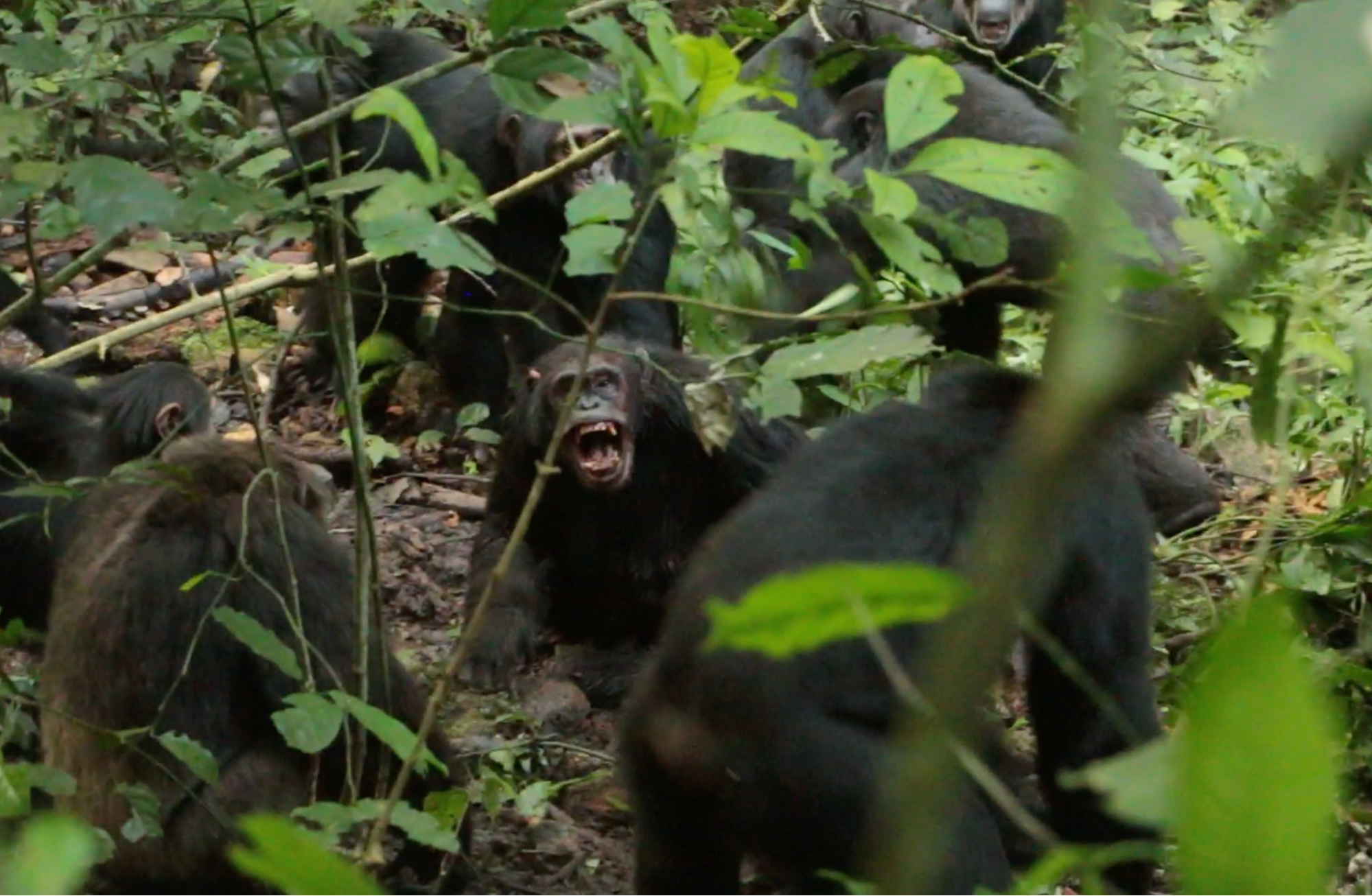
Scientists have observed an extremely rare chimpanzee “civil war,” a conflict that has killed at least seven adults and 17 infants, and which sheds new light on the nature of warfare in humans, according to a study published on Thursday in Science

Male chimpanzees are often aggressive to outsiders, but it is unusual for chimps to kill former members of their own social groups. Though Jane Goodall and her colleagues observed one famous example—the Gombe Chimpanzee War of the 1970s, which resulted in seven adult deaths—it’s estimated that these violent episodes occur only once every 500 years, based on genetic analyses of chimpanzee lineages.

Now, a team led by Aaron Sandel, an associate professor of anthropology at the University of Texas at Austin, has reported a far more deadly “group fissure” among the Ngogo chimpanzees of Uganda. This population exceeded 200 individuals at one point, making it the largest group of chimpanzees ever observed in the wild. But over the past decade, the chimps have fractured into two factions, one of which has staged multiple lethal raids on the other.

“Certainly, these are not strangers,” said Sandel in a call with 404 Media. “These are chimps that once knew each other, and we know that for certain.” 

The Ngogo group has been studied since the 1970s by primatologists like Thomas Struhsaker, and have been intensively observed since 1995 as part of the Ngogo Chimpanzee Project set up by David Watts and John Mitani. For more than three decades, researchers from around the world have convened to watch the group during summer field expeditions, while Ugandan research assistants have maintained a continuous presence at the site. 

Because of this longstanding observation, Sandel said, researchers were able to be on the ground “witnessing every moment” as the deadly chimp war unfolded. 

World’s Largest Group of Chimps Waging Deadly ‘Civil War,’ Scientists Discover

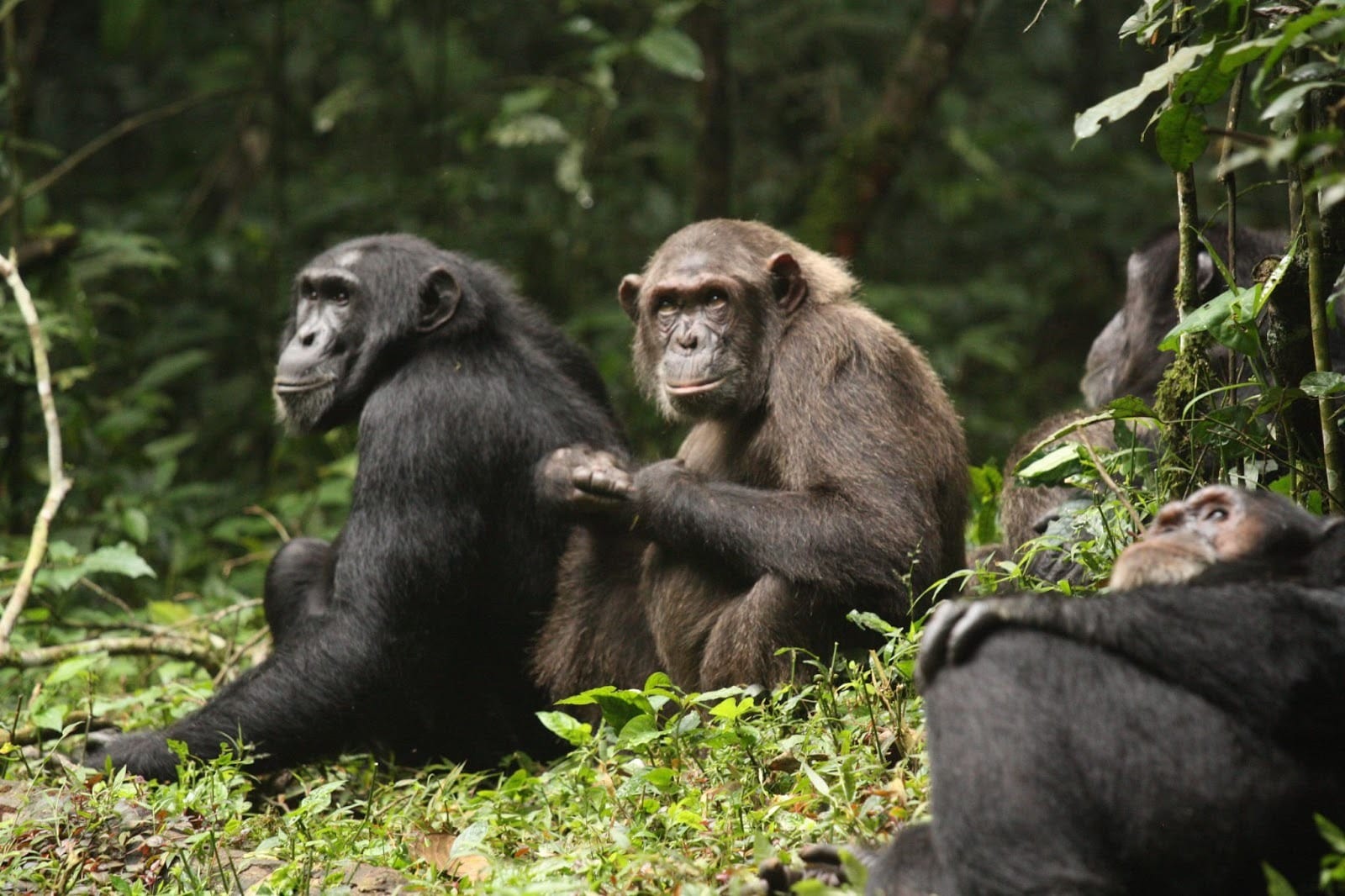
Chimpanzees from different clusters socialized together before the group fissure in 2015. Image: Aaron Sandel

This group has always had distinct subpopulations that spent more time together, including the Western and Central clusters. Even so, before the fissure, the clusters regularly overlapped for shared activities like grooming, patrolling, and interbreeding.

Sandel vividly remembers the exact day that this dynamic had noticeably shifted: June 24, 2015. He was following the Western cluster, which was at the center of its “neighborhood” territory, he said.

“They hear chimps from the Central neighborhood nearby, and they go quiet,” he recalled. “They seem nervous. They’re touching each other with this reassurance that they typically do when they hear the outsider chimps, but I was just alone with them. I remember, just in that moment, being really puzzled and focused, like ‘what’s going on?’”

“They could have reunited and done what’s typical—screaming and charging around, maybe some slapping, and then come together, sit together, groom, maybe go their separate ways after, because they’d already started to be a bit more disconnected,” Sandel continued. “But instead of reuniting in typical chimpanzee fusion fashion, the Western chimpanzees ran and the Central chimps chased them.”

What started as a weird vibe transformed into a weeks-long chill between the groups, followed by a temporary thaw. Ultimately, the tension spiraled into bloody conflicts.

“You act like a stranger, you become a stranger,” Sandel said. “It seemed like that planted the seed of polarization.”

Over the course of the next few years, the males in each cluster began to treat each other like outsiders. The last offspring that had parents from different clusters was conceived in March 2015. The Western and Central chimps were fully separated by 2018. 

The Western chimps, despite being smaller in number, have since amped up hostilities by staging 24 violent attacks against their former kin, killing at least seven mature males and 17 infants from the Central cluster. The death toll may well be higher, but some deaths and disappearances cannot be conclusively attributed to the conflict.

Sandel and his colleagues proposed a few possible causes of this “civil war,” a term that specifically refers to human conflicts, but that may have parallels in other species. First, the unusually large size of the group may have amplified feeding competition among individuals, even in their lush forest habitat. Social networks within the group may have also been disrupted by a wave of six deaths in 2014—five adult males and one adult female—some of whom likely died from disease.

The beginning of the fissure also coincides with the rise of a new alpha male, Jackson, who replaced the previous alpha, Miles. Sandel recalled Miles grunting in submission to Jackson on the same day that the Western cluster ran away from the Central cluster. Such transitions between alphas can introduce social instabilities as the dominance hierarchy is upended, a process that can take several months. 

Indeed, Miles reacted violently toward other members of the group in the wake of his displacement. Jackson, who led the Central cluster, ended up as one the casualties of the conflict; he died from injuries inflicted by the Western cluster in 2022.

Whatever the cause of the rupture, this group of former kin have now become hostile enemies. It’s always dicey to draw broad comparisons between the behavior of humans and other animals, but the team speculates in the study that one possible takeaway is that “it may be in the small, daily acts of reconciliation and reunion between individuals that we find opportunities for peace.” 

 “If we study chimpanzees in detail and start to understand the mechanisms driving their cooperation, their conflict, and something as complex as one group becoming polarized, splitting, and engaging in ongoing lethal conflict, then we might gain insights into similar dynamics that are happening in humans,” Sandel said.

“If chimps are able to do this complex process in the absence of ethnicity, language, and religion—the things we often attribute to human warfare—chimps don’t have those narratives and those excuses,” he concluded. “They’re stripped away of those cultural dimensions. It must be their interpersonal social bonds and daily conflicts, reconciliations, and avoidances—all those dynamics. If that’s the case with chimps, to what extent is it the case in humans? It’s a hypothesis to be tested.”

🌘
Subscribe to 404 Media to get The Abstract, our newsletter about the most exciting and mind-boggling science news and studies of the week.

Farmer Arrested for Speaking Too Long at Datacenter Town Hall Vows to Fight


Farmer Arrested for Speaking Too Long at Datacenter Town Hall Vows to Fight

In February, Oklahoma native Darren Blanchard attended a city council meeting in Claremore with the plan to speak out against a proposed datacenter in the community. When he went a few seconds over his allotted 3 minute time limit, the city ordered Blanchard arrested and transported to the county jail. The city charged Blanchard with trespassing, according to police records 404 Media has obtained about the incident. Blanchard has vowed to fight the charges.

The arrest occurred on February 17 during a Claremore City Council meeting where city officials were set to hear from the public about Project Mustang, a proposed data center. City residents are concerned about the datacenters’ use of water, what might happen to their electricity bills, and how noisy the building will be. Answers aren’t forthcoming and Beale Infrastructure, the company behind the datacenter, won’t talk to local media and has gotten city officials to sign non-disclosure agreements.


According to the police report we obtained, city officials and police expected a huge crowd for the city council meeting and leased space from Rogers State University to accommodate everyone. Claremore also established a speaking limit and notified participants when their time was up as the meeting proceeded.

When Blanchard rose to speak, he went a few seconds over his time limit and the city officials immediately sent the cops after him. “Darren Blanchard was called to speak and did. Blanchard continued speaking past the predetermined limit established at the start of the meeting. City Manager John Feary addressed Blanchard, informing him to stop, and he continued,” the police report said.

“Feary then notified police to have Blanchard removed. I informed Blanchard that he was asked to leave and needed to do so. Blanchard then continued to the front of the room where counselors sat behind a table and insisted on giving them paperwork,” according to the police report. “Sergeant Singer then directed me to place Blanchard under arrest for trespassing. Blanchard was placed in handcuffs, escorted from the property, and transported to Rogers County Jail.”

The City charged Blanchard with trespassing, a municipal crime that carries a penalty of $200. A week after the arrest, Blanchard appeared in court and pleaded not guilty. “We feel that he was arrested unconstitutionally against his first amendment rights to petition his government and to free speech,” Colleen McCarty, Blanchard’s lawyer, told Tulsa NewsChannel 8 outside the courtroom after he entered his plea.

Since his arrest, Blanchard has made several public appearances speaking out against datacenters and recounting what happened at the meeting. “True story. I was at a public meeting a few weeks ago and went slightly over my speaking time and got thrown in the slammer there in China, I mean Rogers county,” he said at an anti-data center rally in March. “Boy I tell ya, James Maddison is rolling in his grave. It’s funny they tried to silence me by stripping me of my rights but in turn they’ve given me an even bigger platform to spread my message.”

Phantom: Product Design (Wallet Platform)

Headquarters: Remote-US

Phantom is revolutionizing the way millions of people interact with the crypto ecosystem. Our self-custodial wallet offers a seamless, unified experience for managing accounts and tokens across Solana, Bitcoin, Ethereum, and Polygon, empowering users with a single, convenient solution. By integrating cutting-edge security features and launching innovative tools for an enhanced personalized user experience, Phantom is able to provide a next-generation, safe and easy to use self-custodial wallet for everyone. This strategy has allowed Phantom to achieve significant milestones including surpassing 16 million MAU’s, reaching #1 in the Google play store finance category, and consistently trending as a Top 50 app across all categories, right next to X, PayPal, Coinbase, and ChatGPT.

Role Description

Phantom is a design-led company focused on making crypto safe, friendly, and easy to use. Our crypto wallet is used by millions of people to access apps and financial services built on the Solana blockchain. As a Product Designer at Phantom you will have the opportunity to make crypto more accessible and inclusive for millions of people around the world by lowering the barrier to entry through human-centered design.

Responsibilities

  • Lead design for a product team from conception to launch in partnership with product managers, engineers, marketing, support, and executive leadership

  • Define new product flows and incorporate them into our design system

  • Take complex, conceptual ideas and turn them into something useful and easy to use for our users across desktop and mobile

  • Contribute to strategic decisions around the future direction of Phantom, crypto wallets, and web3

  • Proactively raise our bar for quality, by making crypto UX more approachable for everyday people

  • Design end-to-end flows and experiences that are simple and elegant

Qualifications

  • 6+ years of experience building and shipping applications and software to users, with a strong emphasis on mobile-first consumer products.

  • Understanding of crypto ecosystems, with a crypto-native perspective—whether through professional experience, personal projects, or active participation in the web3 community.

  • Proven ability to present work to broader product teams and leadership, clearly articulating design goals, rationale, and user impact.

  • Strong visual design skills, with proficiency in desktop and mobile UI, color systems, layout, and iconography.

  • Advanced interaction design expertise and the ability to define intuitive behavior based on user needs and communicate ideas clearly through high-fidelity prototypes.

  • Experience leading product direction and applying strategic thinking to define product goals, uncover user opportunities, and make informed design decisions.

  • Background in defining and contributing to design systems and reusable components that elevate the quality and consistency of the overall design practice.

Why Work with Us

Opportunity

We are a team of experienced builders in the blockchain and crypto industry. Our journey began from users seeking an easy, seamless path to accessing the crypto ecosystem. This passion fueled our exponential growth, allowing us to onboard over 16M+ active users in just over three years; with our user base growing weekly. Our dedication to a secure and seamless user experience has made us the leading wallet on Solana as well as our multi-chain approach enhances our platform’s versatility, meeting the needs of a diverse and growing user base. By staying at the forefront of technology and user expectations, we continue to innovate and set industry standards on self-custodial crypto wallets.

There has never been a better time to work in crypto to help shape the future of innovation with a focus around the wallet experience!

  • First impressions matter: Wallets are responsible for a users first impression with crypto and onboarding new users into crypto. By ensuring that a user has a great first-time experience with crypto, we can help supercharge the growth of the entire ecosystem.

  • Make crypto easier to navigate: There is no easy way for a user to discover and navigate all that crypto has to offer. Wallets have a unique opportunity to help users not only onboard to crypto but also stay retained by exploring new things to do.

  • We live in a multi-chain world: We currently support Solana, Ethereum, Polygon and Bitcoin with more networks to come in the new future. We are focused on creating a unified, multi-chain crypto experience for users.

Benefits

  • Competitive salary and equity

  • Eligibility to participate in performance bonus program

  • Comprehensive insurance (medical/dental/vision) — 100% covered

  • Stipend for your ideal remote set-up

  • Flexible hours and a supportive remote environment

  • Unlimited vacation: Take time when you need it (and we really mean it!)

  • 401(k) retirement plan

  • Monthly wellness benefit

  • Weekly meal benefit

  • Global off-sites

We strongly encourage candidates of all different backgrounds to apply.

We believe that our work is stronger with a variety of perspectives, and we’re eager to further diversify our company. If you have a background that you feel would make an impact at Phantom, please consider applying. We’re committed to building an inclusive, supportive place for you to do the best work of your career.

The target base salary for this role will range between $200,000 $238,000 with the addition of equity and benefits. This is determined by a few factors including your skillset, prior relevant experience, quality of interviews and market factors (such as location) at the point in time of offer.

By submitting your resume and application materials, you acknowledge and agree that Phantom may use automated tools, including AI systems, and may engage trusted third-party service providers to process your application and ensure an efficient hiring process. Phantom does not sell your information and your materials will be handled securely and in accordance with applicable data protection laws.

To apply: https://weworkremotely.com/remote-jobs/phantom-product-design-wallet-platform

CRUX: Full Stack Developer/Senior Full Stack/Lead

Headquarters: Chennai, Chennai , Tamil Nadu, India

Company Description

About CRUX

CRUX is one of the leading information technology companies. Through its Global Network Delivery Model, Innovation Network, and Solution Accelerators, CRUX focuses on helping global organizations address their business challenges effectively.

CRUX continues to invest in new technologies, processes, and people, which can help its customers, succeed. From generating novel concepts through CRUX’s R&D and academic alliances, to drawing on the expertise of key partners, it keeps clients operating at the very edge of technological possibility.

CRUX highly skilled, dedicated IT professionals, its subsidiaries and Joint Ventures provide customized IT solutions for several industries using our range of technical expertise and experience.

CRUX

Client’s satisfaction is our utmost priority. We will go through and provide you with the right vendor with the right talent who are capable of handling any job you desire. We will handle the project for you making sure that all your requirements are met. We work for you.

We believe that every IT & ITES project is unique in it and cannot be generalized.  In this model the client stands to gain by working with the pioneers of the industry at relatively lower cost and towards the end of the development life cycle the technology is transferred which value adds to the local content.

CRUX offers a wide variety of services.  Match your business needs to our capabilities.  Our professional staff’s are highly qualified to assist companies in any area related to their information systems environment

Job Description

We are seeking a highly skilled and versatile Full-Stack Developer to join our engineering team. In this role, you will be responsible for the end-to-end development of web applications, from architecting user-facing front-end components to building robust, scalable server-side logic and database schemas.

The ideal candidate has a deep understanding of the entire software development life cycle and is comfortable working in a fast-paced, Agile environment. Whether you are a seasoned Senior Developer or a Lead ready to drive architectural decisions, you will play a critical role in ensuring the performance, security, and scalability of our platforms.


Key Responsibilities

  • Front-End Development: Design and implement responsive, high-performance user interfaces using Angular (v16+) and TypeScript.

  • Back-End Development: Build and maintain secure, scalable server-side applications using NestJS and Node.js.

  • Database Management: Architect and optimize data models across both relational (PostgreSQL) and NoSQL (MongoDB) databases.

  • API Design: Develop and integrate RESTful APIs; experience with microservices architecture is highly preferred.

  • Full-Stack Integration: Ensure seamless communication between the client-side and server-side systems.

  • Code Quality: Conduct thorough testing using frameworks like Jest or Jasmine and participate in rigorous code reviews.

  • DevOps & Deployment: Work within CI/CD pipelines and utilize containerization tools like Docker and Kubernetes.

  • Mentorship: (For senior/lead candidates) Provide technical guidance, promote best practices, and lead architectural discussions.

Technical Requirements

  • Professional Experience: 4 to 12 years of software development experience in a professional environment.

  • Core Fundamentals: Strong mastery of Computer Science fundamentals, including data structures, algorithms, and software design patterns.

  • Front-End Mastery: Extensive experience with Angular (specifically version 16 or higher) and reactive programming (RxJS).

  • Back-End Mastery: Proven expertise in NestJS, TypeScript, and Node.js.

  • Database Expertise: Proficiency in database design, query optimization, and management (PostgreSQL and MongoDB).

  • DevOps Knowledge: Solid understanding of Git, CI/CD practices, and cloud infrastructure (AWS, Azure, or GCP).

  • Security: Deep knowledge of web security best practices (OWASP, JWT, OAuth).

Qualifications

  • Education: Bachelor’s degree in Computer Science, Engineering, or a related technical field.

  • Cloud & Containers: Experience with Docker, Kubernetes, and cloud-native services.

  • Leadership: Previous experience in a Lead or Senior role is highly desirable.

  • Methodology: Familiarity with Agile/Scrum processes.

Additional Information


Experience Level: 4–12 Years

Location: [Chennai/Remote]


To apply: https://weworkremotely.com/remote-jobs/crux-full-stack-developer-senior-full-stack-lead

New technique makes AI models leaner and faster while they’re still learning

Training a large artificial intelligence model is expensive, not just in dollars, but in time, energy, and computational resources. Traditionally, obtaining a smaller, faster model either requires training a massive one first and then trimming it down, or training a small one from scratch and accepting weaker performance. 

Researchers at MIT’s Computer Science and Artificial Intelligence Laboratory (CSAIL), Max Planck Institute for Intelligent Systems, European Laboratory for Learning and Intelligent Systems, ETH, and Liquid AI have now developed a new method that sidesteps this trade-off entirely, compressing models during training, rather than after.

The technique, called CompreSSM, targets a family of AI architectures known as state-space models, which power applications ranging from language processing to audio generation and robotics. By borrowing mathematical tools from control theory, the researchers can identify which parts of a model are pulling their weight and which are dead weight, before surgically removing the unnecessary components early in the training process.

“It’s essentially a technique to make models grow smaller and faster as they are training,” says Makram Chahine, a PhD student in electrical engineering and computer science, CSAIL affiliate, and lead author of the paper. “During learning, they’re also getting rid of parts that are not useful to their development.”

The key insight is that the relative importance of different components within these models stabilizes surprisingly early during training. Using a mathematical quantity called Hankel singular values, which measure how much each internal state contributes to the model’s overall behavior, the team showed they can reliably rank which dimensions matter and which don’t after only about 10 percent of the training process. Once those rankings are established, the less-important components can be safely discarded, and the remaining 90 percent of training proceeds at the speed of a much smaller model.

“What’s exciting about this work is that it turns compression from an afterthought into part of the learning process itself,” says senior author Daniela Rus, MIT professor and director of CSAIL. “Instead of training a large model and then figuring out how to make it smaller, CompreSSM lets the model discover its own efficient structure as it learns. That’s a fundamentally different way to think about building AI systems.”

The results are striking. On image classification benchmarks, compressed models maintained nearly the same accuracy as their full-sized counterparts while training up to 1.5 times faster. A compressed model reduced to roughly a quarter of its original state dimension achieved 85.7 percent accuracy on the CIFAR-10 benchmark, compared to just 81.8 percent for a model trained at that smaller size from scratch. On Mamba, one of the most widely used state-space architectures, the method achieved approximately 4x training speedups, compressing a 128-dimensional model down to around 12 dimensions while maintaining competitive performance.

“You get the performance of the larger model, because you capture most of the complex dynamics during the warm-up phase, then only keep the most-useful states,” Chahine says. “The model is still able to perform at a higher level than training a small model from the start.”

What makes CompreSSM distinct from existing approaches is its theoretical grounding. Conventional pruning methods train a full model and then strip away parameters after the fact, meaning you still pay the full computational cost of training the big model. Knowledge distillation, another popular technique, requires training a large “teacher” model to completion and then training a second, smaller “student” model on top of it, essentially doubling the training effort. CompreSSM avoids both of these costs by making informed compression decisions mid-stream.

The team benchmarked CompreSSM head-to-head against both alternatives. Compared to Hankel nuclear norm regularization, a recently proposed spectral technique for encouraging compact state-space models, CompreSSM was more than 40 times faster, while also achieving higher accuracy. The regularization approach slowed training by roughly 16 times because it required expensive eigenvalue computations at every single gradient step, and even then, the resulting models underperformed. Against knowledge distillation on CIFAR-10, CompressSM held a clear advantage for heavily compressed models: At smaller state dimensions, distilled models saw significant accuracy drops, while CompreSSM-compressed models maintained near-full performance. And because distillation requires a forward pass through both the teacher and student at every training step, even its smaller student models trained slower than the full-sized baseline.

The researchers proved mathematically that the importance of individual model states changes smoothly during training, thanks to an application of Weyl’s theorem, and showed empirically that the relative rankings of those states remain stable. Together, these findings give practitioners confidence that dimensions identified as negligible early on won’t suddenly become critical later.

The method also comes with a pragmatic safety net. If a compression step causes an unexpected performance drop, practitioners can revert to a previously saved checkpoint. “It gives people control over how much they’re willing to pay in terms of performance, rather than having to define a less-intuitive energy threshold,” Chahine explains.

There are some practical boundaries to the technique. CompreSSM works best on models that exhibit a strong correlation between the internal state dimension and overall performance, a property that varies across tasks and architectures. The method is particularly effective on multi-input, multi-output (MIMO) models, where the relationship between state size and expressivity is strongest. For per-channel, single-input, single-output architectures, the gains are more modest, since those models are less sensitive to state dimension changes in the first place.

The theory applies most cleanly to linear time-invariant systems, although the team has developed extensions for the increasingly popular input-dependent, time-varying architectures. And because the family of state-space models extends to architectures like linear attention, a growing area of interest as an alternative to traditional transformers, the potential scope of application is broad.

Chahine and his collaborators see the work as a stepping stone. The team has already demonstrated an extension to linear time-varying systems like Mamba, and future directions include pushing CompreSSM further into matrix-valued dynamical systems used in linear attention mechanisms, which would bring the technique closer to the transformer architectures that underpin most of today’s largest AI systems.

“This had to be the first step, because this is where the theory is neat and the approach can stay principled,” Chahine says. “It’s the stepping stone to then extend to other architectures that people are using in industry today.”

“The work of Chahine and his colleagues provides an intriguing, theoretically grounded perspective on compression for modern state-space models (SSMs),” says Antonio Orvieto, ELLIS Institute Tübingen principal investigator and MPI for Intelligent Systems independent group leader, who wasn’t involved in the research. “The method provides evidence that the state dimension of these models can be effectively reduced during training and that a control-theoretic perspective can successfully guide this procedure. The work opens new avenues for future research, and the proposed algorithm has the potential to become a standard approach when pre-training large SSM-based models.”

The work, which was accepted as a conference paper at the International Conference on Learning Representations 2026, will be presented later this month. It was supported, in part, by the Max Planck ETH Center for Learning Systems, the Hector Foundation, Boeing, and the U.S. Office of Naval Research.

OpenAI Full Fan Mode Contest: Terms & Conditions

Explore the official terms and conditions for the OpenAI Full Fan Mode Contest, including eligibility, entry steps, judging criteria, and prize details. Learn how to participate, submit your entry on Instagram, and win IPL match tickets.

FBI Extracts Suspect’s Deleted Signal Messages Saved in iPhone Notification Database


FBI Extracts Suspect’s Deleted Signal Messages Saved in iPhone Notification Database

The FBI was able to forensically extract copies of incoming Signal messages from a defendant’s iPhone, even after the app was deleted, because copies of the content were saved in the device’s push notification database, multiple people present for FBI testimony in a recent trial told 404 Media. The case involved a group of people setting off fireworks and vandalizing property at the ICE Prairieland Detention Facility in Alvarado, Texas in July, and one shooting a police officer in the neck.

The news shows how forensic extraction—when someone has physical access to a device and is able to run specialized software on it—can yield sensitive data derived from secure messaging apps in unexpected places. Signal already has a setting that blocks message content from displaying in push notifications; the case highlights why such a feature might be important for some users to turn on.

Better: Executive Assistant

Headquarters: Manila, Philippines

URL: https://www.better.co/

Location: Philippines based, Remote

Salary : $1400-1800 per month

Hours : Monday – Friday 9am-5pm (GMT)

About Us

Better is a leading provider of telecommunications solutions, dedicated to delivering exceptional service to our customers. We pride ourselves on our innovative approach and commitment to customer satisfaction. If you want to make a real impact, we want you!

Role Overview

Better is looking for a world-class Executive Assistant who can think ahead, communicate flawlessly, manage sensitive work, and support a fast-moving UK Managing Director. This is not high-volume admin – it is high-importance work that requires judgement, tone, and absolute reliability.

What you’ll be doing

    • Act as the Managing Director’s trusted gatekeeper and first point of contact
    • Manage diary, meetings, priorities, and follow-ups with 100% accuracy
    • Draft flawless, UK-standard emails and communication
    • Liaise confidently with senior executives, investors, and gatekeepers
    • Secure meetings, solve problems, and anticipate needs before they arise
    • Handle confidential information with absolute discretion
    • Coordinate travel, logistics, and occasional personal admin
    • Maintain organised, efficient systems that “just work”

Requirements

What you’ll bring to the team

    • Proven experience as an Executive Assistant supporting C‑suite or equivalent senior leadership in fast‑paced, high‑stakes environments.
    • Exceptional written and spoken English, with a UK-appropriate tone
    • Strong judgement, initiative, and attention to detail
    • Ability to think three steps ahead and manage shifting priorities
    • Tech-savvy with MS Office, CRMs (HubSpot/Salesforce), and modern tools
    • Comfortable working UK-aligned hours with flexibility when needed
    • Calm, proactive, reliable – someone who doesn’t miss the small things

Who succeeds here

  • Someone who loves detail
  • Communicates like a pro
  • Makes things happen
  • Is loyal, discreet, and commercially aware
  • Wants to be the Managing Director’s right hand — not an admin robot!
  • To confirm you’ve read the full role description, please start your cover letter with the phrase Attention to detail matters.

Benefits

  • Work in a dynamic, supportive team.
  • Competitive salary, paid in PHP or USD.
  • UK bank holidays off.
  • Fully remote working environment.
  • Access to Perkbox for discounts and rewards.
  • Participate in our employee referral scheme.
  • Monthly staff awards to celebrate achievements.

If you’re ready to become the trusted right hand to a fast-moving UK Managing Director and play a key role in driving a growing telecoms business forward, we’d love to hear from you.

To apply: https://weworkremotely.com/remote-jobs/better-executive-assistant