Precision Talent

Loading

FAA Scraps Civil and Criminal Penalties for Flying Drones Near ICE Vehicles


FAA Scraps Civil and Criminal Penalties for Flying Drones Near ICE Vehicles

On Wednesday the Federal Aviation Administration rescinded a temporary flight restriction (TFR) that created a no-fly zone within 3,000 feet of “Department of Homeland Security facilities and mobile assets.” The new restriction softened the language of the original and abandoned the threat of civil or criminal penalties but added the Department of Justice to the list of protected agencies.

A 2025 TFR restricted the presence of drones around Department of Energy and Pentagon assets. The FAA added ICE and CBP to the list of restricted agencies in January as ICE began operations in Minneapolis. The no-fly zone covered 3,000 feet around any ICE vehicle. Anyone who was caught violating it could be fined or jailed. Because ICE agents often drive through the city in unmarked vehicles it was impossible for drone operators to know if they were violating the order and local journalists who use drones to take pictures and monitor law enforcement activities were grounded.


Earlier this month, Minnesota journalist Rob Levine sued the FAA over the TFR. In a motion filed earlier this week, Levine’s lawyers argued that the FAA had violated his rights and should rescind the restrictions. Core to their argument was the unmarked vehicles which they said created a “flotilla of invisible, moving bubbles,” according to court documents. “Under any standard, the TFR’s chilling sweep violates the First Amendment as applied to the Petitioner’s use of drones in photojournalism.”

The FAA replaced the TFR this week after Levine’s lawyers filed the motion. The new advisory lessened restrictions, including dropping the language around 3,000 feet and criminal penalties, but expanded the amount of protected assets. 

“UAS operators are advised to avoid flying in proximity to: Department of War, Department of Energy, Department of Justice, and Department of Homeland Security covered mobile assets,” the new TFR said. “UAS operators who fly within this airspace are warned that…DOW, DOE, DOJ, or DHS may take action that results in the interference, disruption, seizure, damaging, or destruction of unamended [aircraft] deemed to pose a credible safety or security threat to covered mobile assets.”

Despite the threat to shoot journalist’s drones out of the sky, Levine and his lawyers see the new TFR as a victory. “This is a big win. It was heartbreaking to have my drones grounded at a time of such importance to my community, but I’m looking forward to getting back up there and getting back to my journalism as soon as possible,” Levine said in a statement provided to 404 Media.

Grayson Clary, a lawyer with Reporters Committee for Freedom of the Press who took on Levine’s case, said there is still work to do. “We’re glad to see the FAA rescind its original order, which was an egregious overreach that had serious consequences for reporters nationwide. But this kind of arbitrary back-and-forth from the FAA is exactly the problem, and we intend to make clear to the D.C. Circuit that this restriction never should have been implemented in the first place,” he said.

Jacob Andreas and Brett McGuire named Edgerton Award winners

MIT Associate Professor Jacob Andreas of the Department of Electrical Engineering and Computer Science [EECS] and MIT Associate Professor Brett McGuire of the Department of Chemistry have been selected as the winners of the 2026 Harold E. Edgerton Faculty Achievement Award. Established in 1982 as a permanent tribute to Institute Professor Emeritus Harold E. Edgerton’s great and enduring support for younger faculty members, this award is given annually in recognition of exceptional distinction in teaching, research, and service.

“The Department of Chemistry is extremely delighted to see Brett recognized for science that has changed how we think about carbon in space,” says Class of 1942 Professor of Chemistry and Department Head Matthew D. Shoulders. “Brett’s lab combines laboratory spectroscopy, radio astronomy, and sophisticated signal-analysis methods to pull definitive molecular fingerprints out of extraordinarily faint data. His discovery of polycyclic aromatic hydrocarbons in the cold interstellar medium has opened a powerful new window on astrochemistry. Moreover, Brett is inventing the creative and unique tools that make discoveries like this possible.”

“Jacob Andreas represents the very best of MIT EECS” says Asu Ozdaglar, EECS department head. “He is an innovative researcher whose work combines computational and linguistically informed approaches to build foundations of language learning. He is an extraordinary educator who has brought these forefront ideas into our core classes in natural language processing and machine learning. His ability to bridge foundational theory with real-world impact, while also advancing the social and ethical dimensions of computing, makes him truly deserving of the Edgerton Faculty Achievement Award.”

Andreas joined the MIT faculty in July 2019, and is affiliated with the Computer Science and Artificial Intelligence Laboratory. His work is in natural language processing (NLP), and more broadly in AI. He aims to understand the computational foundations of language learning, and to build intelligent systems that can learn from human guidance. Among other honors, Andreas has received Samsung’s AI Researcher of the Year award, MIT’s Kolokotrones and Junior Bose teaching awards, a 2024 Sloan Research Fellow award, and paper awards at the National Accrediting Agency for Clinical Laboratory Sciences, the International Conference on Machine Learning, and the Association for Computational Linguistics.

Andreas received his BS from Columbia University, his MPhil from Cambridge University (where he studied as a Churchill scholar), and his PhD in natural language processing from the University of California at Berkeley. His work in natural language processing has taken on thorny problems in the capability gap between humans and computers. “The defining feature of human language use is our capacity for compositional generalization,” explains Antonio Torralba, Delta Electronics Professor and faculty head of Artificial Intelligence and Decision-Making in the Department of EECS. “Many of the core challenges in natural language processing is addressed by simply training larger and larger neural models, but this kind of compositional generalization remains a persistent difficulty, and without the ability to generalize compositionally, the deep learning toolkit will never be robust enough for the most challenging real-world NLP tasks. Jacob’s work on compositional modeling draws new connections between NLP and work in computer vision and physics aimed at modeling systems governed by symmetries and other algebraic structures and, using them, they have been able to build NLP models exhibiting a number of new, human-like language acquisition behaviors, including one-shot word learning, learning via mutual exclusivity constraints, and learning of grammatical rules in extremely low-resource settings.”

Within EECS, Andreas has developed multiple advanced courses in natural language processing, as well as new exercises designed to get students to grapple with important social and ethical considerations in machine learning deployment. “Jacob has taken a leading role in completely modernizing and extending our course offerings in natural language processing,” says award nominator Leslie Pack Kaelbling, Panasonic Professor in the Department of EECS. “He has led the development of a modern two-course sequence, which is a cornerstone of the new AI+D [artificial intelligence and decision-making] major, routinely enrolling several hundred students each semester. His command of the area is broad and deep, and his classes integrate classical structural understanding of language with the most modern learning-based approaches. He has put MIT EECS on the worldwide map as a place to study natural language at every level.”

Brett McGuire joined the MIT faculty in 2020 and was promoted to associate professor in 2025. His research operates at the intersection of physical chemistry, molecular spectroscopy, and observational astrophysics, where he seeks to uncover how the chemical building blocks of life evolve alongside and help shape the birth of stars and planets. A former Jansky Fellow and then Hubble Postdoctoral Fellow at the National Radio Astronomy Observatory, McGuire has a BS in chemistry from the University of Illinois and a PhD in physical chemistry from Caltech. His honors include a 2026 Sloan Fellowship, the Beckman Young Investigator Award, the Helen B. Warner Prize for Astronomy, and the MIT Award for Teaching with Digital Technology.

The faculty who nominated McGuire for this award praised his extraordinary public outreach, his immediate willingness to take on teaching class 5.111 (Principles of Chemical Science), a General Institute Requirement (GIR) course comprised of 150–500 students, and his service to both the MIT and astrochemical communities.

“Brett is at the very top of astrochemical scientists in his age group due to his discovery of fused carbon ring compounds in the cold region of the ISM [interstellar medium], an observation that provides a route for carbon incorporation in planets,” says Sylvia Ceyer, the John C. Sheehan Professor of Chemistry in her nomination statement. “His extensive involvement in service-oriented activities within the astrochemical/physical community is highly unusual for a junior scientist, and is testament to the value that the astronomical community places in his wisdom and judgement. His phenomenal organizational skills have made his contributions to graduate admission protocols and seminar administration at MIT the envy of the department. And most importantly, Brett is a superb teacher, who cares deeply about students’ understanding and success, not only in his course, but in their future endeavors.”

“As an assistant professor, Brett volunteered to teach 5.111, a large GIR course with 150–500 students, and has received some of the best teaching evaluations among all faculty who have led the subject,” says Mei Hong, the David A. Leighty Professor of Chemistry. “He has a natural talent in explaining abstract physical chemistry concepts in an engaging manner. His slides, which he prepared from scratch instead of modifying from previous years’ material from other professors, are clear, and … the combination of lucid explanation and humor has generated great enthusiasm and interest in chemistry among students.”

Subject evaluations from McGuire’s courses praised his humor, the clarity of his explanations, and his ability to transform a lecture into a “science show.” “I haven’t felt this sort of desire for the depth of understanding in a subject beyond just a straight grade [in some time],” says one student. “Brett definitely stimulated that love of learning for me.” 

“Brett is an outstanding faculty member who is dedicated to fostering student learning and success,” says Jennifer Weisman, assistant director of academic programs in chemistry. “He is thoughtful, caring, and goes above and beyond to help his colleagues, students, and staff.”

“I’m thrilled to be selected for the Edgerton Award this year,” says McGuire. “The award is nominally for teaching, research, and service; MIT and the chemistry department in particular have been an incredible place to learn and grow in all these areas. I’m incredibly grateful for the mentorship, enthusiasm, and support I have received from my colleagues, from my students both in the lab and in the classroom, and from the MIT community during my time here. I look forward to many more years of exciting discovery together with this one-of-a-kind community.”

Behind the Blog: Jazz and Journalism


Behind the Blog: Jazz and Journalism

This is Behind the Blog, where we share our behind-the-scenes thoughts about how a few of our top stories of the week came together. This week, we discuss the Madonna-whore algorithm, reader tips, and jazz.

SAM: Yesterday morning I published a story I started working on weeks ago and only in the last week or so felt enough distance from the topic to be able to articulate it clearly: My year in the wedding planning social media abyss. The piece is a long, more sourced BTB, and I don’t have a ton to add to what’s said in it, but I do want to highlight some of the comments I’ve gotten so far that touch on things the story doesn’t elaborate on.

The Destroyed Remnants of a Lost World Are Falling to Earth, Scientists Discover

🌘
Subscribe to 404 Media to get The Abstract, our newsletter about the most exciting and mind-boggling science news and studies of the week.

The Destroyed Remnants of a Lost World Are Falling to Earth, Scientists Discover

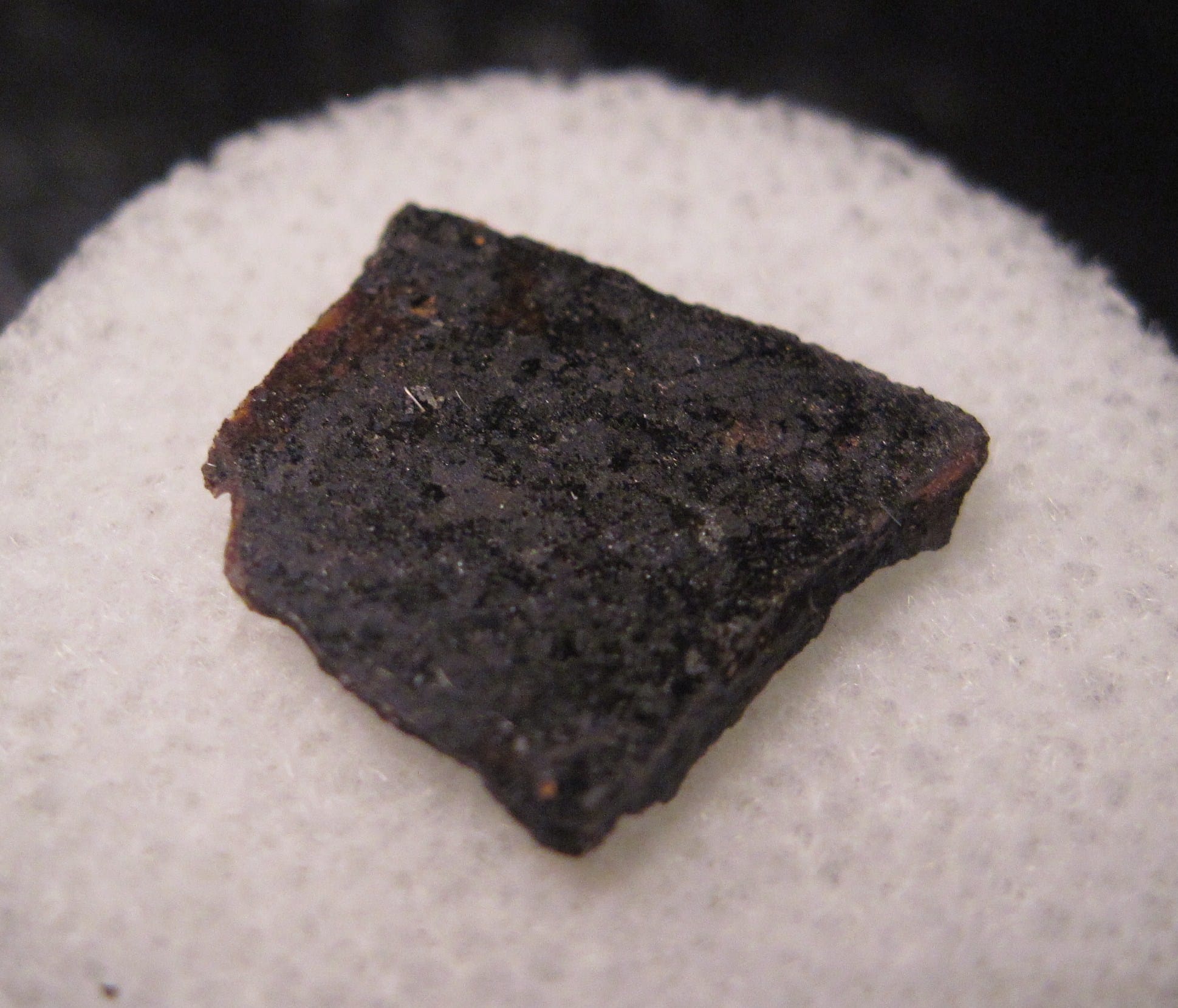
The remnants of a bizarre long-lost world that fell apart before our planet was fully formed are falling to Earth in the form of meteorites, according to a new study in Earth and Planetary Science Letters

For decades, scientists have puzzled over the origin of angrites, a rare class of about 70 meteorites with unique volcanic compositions that suggest they were forged in a large ancient object with differentiated layers, including a metallic core and a magma ocean.

Scientists have long assumed that this object, the so-called angrite parent body (APB), was roughly a few hundred miles across, similar in size to the asteroid 4 Vesta. But researchers recently raised the tantalizing possibility that the APB might have been much larger, perhaps on the scale of Earth’s moon.

Now, a team led by Aaron Bell, an experimental petrologist and an assistant research professor at the University of Colorado, Boulder, has discovered “the first unequivocal evidence supporting the large angrite parent body hypothesis, which posits that the angrites are samples derived from a protoplanet that was catastrophically disrupted during the earliest evolutionary stages of the inner solar system,” according to the new study.

“It probably got destroyed in the early solar system, so [angrites] are remnants of a lost protoplanet,” Bell said in a call with 404 Media. “A few pieces broke off and are now in the asteroid belt, and a few of them have come to Earth, and we’ve picked them up.”

Angrites date back about 4.56 billion years, making them among the oldest known volcanic rocks. They belong to a class of stony “achondritic” meteorites that contain the crystalized signatures of melted rock, such as basalts, hinting that they originate in larger bodies that underwent some degree of planetary processing and layered differentiation, even if those early planetary embryos never accreted into full planets. 

“Angrites are interesting in that they don’t have a known parent body,” Bell said. “It’s never been definitively identified, and that’s one of the mysteries.”

“There are a bunch of arguments about why angrites are so geochemically unusual,” he added. “They’re kind of this oddity.” 

Most models of early planetary accretion predict that relatively small objects formed within the first few million years of the solar system, which is why the APB was assumed to be an asteroid-sized object, rather than a much larger nascent planet.

While working on a previous study, Bell became interested in an aluminum-rich angrite from Northwest Africa, known as NWA 12,774, which was classified in 2019. The meteorite is one of a handful of unusual primitive angrites that appear to have been crystallized at high pressure within the APB, indicating that it formed deep under the surface and therefore might shed light on the size of this bygone world.

“Even among angrites, there’s only four or five that have these primitive compositions,” Bell said, adding that the meteorite had “off-the-charts aluminum content, which is really very unusual.”

Bell and his colleagues developed a geobarometer—a tool that calculates the pressures at which rocks and minerals formed—-that estimated it would take at least 1.7 gigapascals to account for the rock’s special properties. This pressure corresponds to an object with a minimum radius of 620 miles (1,000 kilometers), which is just under the size of Pluto. The APB may even have been as large as the Moon, which has a roughly 1000-mile radius. 

“Clearly, within the first few million years of solar system evolution, you could grow planetary embryos that were 1,000-plus kilometers” in radius, Bell said. “We’re talking within three million years of the condensation of the first solids in the solar system, so it’s right at the beginning.”

The discovery suggests that the APB may have been a first-generation protoplanet that coalesced and shattered millions of years before the familiar worlds of our solar system took full shape. Judging by the strange properties of angrites, the APB was also on track to be a very different kind of world than Earth and its neighbors, had it survived the chaotic environment of its infancy. 

Angrites are “geochemically fundamentally different, and that’s why people were interested in the first place—because they were odd,” Bell said. “They don’t look like garden-variety

basalts you get from Mars or the Moon or Earth.”

“It’s sort of this path not taken—or maybe it was, but we just have a couple pieces of it that tell us something we didn’t know,” he concluded. “There were once large bodies that, maybe, didn’t look like the terrestrial planets.” 

🌘
Subscribe to 404 Media to get The Abstract, our newsletter about the most exciting and mind-boggling science news and studies of the week.

How access models are shaping AI cybersecurity deployment

How access models are shaping  AI cybersecurity deployment

What happens when advanced AI capabilities enter the cybersecurity stack at scale?

💡
Recent developments from OpenAI and Anthropic highlight a meaningful shift in how AI-powered security tools reach practitioners. The focus has moved beyond raw model performance and into a more operational question:

How is access to these systems structured, verified, and deployed?

For AI professionals, this marks an important moment. Cybersecurity AI now sits at the intersection of infrastructure, governance, and real-world application.

In other words, it has moved from interesting to essential.

So what does this mean for AI professionals?


The rise of AI-native cybersecurity tools

AI-driven cybersecurity continues to evolve from passive detection into active analysis and response. Models such as GPT-5.4-Cyber introduce capabilities that extend far beyond traditional tooling.

Security teams now have access to systems that can interpret compiled binaries, identify anomalies, and surface vulnerabilities without requiring source code.

This represents a meaningful acceleration in workflows that previously required manual reverse engineering and deep domain expertise.

The result is a shift toward AI-augmented security operations, where analysts operate alongside models that continuously evaluate and interpret complex systems. The coffee consumption may stay the same, yet the output per analyst looks very different…

Why AI safety breaks at the system level
AI safety shifts from the model to the system level. As AI becomes agentic and tool-driven, risk emerges from complex interactions, widening the gap between evaluation and real-world behavior.
How access models are shaping  AI cybersecurity deployment

Two emerging approaches to access

As these capabilities mature, different deployment strategies are taking shape. The contrast reflects a broader design decision within AI cybersecurity.

Some platforms emphasize controlled distribution, where access is limited to a small group of verified organizations. This approach prioritizes tight oversight and curated usage environments.

Others adopt a broader access model, where entry is granted through identity verification and structured onboarding. This approach focuses on enabling a wider pool of security professionals to leverage advanced tools.

💡
Both strategies reflect valid priorities. Each introduces distinct considerations for scalability, collaboration, and operational readiness.

What this means for AI professionals

For practitioners, access models now play a central role in how cybersecurity systems are integrated into existing workflows. The conversation has expanded from capability evaluation into deployment strategy.

Security leaders and AI engineers increasingly evaluate questions such as:

• How AI tools integrate into existing security pipelines and SIEM platforms• How identity verification frameworks support controlled access at scale

• How model outputs align with internal validation and audit processes

• How teams manage collaboration between human analysts and AI systems

These considerations highlight a broader trend. AI cybersecurity requires alignment across engineering, security, and governance functions. Silos rarely perform well under pressure, and as we all know, cybersecurity provides plenty of pressure.

3 easy ways to get the most out of Claude code
Everyone is talking about Claude Code. With millions of weekly downloads and a rapidly expanding feature set, it has quietly become one of the most powerful tools in a developer’s arsenal. But most people are barely scratching the surface.
How access models are shaping  AI cybersecurity deployment

The operational impact on security teams

AI-powered cybersecurity tools introduce measurable improvements in speed and coverage. At the same time, they reshape how teams approach daily operations.

Routine analysis tasks can be automated or augmented, allowing analysts to focus on higher-value investigations. Pattern recognition and anomaly detection benefit from continuous model evaluation, providing earlier visibility into potential threats.

At the same time, teams gain the ability to inspect complex systems with greater depth. Reverse engineering, malware classification, and vulnerability detection become more accessible across a wider range of skill levels.

This evolution supports a more distributed model of expertise, where advanced capabilities extend across the organization rather than remaining concentrated in specialized roles. More eyes on the problem, fewer bottlenecks in the process.


Key considerations for implementation

As organizations adopt AI-driven cybersecurity tools, several practical considerations come into focus:

• Integration: Alignment with existing infrastructure, including cloud environments and security platforms

• Validation: Processes for verifying model outputs and ensuring reliability in high-stakes scenarios

• Access control: Mechanisms for managing user permissions and maintaining secure usage

• Monitoring: Continuous oversight of model behavior and system performance

These factors shape how effectively AI systems contribute to security outcomes. Strong implementation frameworks support both performance and trust.


Building trust in AI-driven security systems

Trust remains a central component of AI adoption in cybersecurity. Teams rely on systems that operate consistently, transparently, and with measurable accuracy.

Clear audit trails, reproducible outputs, and well-defined evaluation metrics contribute to confidence in AI-generated insights. Structured access models further support trust by ensuring that usage aligns with organizational policies and standards.

As AI systems take on more responsibility within security workflows, trust becomes an operational requirement rather than a conceptual goal.

AI’s new era: Train once, infer forever in production AI
Why the future of AI systems will be driven by inference and agent workloads.
How access models are shaping  AI cybersecurity deployment

Looking ahead: Access as a design decision

AI cybersecurity continues to evolve rapidly, with new models and capabilities entering the landscape at a steady pace. Alongside this growth, access models have emerged as a defining factor in how these systems are used.

For AI professionals, this represents a shift in focus. Technical capability remains essential, while deployment strategy now carries equal weight. Decisions around access, verification, and integration shape how effectively AI contributes to security outcomes.

The next phase of AI cybersecurity development will likely bring further innovation in both capability and delivery. Teams that approach access as a core design decision will be well-positioned to adapt and scale.

Innovation in AI cybersecurity continues to accelerate. With the right access models in place, organizations can translate advanced capabilities into practical, high-impact security outcomes.

And ideally, sleep a little better at night…

Hello There Collective: Affiliate Marketing Manager

Headquarters: Los Angeles, California

URL: https://hellotherecollective.com

Overview

We’re looking for a performance-driven Affiliate Marketing Manager to own and scale our affiliate channel through CJ (Commission Junction). This role is responsible for driving revenue growth, building high-quality publisher relationships, and optimizing program performance across content, loyalty, and deal partners.


You’re not just managing a program—you’re actively growing it. This is open to candidates outside the United States only.


Key Responsibilities

Program Ownership & Growth

  • Own day-to-day management of the CJ affiliate program
  • Develop and execute strategies to drive scalable revenue growth
  • Set and hit monthly/quarterly performance targets (revenue, ROAS, CPA)


Publisher Recruitment & Relationship Management

  • Proactively recruit new publishers across content, commerce, loyalty, and influencer verticals
  • Build and maintain strong relationships with top-performing affiliates
  • Negotiate placements, commissions, and exclusive opportunities


Campaign & Offer Management

  • Plan and execute promotional calendars (seasonal, product launches, tentpole moments)
  • Create compelling offers, bonuses, and incentives to drive partner performance
  • Collaborate with internal teams on product priorities and messaging


Performance Optimization

  • Analyze affiliate performance data and identify growth opportunities
  • Continuously optimize commission structures, partner mix, and placements
  • Monitor attribution, incrementality, and partner quality


Platform Management (CJ)

  • Manage CJ dashboard, including partner approvals, link tracking, creatives, and reporting
  • Ensure proper tracking, attribution, and compliance across all partners
  • Troubleshoot technical or tracking issues as they arise


Cross-Functional Collaboration

  • Work with paid media, influencer, and content teams to align strategies
  • Partner with creative teams to develop high-performing affiliate assets
  • Coordinate with finance on payouts, budgets, and forecasting


Qualifications

  • 3+ years of affiliate marketing experience, with hands-on CJ platform expertise
  • Proven track record of driving revenue growth through affiliate programs
  • Strong relationships across affiliate publishers (media, content, loyalty, etc.)
  • Deep understanding of performance marketing metrics (CPA, ROAS, LTV)
  • Strong analytical and reporting skills
  • Experience negotiating partnerships and placements
  • Highly proactive—comfortable building from scratch, not just maintaining


Nice to Have

  • Experience working with DTC brands (especially in CPG, beauty, or apparel)
  • Familiarity with other affiliate platforms (Impact, Rakuten, ShareASale)
  • Understanding of influencer/creator affiliate models
  • Experience with promo strategy and retail calendars


What Success Looks Like

  • Consistent MoM revenue growth from the affiliate channel
  • Expansion of high-quality, incremental publisher partnerships
  • Efficient CPA/ROAS aligned with broader performance goals
  • A program that feels actively managed—not passive

To apply: https://weworkremotely.com/remote-jobs/hello-there-collective-affiliate-marketing-manager

Bringing AI-driven protein-design tools to biologists everywhere

Artificial intelligence is already proving it can accelerate drug development and improve our understanding of disease. But to turn AI into novel treatments we need to get the latest, most powerful models into the hands of scientists.

The problem is that most scientists aren’t machine-learning experts. Now the company OpenProtein.AI is helping scientists stay on the cutting edge of AI with a no-code platform that gives them access to powerful foundation models and a suite of tools for designing proteins, predicting protein structure and function, and training models.

The company, founded by Tristan Bepler PhD ’20 and former MIT associate professor Tim Lu PhD ’07, is already equipping researchers in pharmaceutical and biotech companies of all sizes with its tools, including internally developed foundation models for protein engineering. OpenProtein.AI also offers its platform to scientists in academia for free.

“It’s a really exciting time right now because these models can not only make protein engineering more efficient — which shortens development cycles for therapeutics and industrial uses — they can also enhance our ability to design new proteins with specific traits,” Bepler says. “We’re also thinking about applying these approaches to non-protein modalities. The big picture is we’re creating a language for describing biological systems.”

Advancing biology with AI

Bepler came to MIT in 2014 as part of the Computational and Systems Biology PhD Program, studying under Bonnie Berger, MIT’s Simons Professor of Applied Mathematics. It was there that he realized how little we understand about the molecules that make up the building blocks of biology.

“We hadn’t characterized biomolecules and proteins well enough to create good predictive models of what, say, a whole genome circuit will do, or how a protein interaction network will behave,” Bepler recalls. “It got me interested in understanding proteins at a more fine-grained level.”

Bepler began exploring ways to predict the chains of amino acids that make up proteins by analyzing evolutionary data. This was before Google released AlphaFold, a powerful prediction model for protein structure. The work led to one of the first generative AI models for understanding and designing proteins — what the team calls a protein language model.

“I was really excited about the classical framework of proteins and the relationships between their sequence, structure, and function. We don’t understand those links well,” Bepler says. “So how could we use these foundation models to skip the ‘structure’ component and go straight from sequence to function?”

After earning his PhD in 2020, Bepler entered Lu’s lab in MIT’s Department of Biological Engineering as a postdoc.

“This was around the time when the idea of integrating AI with biology was starting to pick up,” Lu recalls. “Tristan helped us build better computational models for biologic design. We also realized there’s a disconnect between the most cutting-edge tools available and the biologists, who would love to use these things but don’t know how to code. OpenProtein came from the idea of broadening access to these tools.”

Bepler had worked at the forefront of AI as part of his PhD. He knew the technology could help scientists accelerate their work.

“We started with the idea to build a general-purpose platform for doing machine learning-in-the-loop protein engineering,” Bepler says. “We wanted to build something that was user friendly because machine-learning ideas are kind of esoteric. They require implementation, GPUs, fine-tuning, designing libraries of sequences. Especially at that time, it was a lot for biologists to learn.”

OpenProtein’s platform, in contrast, features an intuitive web interface for biologists to upload data and conduct protein engineering work with machine learning. It features a range of open-source models, including PoET, OpenProtein’s flagship protein language model.

PoET, short for Protein Evolutionary Transformer, was trained on protein groups to generate sets of related proteins. Bepler and his collaborators showed it could generalize about evolutionary constraints on proteins and incorporate new information on protein sequences without retraining, allowing other researchers to add experimental data to improve the model.

“Researchers can use their own data to train models and optimize protein sequences, and then they can use our other tools to analyze those proteins,” Bepler says. “People are generating libraries of protein sequences in silico [on computers] and then running them through predictive models to get validation and structural predictors. It’s basically a no-code front-end, but we also have APIs for people who want to access it with code.”

The models help researchers design proteins faster, then decide which ones are promising enough for further lab testing. Researchers can also input proteins of interest, and the models can generate new ones with similar properties.

Since its founding, OpenProtein’s team has continued to add tools to its platform for researchers regardless of their lab size or resources.

“We’ve tried really hard to make the platform an open-ended toolbox,” Bepler says. “It has specific workflows, but it’s not tied specifically to one protein function or class of proteins. One of the great things about these models is they are very good at understanding proteins broadly. They learn about the whole space of possible proteins.”

Enabling the next generation of therapies

The large pharmaceutical company Boehringer Ingelheim began using OpenProtein’s platform in early 2025. Recently, the companies announced an expanded collaboration that will see OpenProtein’s platform and models embedded into Boehringer Ingelheim’s work as it engineers proteins to treat diseases like cancer and autoimmune or inflammatory conditions.

Last year, OpenProtein also released a new version of its protein language model, PoET-2, that outperforms much larger models while using a small fraction of the computing resources and experimental data.

“We really want to solve the question of how we describe proteins,” Bepler says. “What’s the meaningful, domain-specific language of protein constraints we use as we generate them? How can we bring in more evolutionary constraints? How can we describe an enzymatic reaction a protein carries out such that a model can generate sequences to do that reaction?”

Moving forward, the founders are hoping to make models that factor in the changing, interconnected nature of protein function.

“The area I am excited about is going beyond protein binding events to use these models to predict and design dynamic features, where the protein has to engage two, three, or four biological mechanisms at the same time, or change its function after binding,” says Lu, who currently serves in an advisory role for the company.

As progress in AI races forward, OpenProtein continues to see its mission as giving scientists the best tools to develop new treatments faster.

“As work gets more complex, with approaches incorporating things like protein logic and dynamic therapies, the existing experimental toolsets become limiting,” Lu says. “It’s really important to create open ecosystems around AI and biology. There’s a risk that AI resources could get so concentrated that the average researcher can’t use them. Open access is super important for the scientific field to make progress.”


Bjak: Senior QA Automation Engineer

Headquarters: Malaysia

URL: https://bjak.my/en

If you enjoy building cutting-edge platforms and ecosystems to provide equal access to financial services for the masses, we’d love to speak with you!


Your Mission:

  • Design, develop, and enhance robust automation frameworks using modern tools (e.g., Playwright, Cypress, Selenium).

  • Write clean, maintainable automated test suites for web, API services, and other application types.

  • Integrate automated tests into Git-based CI/CD pipelines (e.g., GitHub Actions, Jenkins) to support continuous delivery.

  • Execute and manage functional, regression, integration, and specialized performance tests.

  • Participate in requirement reviews to define test scenarios, identify edge cases, and ensure maximum test coverage.

  • Perform root cause analysis of failures and collaborate directly with development and product teams to resolve defects and ensure quality metrics are met.

  • Maintain test data, mocks, and environments, and build specialized tooling (e.g., monitoring/reporting dashboards) to improve QA efficiency.

  • Document test plans, test cases, automation design decisions, and contribute to the continuous improvement of overall QA processes and best practices.

Requirements:

  • Bachelor’s Degree in Computer Science, Software Engineering, or related fields.

  • 3+ years of experience in QA Automation for backend services and cloud infrastructure.

  • Strong experience with automation tools such as Playwright, Cypress, Selenium, or Appium.

  • Proficiency in JavaScript/TypeScript is a must

  • Solid understanding of REST APIs, automated API testing (Postman, Newman, REST Assured).

  • Experience with CI/CD pipelines and version control (Git).

  • Knowledge of software testing methodologies and QA best practices.

  • Familiarity with microservices, cloud platforms (AWS/GCP), and containerization (Docker/Kubernetes) is a plus.


Bonus Points:

  • Experience with performance testing (Locust, k6, JMeter).

  • Experience with contract testing (PACT).

  • Security testing fundamentals (OWASP).

  • Understanding of SQL/NoSQL databases.

  • Previous work in Agile/Scrum environments.


Benefits:

  • Innovative Challenges: Work on fast-moving, challenging, and unique business problems.

  • Career Growth: Benefit from strong learning and development plans for your career growth.

  • Global Environment: Thrive in an international work environment with a flat organizational structure.

  • Competitive Salary: Receive a competitive salary package.

To apply: https://weworkremotely.com/remote-jobs/bjak-senior-qa-automation-engineer

Toast: Senior Enterprise Process Engineer

Headquarters: United States

URL: https://pos.toasttab.com/?srsltid=AfmBOoo8wW91HkpMsshu2DyL9RieQmtrYW9efWs9TGKeXL4NgPDGOv8k

Toast creates technology to help restaurants and local businesses succeed in a digital world, helping business owners operate, increase sales, engage customers, and keep employees happy.

We are seeking a Senior Enterprise Process Engineer to drive the design and evolution of critical processes across the Enterprise line of business. As our Enterprise business continues to grow, scaling how work flows across teams, systems, and lifecycle stages is essential to delivering a consistent and high-quality customer experience.

This role will focus on analyzing, designing, and improving the operational processes that support the Enterprise customer lifecycle — from acquisition through onboarding, success, support, and renewal. Working closely with stakeholders across Sales, Marketing, Solutions, Onboarding, Customer Success, Care, Billing, Product, and Systems teams, you will identify operational friction, redesign workflows, and ensure scalable processes are implemented effectively.

The ideal candidate brings strong systems thinking, deep process improvement experience, and the ability to drive cross-functional change in a complex, fast-moving environment.

A day in the life (Responsibilities)

Enterprise Process Engineering: 

    • Map, analyze, and redesign critical operational processes across the Enterprise customer lifecycle to improve scalability, efficiency, and customer outcomes.
    • Identify opportunities to streamline handoffs, eliminate manual work, and reduce operational friction across teams and systems.

Cross-Functional Process Improvement Initiatives:

    • Partner with leaders across Sales, Solutions, Customer Success, Care, Billing, Product, and Systems teams to drive process redesign efforts that improve how work flows across the Enterprise operating model.
    • Lead structured process improvement initiatives from problem identification through implementation.

Systems & Process Alignment:

    • Collaborate with internal systems teams to ensure operational processes are properly reflected in supporting tools and platforms, including CRM and lifecycle management systems.
    • Translate operational requirements into clear system needs and partner with technical teams during implementation.

Operational Analysis & Root Cause Identification

    • Analyze operational performance and identify root causes of inefficiencies, breakdowns, or customer friction.
    • Use structured methodologies such as process mapping, workflow analysis, and root cause analysis to develop solutions.

Implementation & Adoption:

    • Ensure redesigned processes are effectively implemented and adopted across teams by partnering with stakeholders on rollout plans, documentation, and operational alignment.
    • Drive accountability and follow-through across cross-functional teams to ensure improvements deliver measurable impact.

What you’ll need to thrive (Requirements)

  • 7+ years of experience in process engineering, operations, program management, or business transformation within a SaaS or technology environment
  • Proven experience designing and implementing cross-functional process improvements
  • Strong expertise in process mapping, workflow design, and operational analysis
  • Demonstrated ability to drive change across multiple teams without direct authority
  • Strong systems thinking and understanding of how tooling, process, and lifecycle operations intersect
  • Experience working with enterprise operational systems such as Salesforce, DocuSign, ServiceNow, or customer lifecycle tooling
  • Excellent stakeholder management and communication skills (written and verbal)
  • Ability to thrive in ambiguity and bring structure to complex operational challenges
  • Demonstrates curiosity for and comfort experimenting with emerging technologies and tools (including AI-driven productivity and workflow automation) that can improve operational efficiency
  • Lean Six Sigma Green Belt certified (or equivalent)

AI at Toast

At Toast, one of our company values is that we’re hungry to build and learn. We believe learning new AI tools empowers us to build for our customers faster, more independently, and with higher quality. We provide these tools across all disciplines, from Engineering and Product to Sales and Support, and are inspired by how our Toasters are already driving real value with them. The people who thrive here are those who embrace changes that let us build more for our customers; it’s a core part of our culture.

Our Total Rewards Philosophy 
We strive to provide competitive compensation and benefits programs that help to attract, retain, and motivate the best and brightest people in our industry. Our total rewards package goes beyond great earnings potential and provides the means to a healthy lifestyle with the flexibility to meet Toasters’ changing needs. Learn more about our benefits at https://careers.toasttab.com/toast-benefits.

The base salary range for this role is listed below. The starting salary will be determined based on skills, experience, and geographic location. In addition to base salary, our total rewards components include cash compensation (overtime, bonus/commissions if eligible), equity, and benefits. You can learn more about how we align pay with local labor markets in our Geographic Pay Zone Philosophy.

Zone A
$142,000—$227,000 USD
Zone B
$123,000—$197,000 USD
Zone C
$111,000—$178,000 USD

How Toast Uses AI in its Hiring Process

Throughout the hiring process, our goal is to get to know you. We use AI tools to support our recruiters and interviewers with tasks like note-taking, summarization, and documentation of interviews to ensure they can be fully focused on your conversation. All hiring decisions are made by people.

Diversity, Equity, and Inclusion is Baked into our Recipe for Success

At Toast, our employees are our secret ingredient—when they thrive, we thrive. The restaurant industry is one of the most diverse, and we embrace that diversity with authenticity, inclusivity, respect, and humility. By embedding these principles into our culture and design, we create equitable opportunities for all and raise the bar in delivering exceptional experiences.

We Thrive Together

We embrace a hybrid work model that fosters in-person collaboration while valuing individual needs. Our goal is to build a strong culture of connection as we work together to empower the restaurant community. To learn more about how we work globally and regionally, check out: https://careers.toasttab.com/locations-toast.

Apply today!

Toast is committed to creating an accessible and inclusive hiring process. As part of this commitment, we strive to provide reasonable accommodations for persons with disabilities to enable them to access the hiring process. If you need an accommodation to access the job application or interview process, please contact candidateaccommodations@toasttab.com.

——

For roles in the United States, it is unlawful in Massachusetts to require or administer a lie detector test as a condition of employment or continued employment. An employer who violates this law shall be subject to criminal penalties and civil liability.

To apply: https://weworkremotely.com/remote-jobs/toast-senior-enterprise-process-engineer

Chess.com: Senior ML Engineer

Headquarters: California, US

URL: https://www.chess.com/about

About You

You believe in the power of ML and AI to build amazing, interesting, and insightful products and services for humanity… and you’d love to do that in chess!


What you’ll do

  • Own ML-driven product features, identifying opportunities through to modeling, deployment, experimentation, and impact.
  • Partner with Product, Leadership, Growth, and Data Science to determine which problems should (and shouldn’t) be solved with ML, define success metrics, and iterate based on real-world performance.
  • Design, build, and ship scalable ML systems, including data pipelines, training workflows, and production model serving infrastructure.
  • Prototype rapidly and iterate regularly, developing repeatable evaluation frameworks, running experiments, and improving models based on results
  • Shape our ML architecture and MLOps practices, establishing standards for experimentation, deployment, monitoring, and retraining as we scale.
  • Drive innovation in Generative AI, exploring how we can best use LLMs and agents to power new user experiences and internal productivity tools.
  • Provide technical leadership and mentorship, mentoring more junior team members, influencing our roadmap, and raising AI/ML literacy across the company.


Preferred Skills

  • 5+ years of demonstrated, hands-on experience building scaled ML systems, training large ML models, or equivalent experience.
  • 1+ year of AI engineering experience.
  • Strong technical skills and judgment around coding, testing, and building for scale.
  • Strong practical ML knowledge, solid knowledge of ML theory, and a working understanding of the AI application stack and lifecycle in the context of foundation models, from evaluation to deployment.
  • High sense of ownership and a drive to deliver impact in a fast-paced, evolving, ambiguous environment.


About the Opportunity

  • This is a full-time opportunity
  • We are 100% remote (work from anywhere!)

You can learn more about us here:

To apply: https://weworkremotely.com/remote-jobs/chess-com-senior-ml-engineer