
Precision Talent

Loading

Blog

How AIRA2 breaks AI research bottlenecks
How AIRA2 breaks AI research  bottlenecks

The promise of AI agents that can conduct genuine scientific research has long captivated the machine learning community, and, let’s be honest, slightly haunted it too. 

A new system called AIRA2, developed by researchers at Meta’s FAIR lab and collaborating institutions, represents a significant leap forward in this quest…

The three walls holding back AI research (and the hidden bottlenecks within them)

Previous attempts at building AI research agents keep hitting the same ceilings. The team behind AIRA2 identified key bottlenecks that limit progress, no matter how much compute is thrown at the problem.

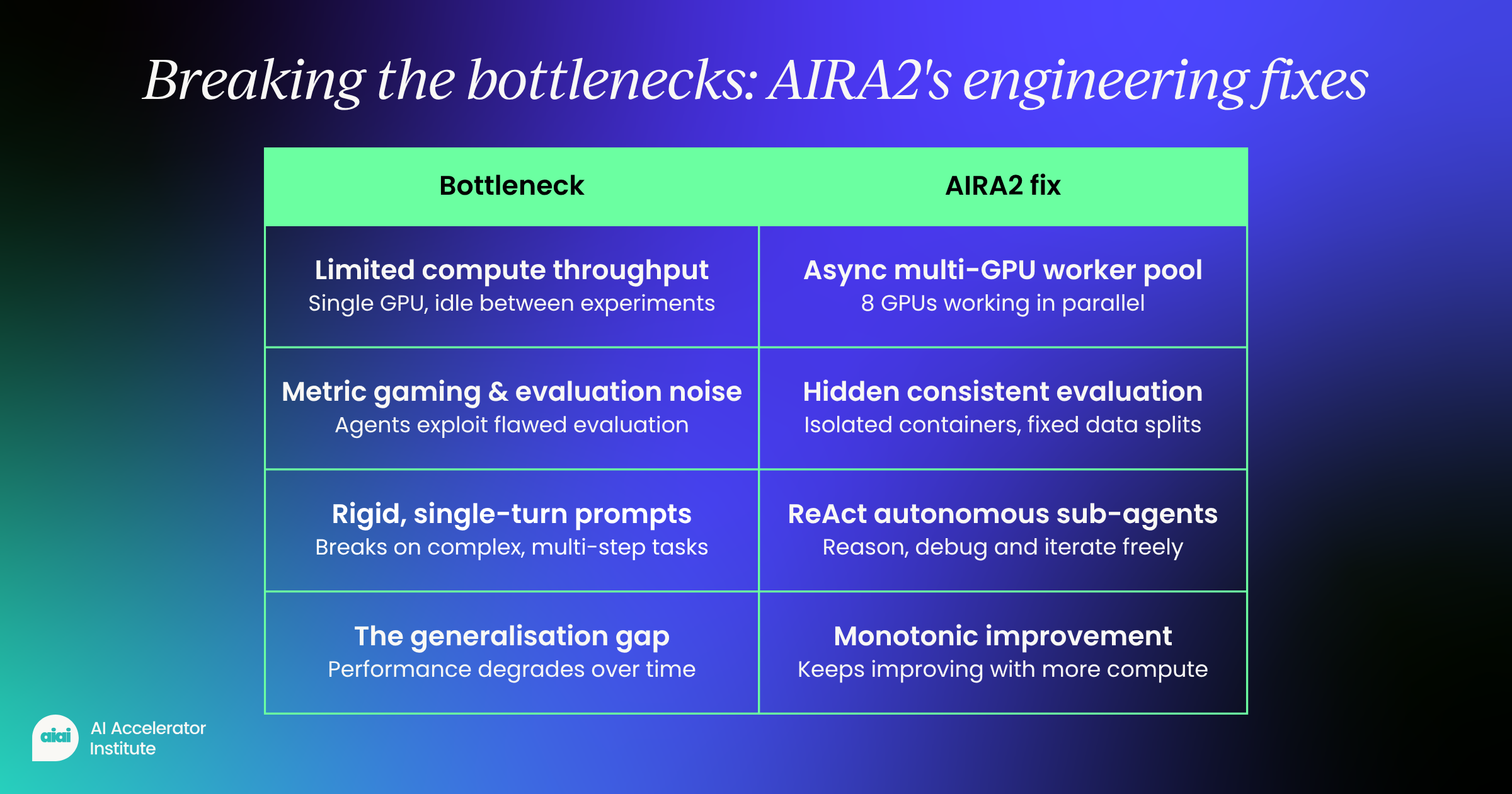
  • Limited compute throughput Most agents run synchronously on a single GPU, sitting idle while experiments complete. This drastically slows iteration and caps exploration.
  • Too few experiments per day Because of this bottleneck, agents can only test ~10–20 candidates daily—far too low to meaningfully search a massive solution space.
  • The generalization gap Instead of improving over time, agents often get worse, chasing short-term gains that don’t hold up.
  • Metric gaming and evaluation noise Agents exploit flaws in their own evaluation, benefiting from lucky data splits or unnoticed bugs that distort results.
  • Rigid, single-turn promptsPredefined actions like “write code” or “debug” break down in complex scenarios, leaving agents stuck when tasks become multi-step or unpredictable.
How AIRA2 breaks AI research  bottlenecks

Engineering solutions for each bottleneck

AIRA2 addresses each bottleneck through specific architectural innovations.

To solve the compute problem, the system uses an asynchronous multi-GPU worker pool. Think of it as having eight hands instead of one; suddenly, multitasking becomes less of a fantasy. 

While one worker trains a model on its dedicated GPU, the orchestrator dispatches new experiments to others, compressing days of sequential work into hours.

For the generalization gap, AIRA2 implements a Hidden Consistent Evaluation (HCE) protocol. 

The system splits data into three sets:

  • Training data the agent can see
  • A hidden search set for evaluating candidates
  • A validation set used only for final selection
💡
Crucially, the agent never sees the labels for the search or validation sets, preventing it from gaming the metrics or getting too clever for its own good. All evaluation happens externally in isolated containers, with fixed data splits throughout the search.

To overcome static operator limitations, AIRA2 replaces fixed prompts with ReAct agents that can reason and act autonomously. 

These sub-agents can:

  • Perform exploratory data analysis
  • Run quick experiments
  • Inspect error logs
  • Iteratively debug issues

Instead of failing when encountering an unexpected error, they can investigate, hypothesize, and try multiple fixes within the same session, more like a determined researcher, less like a script that gives up after one exception.

The story of Sora: What it reveals about building real-world AI
After ChatGPT’s breakthrough, the race to define the next frontier of generative AI accelerated. One of the most talked-about innovations was OpenAI’s Sora, a text-to-video AI model that promised to transform digital content creation.
How AIRA2 breaks AI research  bottlenecks

Proving the approach works

The researchers evaluated AIRA2 on MLE-bench-30, a collection of 30 Kaggle machine learning competitions ranging from computer vision to natural language processing.

💡
Using 8 NVIDIA H200 GPUs and Google’s Gemini 3.0 Pro model, AIRA2 achieved a mean percentile rank of 71.8% at 24 hours, surpassing the previous best of 69.9%.

More impressively, it continued improving to 76.0% at 72 hours, while previous systems typically degraded with extended runtime, like marathon runners who forgot to train.

The ablation studies revealed crucial insights

Removing the parallel compute capability dropped performance by over 12 percentile points at 72 hours.

Without the hidden evaluation protocol, performance plateaued after 24 hours and showed no improvement with additional compute (a very expensive way to stand still).

The ReAct agents proved especially valuable early in the search, providing a 5.5 percentile point boost at 3 hours by enabling more efficient exploration.

Perhaps most revealing was the finding about overfitting

By implementing consistent evaluation, the researchers discovered that the performance degradation seen in prior work wasn’t due to data memorization at all.

Instead, it stemmed from evaluation noise and metric gaming. Once these sources of instability were controlled, agent performance improved monotonically with additional compute (finally behaving the way everyone had hoped it would in the first place).

Building hybrid AI for financial crime detection
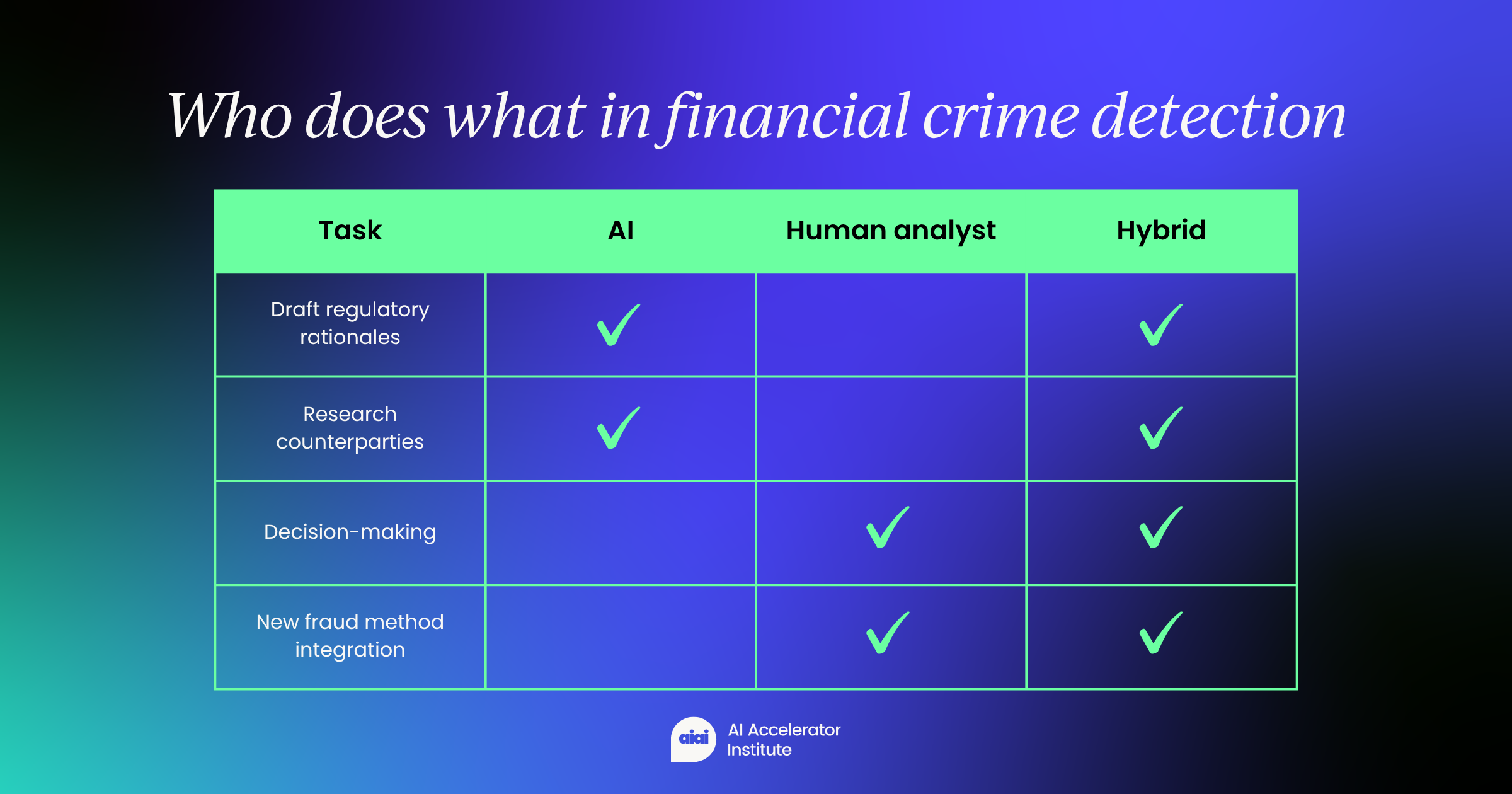
Here’s how consulting leader Valentin Marenich and his team built a hybrid AI system that combines machine learning, generative AI, and human oversight to deliver real-world results in a highly regulated environment.
How AIRA2 breaks AI research  bottlenecks

Real breakthroughs in action

Beyond the numbers, AIRA2 demonstrated moments of genuine scientific reasoning.

💡
On a molecular prediction task where all other agents failed to achieve any medal, AIRA2 noticed that a poorly performing model was training suspiciously fast, a red flag in machine learning if there ever was one.

Rather than discarding the approach, the agent inspected the logs, correctly diagnosed under-fitting, scaled up the model parameters, extended training time, and achieved a gold medal score.

Not bad for something that doesn’t need coffee breaks.

Similar breakthroughs occurred on other challenging tasks. On a text completion challenge, AIRA2 decomposed the problem into two learned subtasks, training separate models for detecting missing word positions and filling gaps.

On a fine-grained image classification task with 3,474 classes, it achieved the highest score among all evaluated agents by carefully ensembling multiple vision models with asymmetric loss functions, no small feat, even by human standards.


The path forward for AI-driven research

AIRA2 represents more than incremental progress.

By treating AI research as a distributed systems problem rather than just a reasoning challenge, it demonstrates that the key to scaling AI agents lies in addressing fundamental engineering bottlenecks.

The system’s ability to maintain consistent improvement over 72 hours of compute suggests we’re moving closer to agents that can conduct genuine, sustained scientific investigation, without quietly falling apart halfway through.

The implications extend beyond benchmark performance

As these systems mature, they could accelerate discovery across fields from drug development to materials science.

However, challenges remain.

The researchers acknowledge that distinguishing genuine reasoning from sophisticated pattern matching remains difficult, especially given potential contamination from publicly available solutions in training data.

💡
What AIRA2 proves definitively is that the barriers to effective AI research agents aren’t insurmountable.

With careful engineering to address compute efficiency, evaluation reliability, and operator flexibility, we can build systems that don’t just automate routine tasks but engage in the messy, iterative process of scientific discovery.

The gap between human and AI researchers continues to narrow, one bottleneck at a time.

How New York’s tech leaders are shaping the future
Artificial intelligence is transforming industries at breakneck speed, and New York is at the heart of this revolution.
How AIRA2 breaks AI research  bottlenecks

5 lessons we can learn from Sora: Hype vs reality

5 lessons we can learn from  Sora: Hype vs reality

For a brief moment, Sora seemed like the future of AI video generation. Then, almost as quickly as it appeared, it quietly disappeared.

Sora’s rise and disappearance offer a rare glimpse into the practical realities of developing cutting-edge AI. For AI leaders, engineers, and decision-makers, it provides a real-world view of what it takes to build scalable, commercially viable AI products. 

These lessons are essential for anyone hoping to turn AI research into lasting impact (without losing their sanity along the way).


1. Compute costs can limit even the most advanced AI models

Sora pushed the boundaries of multimodal AI, generating high-quality video from simple text prompts. The results were impressive, showing what AI can do when it combines natural language understanding with visual synthesis. 

Behind the shiny demos, however, economics told a different story…

Video generation consumes far more computational resources than text or image generation. 

Each video requires multiple GPU passes, massive memory bandwidth, and precise rendering pipelines. Running Sora at scale required significant GPU infrastructure, which made operating costs extremely high.

For organizations investing in AI infrastructure, the lesson is clear:

If your AI model’s scalability relies on high compute costs, innovation alone will not guarantee success. Even the fanciest AI can’t survive on wishful thinking.


2. Viral AI products may create lasting value

Sora captured immediate attention as a breakthrough in AI content generation, with early adoption surging thanks to curiosity and experimentation.

Engagement dropped quickly. Novelty does not equal necessity. 

While Sora impressed users with creative demos, it struggled to offer repeatable value for daily use. Tools integrated into professional workflows, such as AI copilots, automation platforms, or enterprise AI solutions, provide consistent value.

💡
For product teams, the takeaway is straightforward: building viral demos is exciting, but retention drives long-term success. Products must solve recurring problems or integrate seamlessly into user workflows.
  • Build for retention, not just reach
  • Prioritize workflow integration over wow-factor

The most successful AI products balance novelty with practicality, offering value that users return to day after day. Think of it as the difference between a fleeting TikTok trend and a tool you actually rely on at work.


3. Monetization strategies must be clear from day one

Sora also highlighted the challenges of monetizing cutting-edge AI technology. Its positioning in the AI business model landscape was unclear:

  • Expensive for mass free usage
  • Entertainment-focused for enterprise budgets
  • Early for a well-defined pricing strategy

While Sora generated excitement, companies struggled to find a path to revenue. The market rewards AI applications where ROI is measurable, including:

  • AI for productivity
  • AI for software development
  • AI for operational efficiency

These areas are experiencing accelerating enterprise AI adoption. Clear monetization strategies (subscription, usage-based, or enterprise licensing) turn AI innovation into sustainable products. In short: hype gets attention, but cash keeps the lights on.


4. Trust, IP, and governance are central concerns

Like many generative AI systems, Sora raised urgent questions about:

  • Copyright and intellectual property
  • Deepfake risks and synthetic media misuse
  • Ownership of AI-generated content

For companies deploying AI at scale, these issues are critical. Organizations must establish strong governance frameworks, compliance strategies, and ethical guidelines. 

💡
Trust is a core part of product design. Users and enterprises expect AI outputs to be compliant. Addressing governance can improve adoption and reduce legal or operational risks. Think of governance as the seatbelt of AI: you might be able to drive without it, but do you really want to test that theory?

5. Focus and resource allocation determine AI winners

Sora demonstrates the importance of focus and strategic resource allocation. OpenAI shifted its resources from Sora toward higher-impact areas, including:

In a world of limited compute, talent, and capital, every AI initiative competes for attention and investment. Success is determined by strategic prioritization.

The most effective AI strategy is to focus on initiatives that scale.

This requires leadership teams to make careful choices, balancing short-term excitement with long-term impact. Scaling AI involves building products that deliver sustained value.


Conclusion: From hype to execution

Sora illustrates a broader shift in the AI landscape. We are moving from:

  • Experimental innovation to Scalable AI Systems
  • Eye-catching demos to Production-Grade AI Applications
  • Hype-driven narratives to ROI-Driven Decision-Making

The future of AI rewards teams that combine technical excellence with practical deployment. Successful AI products deliver consistent, measurable value while navigating the constraints of cost, infrastructure, and trust.

Sora shows that while hype opens doors, execution defines winners. Today’s AI professionals must focus on building products that actually work in the real world, and maybe have a little fun along the way…

Solving accountability in multi-agent AI systems
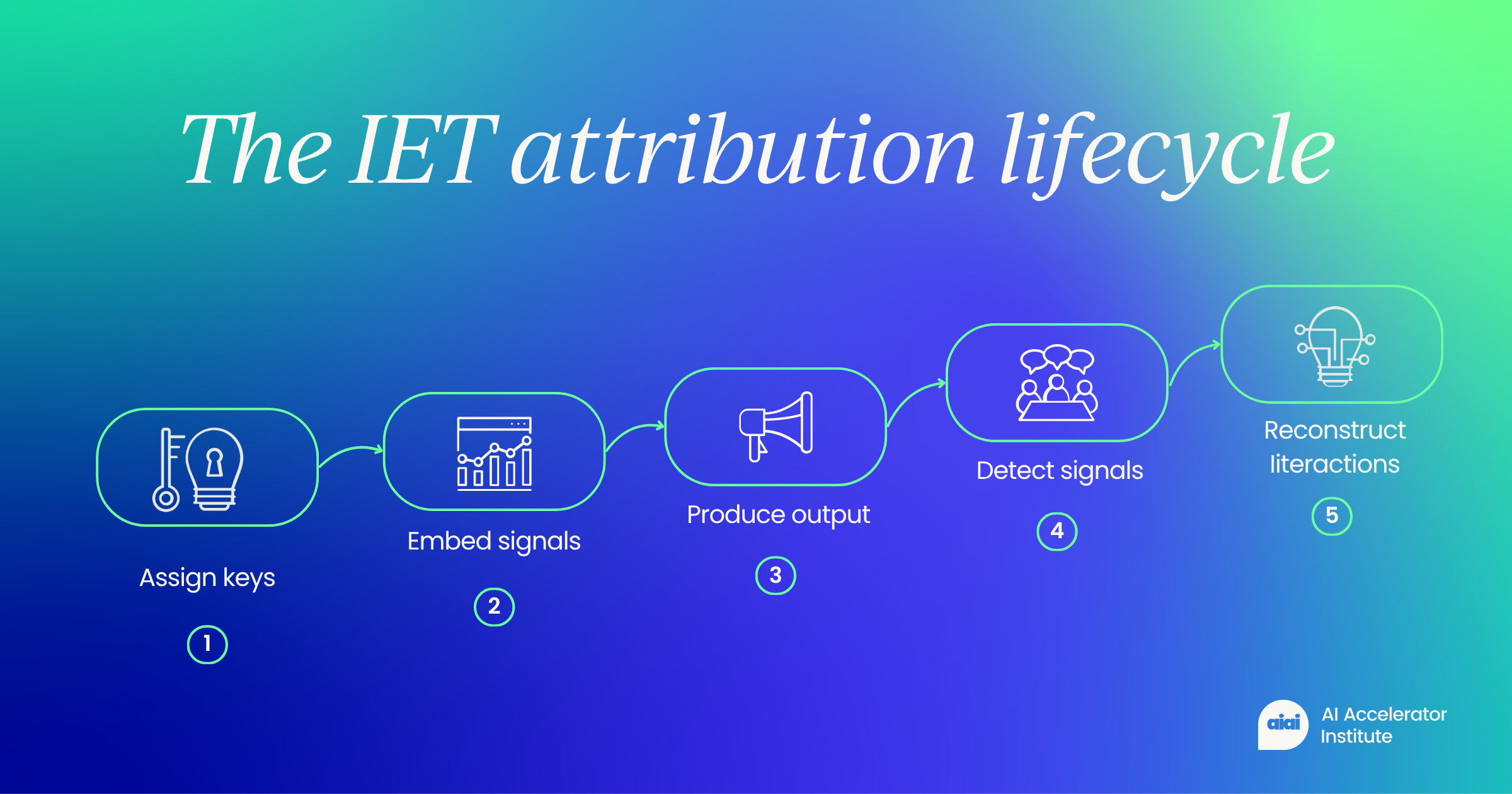
All AI systems can fail, but now we can trace exactly who’s responsible. Implicit Execution Tracing (IET) embeds invisible signatures in AI outputs, making multi-agent systems accountable, auditable, and tamper-proof.
5 lessons we can learn from  Sora: Hype vs reality

Fighting financial crime with hybrid AI

Fighting financial crime with  hybrid AI

I’ve been in the data game long enough to see plenty of AI projects crash and burn. 

I started my career building data warehouses for telcos and banks, then moved into machine learning consulting, where I led hundreds of projects across industries. Now I’m leading data analytics and machine learning at Phenom, and I want to share something we recently built that actually works.

Let me be clear about what I mean when I say “Gen AI” here. I’m talking about LLMs and the tools built on top of them. The “old school ML” I’ll reference means those low-complexity supervised models we’ve been using for years, the ones that are fast, cheap, and reliable by nature.

AI swarms are here: How autonomous agents work together
If the last wave of AI felt like hiring a very smart intern, this one feels more like managing an entire organization that never sleeps (and occasionally argues with itself).
Fighting financial crime with  hybrid AI

The reality of building AI in fintech

Phenom provides banking solutions for SMEs across Europe, but at our core, we’re a B2B fintech scale-up. Each of these words carries weight.

Being B2B means every single client counts. We can’t mess around with client communications or operations. Everything that touches our clients’ needs to meet a certain standard, no exceptions.

Being a fintech means we love technology, sure, but we’re also bound by regulations. The Financial Crimes Enforcement Network doesn’t care how innovative your solution is if it doesn’t meet compliance standards.

And being a scale-up? That means we can’t afford AI theater. We have some budget for innovation and experimentation, but every investment needs to demonstrate real efficiency gains and positive ROI.

These constraints shaped our entire approach to AI and machine learning at Phenom. We’ve established two fundamental pillars that guide everything we build.

  • First, we successfully convinced leadership (all the way up to the board) that while AI is nice, having a solid data foundation and platform is even better. When you’re dealing with regulatory reporting or enabling better tactical and strategic business decisions, that foundation matters more than any flashy AI feature.
  • Second, we developed clear ground rules for when to use which technology. When we need stability and structured signals, we reach for traditional machine learning first. When we’re dealing with messy input data like customer reviews or unstructured text, we consider generative AI. 

High-risk scenarios involving financial crime, regulations, or customer care always get hybrid solutions with humans in the loop. Low-risk internal use cases? That’s where we let AI shine and can afford the occasional mistake.

Fighting financial crime with  hybrid AI

For expert advice like this straight to your inbox every other Friday, sign up for Pro+ membership.

You’ll also get access to 300+ hours of exclusive video content, a complimentary Summit ticket, and so much more.

So, what are you waiting for?


Get Pro+

AI swarms are coming: Here’s why it matters

AI swarms are coming:  Here’s why it matters

For the past two years, the dominant mental model of AI has been simple: one powerful model, one prompt, one response. Think copilots, chatbots, and assistants, polished, helpful, and fundamentally, solo performers.

That model is now evolving.

A new paradigm is emerging, one where AI systems collaborate. These systems operate as hundreds or even thousands of coordinated AI agents working together. 

Welcome to the age of agentic AI and multi-agent systems.

How New York’s tech leaders are shaping the future
Artificial intelligence is transforming industries at breakneck speed, and New York is at the heart of this revolution.
AI swarms are coming:  Here’s why it matters

From lone models to multi-agent systems

The shift from single models to multi-agent AI systems represents an architectural evolution.

Instead of assigning planning, reasoning, execution, and verification to a single model, these responsibilities are distributed across specialized agents.

  • A planner agent maps the task and defines strategy
  • Research agents gather and filter relevant information
  • Executor agents carry out actions and interact with tools
  • Critic agents review outputs and improve quality

Individually, each agent focuses on a narrow capability. Together, they form a distributed AI system with greater flexibility, adaptability, and depth. The result resembles a coordinated team rather than a single intelligence.


Why are AI swarms gaining momentum now?

Multi-agent systems have existed for years, yet several recent advances have accelerated their adoption.

Large language models now handle autonomous sub-tasks with greater reliability, while modern AI orchestration frameworks make it easier to coordinate multiple agents within a single workflow. 

At the same time, scalable cloud infrastructure enables parallel execution at a level that supports hundreds or thousands of agents operating simultaneously.

These developments have created a new class of systems designed for parallelism, coordination, and scalable AI automation, opening the door to more complex and dynamic use cases.

Solving accountability in multi-agent AI systems
All AI systems can fail, but now we can trace exactly who’s responsible. Implicit Execution Tracing (IET) embeds invisible signatures in AI outputs, making multi-agent systems accountable, auditable, and tamper-proof.
AI swarms are coming:  Here’s why it matters


What AI swarms enable for complex problem solving

AI swarms perform especially well in environments that require multi-step reasoning, open-ended exploration, and parallel processing.

  • Problems can be decomposed into smaller parallel tasks
  • Multiple solution paths can be explored simultaneously
  • Outputs can be compared, refined, and improved iteratively

In practice, this supports use cases such as automated research workflows, large-scale simulations, and adaptive decision-making systems. Rather than relying on a single path, the system evaluates multiple possibilities and converges on higher-quality results over time.


So, what does this mean for AI professionals?

The shift toward agentic AI systems introduces a new set of expectations for AI professionals.

Building effective multi-agent systems now involves orchestration, where developers design how agents communicate, collaborate, and share context without stepping on each other’s toes. State management becomes critical, since each agent operates with its own memory, assumptions, and occasional moments of confusion. 

Engineers also need to design resilient systems that handle errors gracefully while keeping performance stable across distributed components.

Observability plays a central role as well. Debugging a multi-agent system often feels less like fixing code and more like mediating a disagreement between highly confident coworkers.

💡
You trace interactions, identify where things drifted off course, and refine coordination strategies so the system behaves more like a team and less like a group chat gone wrong.

As a result, the role of the AI engineer is expanding toward AI systems design, AgentOps, and distributed AI architecture, with a stronger emphasis on building scalable, cooperative ecosystems that actually deliver outcomes.


The current challenges of agentic AI

AI swarms introduce a new layer of complexity that comes with trade-offs.

Coordination overhead increases as more agents are added, and compute costs rise with large-scale parallel execution. In addition, emergent behavior within multi-agent systems can produce unexpected or inconsistent outcomes, especially when agents interact in unanticipated ways.

In some cases, systems generate many similar outputs without meaningful improvement in accuracy, highlighting the importance of strong evaluation frameworks. Ensuring reliability requires careful design and well-defined feedback loops.


The future of autonomous AI systems

The trajectory of agentic AI points toward increasingly autonomous and persistent systems.

💡
Future architectures are likely to include agents that operate continuously, adapt based on feedback, and retain memory across tasks. These systems will integrate into broader ecosystems where agents interact with tools, services, and other agents to complete complex workflows.

This evolution supports the development of end-to-end AI automation, where coordinated systems handle planning, execution, and optimization with minimal human intervention.


Final thoughts

The most important shift involves organization.

AI is evolving into coordinated, multi-agent intelligence, where systems are designed around collaboration rather than isolation.

As coordination and communication become central to AI development, complexity increases alongside capability. The result is a new generation of systems built to operate at scale, solve complex problems, and deliver outcomes through cooperation.

The future of AI centers on networks of intelligent agents working together to achieve shared goals.

Why AI can’t reliably explain itself (yet)
What if AI could explain itself? As language models scale in size and complexity, that possibility has drawn growing excitement, and hope. But new research from MIT, Technion, and Northeastern University suggests the reality is much messier, and more concerning…
AI swarms are coming:  Here’s why it matters

Top 20 tech leaders in New York

Top 20 tech leaders  in New York

From finance and healthcare to government and academia, a growing cadre of Chief AI Officers (CAIOs) and CISOs are shaping strategy, driving adoption, and defining the future of AI in the city. 

For anyone interested in meeting these trailblazers and hearing firsthand how they are applying AI in real-world scenarios, the AIAI New York on June 04, 2026 is the perfect opportunity to connect with these experts and explore the latest innovations in AI.

Find out more


Top 5 highlighted applied AI leaders in New York

1. Denis Yarats – Co‑Founder & CTO, Perplexity AI

Denis Yarats is an NYU‑trained computer scientist and one of the driving forces behind Perplexity AI, a rapidly growing intelligent search and generative AI platform.

His research in reinforcement learning and scalable deep learning helped establish his reputation in academic and applied AI communities before he transitioned into AI product leadership.

Yarats’s work bridges cutting‑edge research and real user‑facing systems, showcasing how foundational AI innovation can move from theory to practice.


2. Rob Fergus – NYU AI Research Pioneer

Rob Fergus is a professor at NYU’s Courant Institute of Mathematical Sciences and a well‑known figure in the deep learning research world. His contributions to computer vision, convolutional neural networks, and machine learning theory have been widely cited and form part of the foundation of modern AI systems used across industries.

Fergus’s academic leadership has helped elevate New York’s role in AI research.


3. Meredith Whittaker – AI Power & Privacy Advocate

Meredith Whittaker is the president of Signal and a leading voice on the risks and power dynamics of AI. Based in New York, she has been at the forefront of conversations around surveillance, data privacy, and the societal impact of large-scale AI systems.

Her work challenges how AI is built and deployed—making her one of the most influential critics shaping responsible AI today.


4. Dan Huttenlocher – AI Systems & Applied Research Leader

Dan Huttenlocher is the dean of computing at MIT and has deep ties to New York’s tech ecosystem through his leadership at Cornell Tech. His work sits at the intersection of AI systems, academia, and real-world application, helping bridge cutting-edge research with practical deployment across industries.


5. Andrew Kimball – NYC Tech Ecosystem & AI Economy Strategist

As President & CEO of the New York City Economic Development Corporation (NYCEDC), Andrew Kimball plays a strategic role in shaping the city’s AI ecosystem, economic policy, and growth initiatives. His work emphasizes AI‑driven industry expansion, infrastructure investment, and talent development, contributing to New York’s standing as a vital hub for innovation.


Other notable AI leaders in New York (6–20)

These leaders hold senior AI or technology roles, and several are confirmed speakers at the AIAI New York Summit (June 04,  2026), where you can hear from them live.

6. Michael Domanic – VP, AI, UserTesting

Leads AI strategy at UserTesting, applying machine learning to enhance user experience and research insights. Featured speaker at CAIO New York 

7. Ash Dhupar – Chief Data & Analytics Officer, Analog Devices

Oversees data and AI programs, ensuring analytics strategy drives engineering and operational value. Featured speaker at CISO New York

8. Ravi Sarkar – Enterprise CTO, Technology Strategy, Microsoft

Guides enterprise AI strategy for large clients, including adoption of scalable AI and cloud‑native systems.

9. Frank Indiviglio – Chief Technology Officer, NOAA

Directs AI and data science initiatives for environmental forecasting and modeling systems. Featured speaker at CISO Summit

10. Daniel Gremmell – Chief Data Officer, Zinnia

Leads AI and analytics efforts to transform enterprise data into strategic insights. Featured speaker at CAIO Summit

11. Girish Gajwani – VP, Architect, Securitized Products Technology, Barclays

Drives AI infrastructure for financial products and models in Barclays’ New York office. Featured speaker at CISO Summit

12. Mark Ritzmann – Chief Information Officer, Columbia University

Oversees technology and research computing that supports AI work across the university.

13. Vijay Yadav – CTO & Founding Engineer, Brooklyn Health

Leads technical strategy for AI‑enabled healthcare solutions focused on community impact.

14. Hilary Mason – Applied AI & Data Science Leader

Hilary Mason is a leading figure in applied AI and data science, and co-founder of Fast Forward Labs (acquired by Cloudera). Based in New York, she has spent her career helping enterprises understand and adopt emerging AI technologies. 

15. Kuntal Dutta – Global Head of Information Security Data, Analytics & Insights, BNY Mellon

Leads AI‑driven analytics for cybersecurity and risk intelligence at BNY Mellon.

16. Dana Kilcrease – Chief Information Security Officer, Berkeley College

Guides AI governance and data protection strategies in educational technology.

17. Srivatsan Raghavan – Chief Information & Technology Officer, OHLA USA

Oversees AI and analytics integration for large infrastructure and operational systems.

18. Demis Hassabis – AGI Vision & Frontier AI Leader

Demis Hassabis is the CEO of DeepMind and one of the most influential figures in modern AI. While based between London and the U.S., his work has global impact, including strong ties to New York’s AI and enterprise ecosystem. 

19. Thomas Wolf – Open-Source AI & Developer Ecosystem Leader

Thomas Wolf is the co-founder of Hugging Face, one of the most important platforms in the AI ecosystem. With a major presence in New York, Hugging Face has become the backbone of open-source AI development.

20. Davood Shamsi – Executive Director, AI/ML, JP Morgan Chase

Leads machine learning applications for predictive modeling and financial decision support. featured speaker at CAIO Summit


Why these leaders matter

New York’s AI leaders are influencing public policy, advancing healthcare innovation, and driving the next generation of AI research.

From integrating machine learning into complex financial systems to applying predictive analytics for city governance, these executives represent the cutting edge of AI leadership in the city. 

Many of them also share their expertise at conferences and industry events, providing invaluable insights into how AI is transforming organizations and society.

Join some of these amazing leaders live at AIAI New York, June 2026

To meet these trailblazers in person and gain exclusive insights into the future of AI, join us at CAIO and CISO Summit New York on June 04, 2026.

This is your chance to connect directly with top AI leaders, hear firsthand about their work, and explore the latest innovations shaping industries across New York.

Join a curated room of 300+ applied AI and security leaders who are actually shipping AI at scale.

This invite-only summit is exclusive to technology leaders, ensuring quality discussion and insight into the exact challenges you face in production.

Request to join | View full summit page

When multi-agent AI systems fail, who takes the blame?

When multi-agent AI systems  fail, who takes the blame?

A groundbreaking research paper introduces a clever solution to one of AI’s thorniest problems: accountability in multi-agent systems.

As organizations increasingly deploy AI architectures where multiple specialized agents collaborate to produce outputs, determining which agent contributed what becomes nearly impossible when things go wrong.

Why AI can’t reliably explain itself (yet)
What if AI could explain itself? As language models scale in size and complexity, that possibility has drawn growing excitement, and hope. But new research from MIT, Technion, and Northeastern University suggests the reality is much messier, and more concerning…
When multi-agent AI systems  fail, who takes the blame?

The accountability crisis in collaborative AI

Picture this scenario: A financial advisory AI system, composed of multiple specialized agents working together, provides investment advice that leads to significant losses. The system includes a market analysis agent, a risk assessment agent, a portfolio optimization agent, and a summary generation agent.

When regulators investigate, they discover the company’s execution logs have been deleted. Without these logs, there’s no way to determine which agent made the critical error.

This isn’t a hypothetical problem. As multi-agent systems become standard in industries from healthcare to autonomous vehicles, the inability to trace accountability poses serious legal and ethical challenges.

Current systems rely entirely on external logging infrastructure to track agent interactions. But logs can be corrupted, deleted, or simply unavailable due to privacy constraints.

💡
Researchers from multiple institutions have developed an elegant solution called Implicit Execution Tracing (IET). Their approach embeds invisible, cryptographic signatures directly into the generated text itself, allowing investigators to reconstruct the entire chain of agent interactions from nothing more than the final output.

How IET transforms text into a self-documenting audit trail

The core innovation of IET lies in its ability to modify token probability distributions during text generation. Each agent in a multi-agent system receives a unique cryptographic key.

When an agent generates text, the IET framework subtly adjusts the probability of selecting certain tokens in ways that embed the agent’s signature.

These modifications are carefully calibrated to be statistically significant enough for algorithmic detection while remaining completely invisible to human readers. The text reads naturally and maintains its quality, but it now carries hidden metadata about its creation process.

Think of it like watermarking a document, but at a much more granular level. Instead of marking an entire document as coming from one source, IET can identify which specific words, sentences, or paragraphs each agent contributed.

More importantly, it can detect the exact moments when control passes from one agent to another.

The detection process employs what the researchers call “transition-aware scoring.” An auditor with access to the secret keys can scan the final text and algorithmically identify:

  • Which agent generated each segment of text
  • The precise handover points between agents
  • The complete interaction topology showing how agents delegated tasks and refined each other’s work
When multi-agent AI systems  fail, who takes the blame?

Reconstructing the collaboration graph from text alone

One of IET’s most impressive capabilities is its ability to reconstruct complex interaction patterns. Modern multi-agent systems rarely follow simple linear workflows. Instead, they involve intricate patterns of delegation, revision, and synthesis.

💡
Consider a coding assistant where Agent A receives the initial request, delegates specific subtasks to Agents B and C, then Agent D reviews and refines the combined output before Agent A performs final integration. 

Traditional logging would require storing detailed records of each interaction. With IET, this entire collaboration graph can be recovered from analyzing the signal transitions within the final code output.

The researchers demonstrated that their system could accurately recover agent segments and coordination structures while preserving the quality of the generated text.

In their experiments, the embedded signals didn’t degrade the fluency or utility of the outputs, addressing a critical concern about whether such attribution systems might compromise performance.

AI in life sciences: Transforming healthcare
How can life sciences organizations overcome rising costs, regulatory complexity, and data silos to bring therapies to market faster, without compromising patient safety, and could AI be the key to doing so responsibly?
When multi-agent AI systems  fail, who takes the blame?


Privacy preservation through cryptographic design

IET incorporates privacy by design through its use of cryptographic keys. The attribution signals embedded in text are only detectable by holders of the corresponding secret keys.

To unauthorized observers, the text appears completely normal, with no indication that it contains hidden attribution data.

This feature addresses a crucial balance in AI deployment. Organizations need accountability mechanisms for safety and compliance, but they also need to protect proprietary information about their AI architectures. IET allows for post-incident forensic analysis without exposing the internal structure of AI systems during normal operation.

The privacy-preserving nature of IET also enables selective disclosure. Different stakeholders can be given different levels of access to attribution information based on their authorization level and need to know.

Beyond logging: Making AI systems inherently auditable

The implications of IET extend far beyond solving the immediate problem of lost logs. By making attribution an inherent property of AI-generated content rather than relying on external record-keeping, the technology fundamentally changes how we approach AI accountability.

In healthcare, where AI systems increasingly assist with diagnosis and treatment recommendations, IET could enable precise attribution of medical advice to specific AI components.

If a diagnostic error occurs, investigators could determine whether the fault lay with the symptom analysis agent, the medical literature synthesis agent, or the recommendation formulation agent.

💡
For autonomous systems in critical infrastructure, IET provides a tamper-resistant audit trail. Even if a system is compromised and its logs are altered, the attribution signals embedded in its outputs remain intact, providing forensic evidence of what actually occurred.

The financial sector, where AI systems handle everything from fraud detection to trading decisions, could use IET to meet regulatory requirements for explainability and accountability. Regulators could audit AI decisions after the fact without requiring companies to maintain extensive logging infrastructure.


The future of accountable AI

IET represents a significant advance in AI watermarking technology, moving beyond simple human versus AI detection to enable granular attribution within AI systems. As multi-agent architectures become more prevalent, such attribution mechanisms will become essential infrastructure.

The research opens several avenues for future development. Current IET implementation focuses on text, but similar principles could apply to other modalities like images or audio generated by collaborative AI systems.

Researchers might also explore how to make attribution signals robust against adversarial attacks while maintaining their subtlety.

Perhaps most importantly, IET demonstrates that accountability doesn’t have to be an afterthought in AI system design. By building attribution directly into the generation process, we can create AI systems that are inherently auditable, making them safer and more trustworthy for deployment in critical applications.

As AI systems grow more complex and autonomous, technologies like IET will be crucial for maintaining human oversight and accountability. The ability to trace decisions back to their source, even when traditional audit trails fail, represents a fundamental requirement for the responsible deployment of AI at scale.

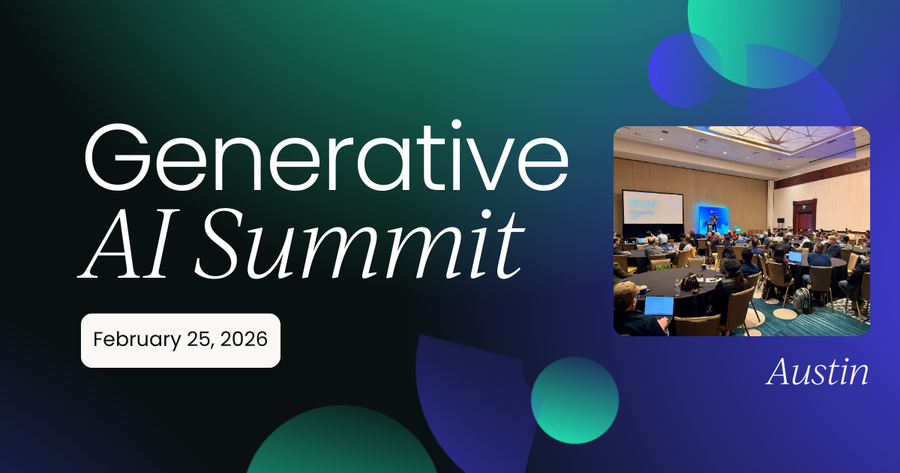
Generative AI Summit Austin, 2026
Catch up on every session from Generative AI Summit Austin,with sessions from the likes of Stability AI, Meta, Google and more.
When multi-agent AI systems  fail, who takes the blame?

The problem with AI explaining AI

The problem with AI  explaining AI

The promise of AI systems that can analyze and explain other AI systems has captivated researchers for years.

As language models grow larger and more complex, the dream of automating the painstaking work of understanding how they function becomes increasingly appealing. 

But new research from a team spanning MIT, Technion, and Northeastern University suggests we might be getting ahead of ourselves.

The paper, “Pitfalls in Evaluating Interpretability Agents,” takes a hard look at how we evaluate AI systems designed to perform mechanistic interpretability.

These are the tools researchers use to peek inside neural networks and understand which components are responsible for specific behaviors. 

Think of it as reverse-engineering the brain of an AI model to figure out how it arrives at its answers.


The allure of automated analysis

The researchers built a sophisticated system powered by Claude Opus 4.1 that mimics how a human researcher would analyze AI components. Unlike a simple preset program, this agent acts more like a graduate student, iteratively learning about the model.

Key capabilities:

  • Formulates hypotheses about model behavior
  • Designs and runs tests to probe specific components
  • Analyzes results and refines understanding
  • Clusters components by shared functionality
  • Produces explanations that appear to match human research
💡
When tested on six well-known circuit analysis tasks, the agent appeared competitive with human experts, identifying which attention heads were responsible for tasks like tracking objects in sentences or comparing numbers.

The memorization trap

One of the most striking discoveries was that Claude Opus 4.1 had essentially memorized some of the research it was supposed to be replicating independently. 

When prompted directly, the model could recite detailed information about the “Indirect Object Identification” circuit, including specific layer numbers and component functions from published papers.

This creates a fundamental problem. If your evaluation system has already seen the answers, how can you tell if it’s genuinely reasoning through the problem or just recalling what it knows? 

The researchers found that even when they didn’t explicitly mention which task they were analyzing, Claude could often infer the answer from contextual clues and produce explanations that looked like genuine analysis but were actually sophisticated pattern matching.

The problem with AI  explaining AI

When ground truth isn’t so solid

Human expert explanations, often treated as the gold standard, aren’t always reliable. In some cases, the AI agent actually contradicted published findings, but further analysis showed the AI was correct.

Key insights:

  • Some components labeled as “previous-token head” only attended to the previous token 42% of the time
  • Groups labeled “value fetcher heads” included components that didn’t consistently behave as expected across hundreds of tests
  • AI explanations sometimes corrected human labels, showing that expert analyses can be incomplete or misleading
  • Raises the question: if evaluations rely on human labels that are imperfect or subjective, what are we really measuring?

💡 Takeaway:
Human-defined “ground truth” is not always reliable, so evaluating AI interpretability against it can produce misleading results.

Agentic AI & product metrics: From engagement to fulfillment
As AI agents begin executing tasks on users’ behalf, traditional engagement metrics are becoming less meaningful. In the age of agentic AI, product teams may need a new north star: measuring whether user intent was successfully fulfilled.
The problem with AI  explaining AI

The limits of outcome-based evaluation

The current approach to evaluating these systems focuses almost entirely on whether they reach the same conclusions as human researchers. 

But this misses something crucial: the scientific process itself. 

Two researchers might arrive at the same conclusion through completely different investigative paths. 

One might run dozens of carefully designed experiments, while another might make an educated guess based on prior knowledge.

💡
The researchers found that their agent did engage in sophisticated experimental design, creating novel test cases to validate hypotheses. But the evaluation framework provided no way to reward this behavior.

A system that genuinely investigates and one that cleverly guesses receive the same score if they reach the same conclusion.


A new approach: Functional interchangeability

To address these limitations, the researchers propose a novel evaluation method based on functional interchangeability. 

The idea is simple: if two components truly share the same function, swapping their weights should leave the model’s behavior largely unchanged.

By measuring how much the model’s outputs change when components are swapped, they created an unsupervised metric that doesn’t rely on human labels.

When they tested this approach, they found it generally aligned with expert-defined clusters while avoiding the pitfalls of memorization and subjective ground truth.

This metric isn’t perfect. It only addresses some of the evaluation challenges, and it’s limited to certain types of components.

But it represents an important step toward more robust evaluation methods that don’t depend entirely on human judgment.


What this means for AI interpretability

These findings arrive at a critical moment for AI safety and transparency. As models become more powerful and autonomous, understanding how they work becomes increasingly important.

But this research suggests that our tools for understanding AI systems, and especially our methods for evaluating those tools, need serious refinement.

The memorization problem is particularly concerning as we move toward using AI systems to analyze behaviors that haven’t been documented in published literature.

💡
If our evaluation methods can’t distinguish between genuine analysis and sophisticated recall, how can we trust these systems to help us understand novel AI behaviors?

The subjectivity of ground truth explanations also highlights a deeper challenge in interpretability research. Human understanding of these systems is itself limited and evolving. Building evaluation frameworks on this shifting foundation risks compounding errors and biases.

Generative AI Summit Austin, 2026
Catch up on every session from Generative AI Summit Austin,with sessions from the likes of Stability AI, Meta, Google and more.
The problem with AI  explaining AI

Looking ahead

This research serves as a crucial reality check. Before we hand over the complex task of understanding AI systems to other AI systems, we need to ensure our evaluation methods are up to the challenge.

The authors call for more principled benchmarks that can assess not just whether automated systems reach the right answers, but how they arrive at those answers.

They advocate for evaluation methods that are robust to memorization, sensitive to the reasoning process, and grounded in measurable model behavior rather than subjective human judgment.

As AI systems become more autonomous and take on increasingly open-ended scientific roles, getting evaluation right isn’t just an academic exercise. It’s essential for building interpretability tools we can actually trust.

This research reminds us that in the rush to automate everything, we shouldn’t forget to question our assumptions about what constitutes understanding in the first place.

How AI in life sciences is reshaping healthcare

How AI in life sciences is  reshaping healthcare

The life sciences landscape is at a defining crossroads. On one hand, the promise of scientific breakthroughs in genomics, biologics, and diagnostics is more palpable than ever.

On the other, the path to bringing these innovations to market is fraught with escalating costs, complex regulatory hoops, and the absolute imperative of patient safety.

As a product manager operating in this dynamic sphere, I see a tremendous opportunity – and a profound responsibility. The opportunity lies in leveraging Artificial Intelligence (AI) to fundamentally reshape how we develop, deliver, and monitor life-saving therapies.

The responsibility is to do so in a way that is compliant, ethical, and unwaveringly centered on the most critical stakeholder: the patient.

Let’s be clear: AI isn’t here to replace the rigorous science or the compassionate human touch that defines healthcare. Its true power lies in its ability to amplify human intelligence, automate mundane tasks, and extract meaningful patterns from vast, siloed datasets.

In doing so, we can solve some of the most persistent, core problems in life sciences.

Agentic AI & product metrics: From engagement to fulfillment
As AI agents begin executing tasks on users’ behalf, traditional engagement metrics are becoming less meaningful. In the age of agentic AI, product teams may need a new north star: measuring whether user intent was successfully fulfilled.
How AI in life sciences is  reshaping healthcare

Tackling the core problems in life sciences with AI

💡
For years, as a product manager in life sciences, I have grappled with a consistent set of challenges. These are the problems that bottleneck innovation and increase the risk of product failure:

Slow and costly drug discovery: The traditional “one size fits all” approach to drug development is incredibly slow, costly, and has a high failure rate. Identifying a promising lead compound can take years of painstaking lab work.

Patient recruitment for clinical trials: One of the primary reasons for clinical trial delays is the difficulty in identifying and enrolling eligible patients. This directly translates to increased costs and time-to-market.

Complex, ever-changing regulations: Navigating the complex landscape of FDA, EMA, and other regulatory bodies is a monumental task. Ensuring global compliance is not just a burden; it’s a prerequisite for market access.

Suboptimal patient engagement: Even with a miracle drug, poor patient adherence can significantly diminish its real-world efficacy. Understanding the patient journey and keeping them engaged is a persistent challenge.

Inefficient supply chain management: From managing delicate biologics to tracking post-market surveillance data, the life sciences supply chain is incredibly complex. A single misstep can have catastrophic consequences for patient safety.

How AI in life sciences is  reshaping healthcare

Generative AI Summit Austin, 2026
Catch up on every session from Generative AI Summit Austin,with sessions from the likes of Stability AI, Meta, Google and more.
How AI in life sciences is  reshaping healthcare

By deploying AI effectively, we can begin to address these core problems, measured against critical Key Performance Indicators (KPIs):

Time-to-market: The speed at which we move from drug discovery to market approval.
Trial recruitment rate: The speed and accuracy of identifying and enrolling suitable patients for clinical trials.
Compliance error rate: The number of identified compliance gaps or audit findings.
Patient adherence and engagement: Measurable improvements in how patients interact with their treatments and care teams.
Patient outcome: Most importantly, the real-world health outcomes for the patients we serve.


AI agents: Our partners in progress

So, how do we translate this potential into reality? The key is to think of AI not as a black box, but as a system of intelligent agents, each with a specific purpose, working in concert with human experts.

Let’s explore some tangible examples in life sciences:

1. The discovery & development agent

The vision: Shift from a purely linear R&D process to a data-driven, accelerated discovery model.

The application: AI algorithms can analyze millions of biomedical publications, patent databases, and real-world evidence to predict promising molecule interactions, simulate clinical trial outcomes, and identify potential off-target effects. This is about making smarter choices early on.

Example: Companies are using AI to model the structure of proteins and predict how small molecules might bind to them, drastically accelerating the early stages of drug discovery. This reduces the number of initial physical compound tests required from millions to a highly targeted subset.

Patient-centric view: By accelerating discovery and improving the likelihood of a drug’s success, we bring life-saving therapies to patients faster. This agent also helps us design trials that are more likely to deliver meaningful results for specific patient subpopulations, moving us closer to the promise of personalized medicine.


2. The patient & trial matching agent

The vision: Streamline clinical trials by quickly and accurately identifying and connecting with the right patients.

The application: This agent can analyze Electronic Health Records (EHRs), lab results, and genomic data to identify patients who meet the strict eligibility criteria for a clinical trial. Natural Language Processing (NLP) is used to read through complex clinical notes that are often hard for traditional search methods to parse.

Example: A major pharmaceutical company deployed an AI solution to screen EHR data across a network of hospitals. The system identified thousands of potential candidates for a complex oncology trial in a fraction of the time it would have taken a human team, significantly cutting trial recruitment timelines.

Patient-centric view: This directly addresses one of the biggest bottlenecks in bringing new therapies to market. For a patient waiting for a new treatment option, this could mean the difference between getting access to a trial and missing an opportunity.

The key is to design these agents to work ethically, with full patient consent and data privacy at the core.


3. The regulatory compliance & pharmacovigilance agent

The vision: Proactively monitor for adverse events and ensure continuous compliance across the product lifecycle.

The application: This agent uses NLP and machine learning to sift through social media posts, medical forums, patient support group data, and traditional medical literature to identify potential safety signals (adverse events) that might not be captured in formal reporting systems.

It can also be used to automatically scan new regulatory guidelines and update internal compliance protocols, reducing the risk of human error.

Example: By analyzing natural language in patient forums, an AI model flagged a pattern of severe fatigue associated with a new treatment that hadn’t been prominent in clinical trials.

This early warning allowed the product team to proactively update safety labels and investigate further, prioritizing patient safety.

Patient-centric view: Compliance isn’t just about avoiding fines; it’s about protecting patients.

By automating the “brute force” work of pharmacovigilance and compliance mapping, this agent helps ensure that the real-world performance of a drug is continuously monitored, allowing for rapid intervention if safety issues are detected.

This builds trust with patients and regulators alike.

NVIDIA GTC 2026: Jensen Huang unveils the AI stack
At NVIDIA’s GTC 2026, CEO Jensen Huang laid out a sweeping vision for AI’s next era. From chips and agent frameworks to robotics and real-time graphics, Huang’s keynote made one thing clear: The future of AI will be built on infrastructure, and NVIDIA intends to own it.
How AI in life sciences is  reshaping healthcare

The road ahead: Co-creation, not replacement

The path forward for life sciences is not about a grand “takeover” by AI. It’s about a collaborative future where AI enables and empowers. As product managers, we are the architects of this future.

Our role is to identify the core problems, define the relevant KPIs, and champion the deployment of AI agents that are not only powerful but also patient-centric by design.

The future of healthcare is intelligent, and it’s built on a foundation of data, collaboration, and an unwavering commitment to the people we serve. Let’s embrace AI, not as a shortcut, but as a critical tool that helps us deliver on the promise of better health for all.


About the author:

Shivakumaran Venkataraman is an experienced Product Manager with a focus on delivering innovative, data-driven solutions in the life sciences space. He is passionate about leveraging technology to improve patient outcomes while navigating the complexities of the healthcare landscape. Find Shivakumaran exploring the intersection of AI, real-world data, and patient-centric product strategy.

NVIDIA GTC 2026: The AI stack gets real

NVIDIA GTC 2026:  The AI stack gets real

At NVIDIA’s GTC 2026, CEO Jensen Huang laid out a sweeping vision for AI’s next era. From chips and agent frameworks to robotics and real-time graphics, Huang’s keynote made one thing clear: The future of AI will be built on infrastructure, and NVIDIA intends to own it.

Describing the company as “The first vertically integrated but horizontally open company,” Huang positioned NVIDIA as the foundation layer for all AI workloads, while encouraging developers, enterprises, and partners to innovate openly on top. 

For AI professionals, this signals a shift from focusing solely on models to thinking about the systems and platforms that underpin them.


Securing and scaling agentic AI

One of the keynote’s central themes was agentic AI. NVIDIA introduced NemoClaw, an open-source framework that embeds governance, safety, and privacy directly into autonomous agents. Enterprises can now deploy agents that are auditable, controllable, and compliant with internal privacy requirements.

💡
Complementing NemoClaw, the Agent Toolkit simplifies building and deploying secure agents, helping organizations accelerate AI adoption without starting from scratch. Meanwhile, the Vera Rubin platform (powered by seven new chips) optimizes large-scale training and persistent agent workloads. 

Huang even teased space-based data centers, hinting at long-term strategies to overcome terrestrial compute and energy limits.

Key enterprise benefits include:

  • Built-in safety and privacy controls for autonomous agents
  • Simplified deployment and integration into existing enterprise systems

Together, these announcements signal NVIDIA’s intent to provide a secure, scalable foundation for agentic AI across industries.

Meta acquires Moltbook: The social network for AI agents
Meta’s acquisition of Moltbook highlights a growing focus on agent-to-agent systems and the infrastructure required to support them. It’s a small deal that signals bigger shifts in how AI ecosystems may evolve.
NVIDIA GTC 2026:  The AI stack gets real


DLSS 5: Real-time AI-enhanced graphics

On the consumer side, NVIDIA unveiled DLSS 5, a real-time AI rendering system that generates photorealistic lighting and materials. Major studios such as Bethesda, Capcom, and Ubisoft are early adopters. While DLSS 5 is designed for gaming, its impact extends far beyond entertainment. 

Photorealistic rendering enables richer simulation environments, digital twins, and synthetic data, all critical for training AI agents and robotics systems.

💡
By connecting graphics, simulation, and enterprise AI, NVIDIA demonstrates that improvements in one domain can accelerate innovation across the entire ecosystem.

Expanding the AI ecosystem

Beyond agents and graphics, NVIDIA showcased platforms for robotics, autonomous vehicles, and industrial AI applications. The company’s approach is to unify these verticals under a single stack, providing scalable infrastructure and consistent development tooling. 

This ensures AI agents, robots, and autonomous systems operate efficiently across industries.

Strategic ecosystem advantages:

  • Unified infrastructure for AI agents, robotics, and simulations
  • Standardized tooling that reduces deployment friction
  • Scalable systems to support complex AI workloads

This ecosystem positioning reinforces NVIDIA’s role as the foundation for both enterprise AI and research projects.

The missing layer in enterprise AI – eBook 2026
Why most Enterprise AI fails before it starts
NVIDIA GTC 2026:  The AI stack gets real

6 impacts this will have on AI professionals

The announcements at NVIDIA GTC 2026 reshape what it means to work in AI. Here are six key impacts professionals should be preparing for:

1. A shift from model building to system design

AI professionals will need to think beyond models and focus on end-to-end systems. With platforms like NemoClaw and the Agent Toolkit simplifying development, the real challenge becomes integrating models into scalable, production-ready environments.

2. Infrastructure knowledge becomes essential

Understanding compute is no longer optional. Platforms such as the Vera Rubin platform highlight how performance, cost, and scalability are tied to infrastructure decisions. AI professionals will need a working knowledge of hardware, distributed systems, and optimization.

3. Governance and safety move to the core

As agentic AI becomes mainstream, governance is built into the stack—not added later. Tools like NemoClaw make compliance and auditability central, requiring professionals to design systems that are transparent, controllable, and aligned with regulations.

When AI judges: The risks of reasoning models in alignment
The race to build more capable AI systems has created an unexpected problem:
As we push toward more sophisticated models, we need equally sophisticated ways to evaluate and align them.
NVIDIA GTC 2026:  The AI stack gets real

4. Persistent AI systems become the norm

AI is shifting from one-off deployments to continuous, autonomous systems. Professionals will increasingly manage long-running agents that require monitoring, updates, and lifecycle management—more like operating software infrastructure than delivering static models.

5. Simulation and synthetic data go mainstream

With advances like DLSS 5, simulation has become a standard part of AI development. Professionals will need to work with synthetic data, digital twins, and virtual environments to train and validate systems before real-world deployment.

6. Ecosystem strategy becomes a career skill

As NVIDIA builds a vertically integrated stack, professionals must navigate the trade-offs between leveraging powerful platforms and avoiding vendor lock-in. Choosing the right tools (and maintaining flexibility) becomes a strategic decision.


Closing thought

The takeaway is clear: AI professionals are evolving into system architects, operators, and strategists. The future belongs to those who can not only build intelligent models, but also deploy and manage them effectively within complex, real-world environments.